
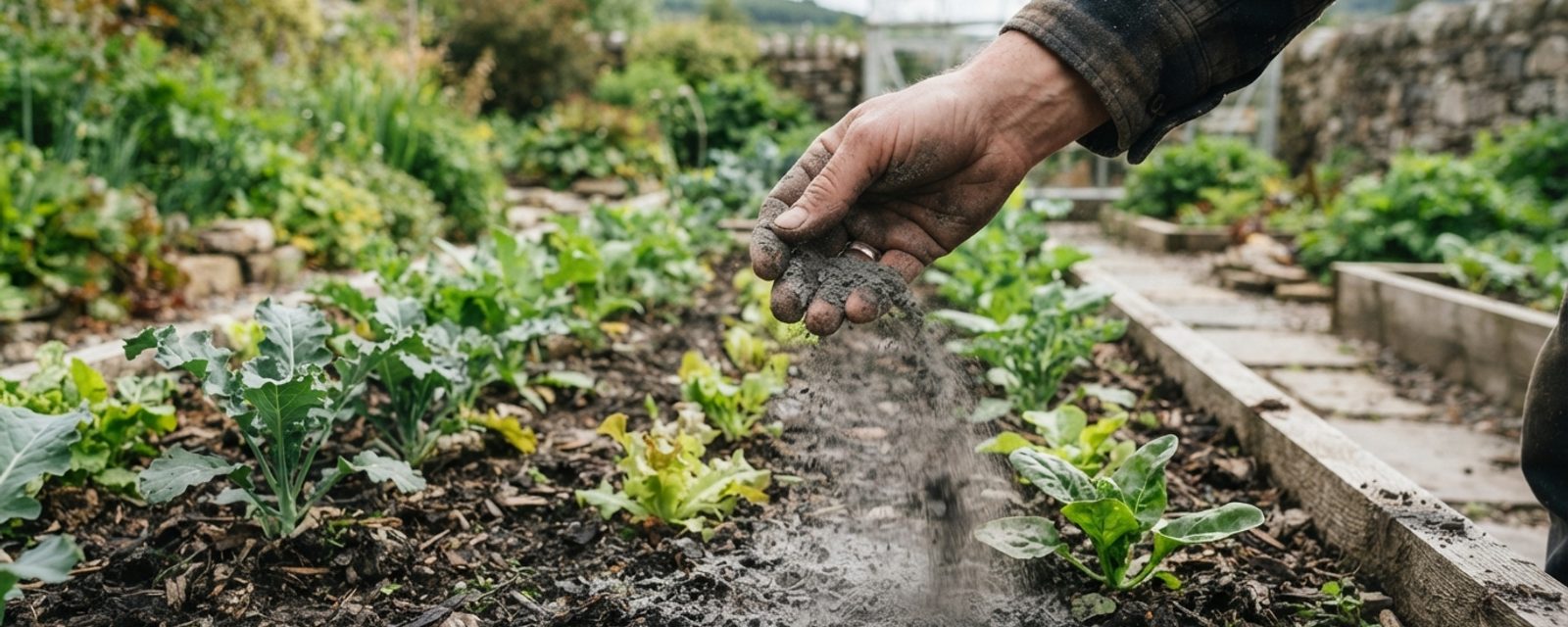
Sellers of rock dust, also marketed as rock mineral fines, Azomite, Gaia Green, or basalt dust, lean hard on one image: glaciers grinding mountains into powder and leaving behind mineral-rich soil, soil they say modern farming and gardening have since "depleted." Buy their ground rock, they say, and you're putting those ice-age minerals back. It's a good story. It also glosses over the part where ground rock releases its minerals over years to decades, not weeks, and where the "depletion" premise itself is disputed by soil scientists.
Here's what the evidence, not the marketing copy, actually says, claim by claim, with a specific look at whether any of it changes for a Scottish garden.
Quick answer
For most Scottish home gardeners, rock dust is not worth the money: the mechanism can't plausibly deliver the fast fertility or yield boost the marketing implies, and no institutional trial has shown a home-garden benefit. The one genuine positive data point, a Newcastle University basalt trial that raised oat yields, was farm-scale arable research in Northumberland, not a garden trial, and doesn't transfer directly to a raised bed. Scotland does have real basalt quarries, and a genuine case for using that basalt to lock away carbon at farm scale, but that's a different claim from "your garden needs remineralising."
What rock dust actually is
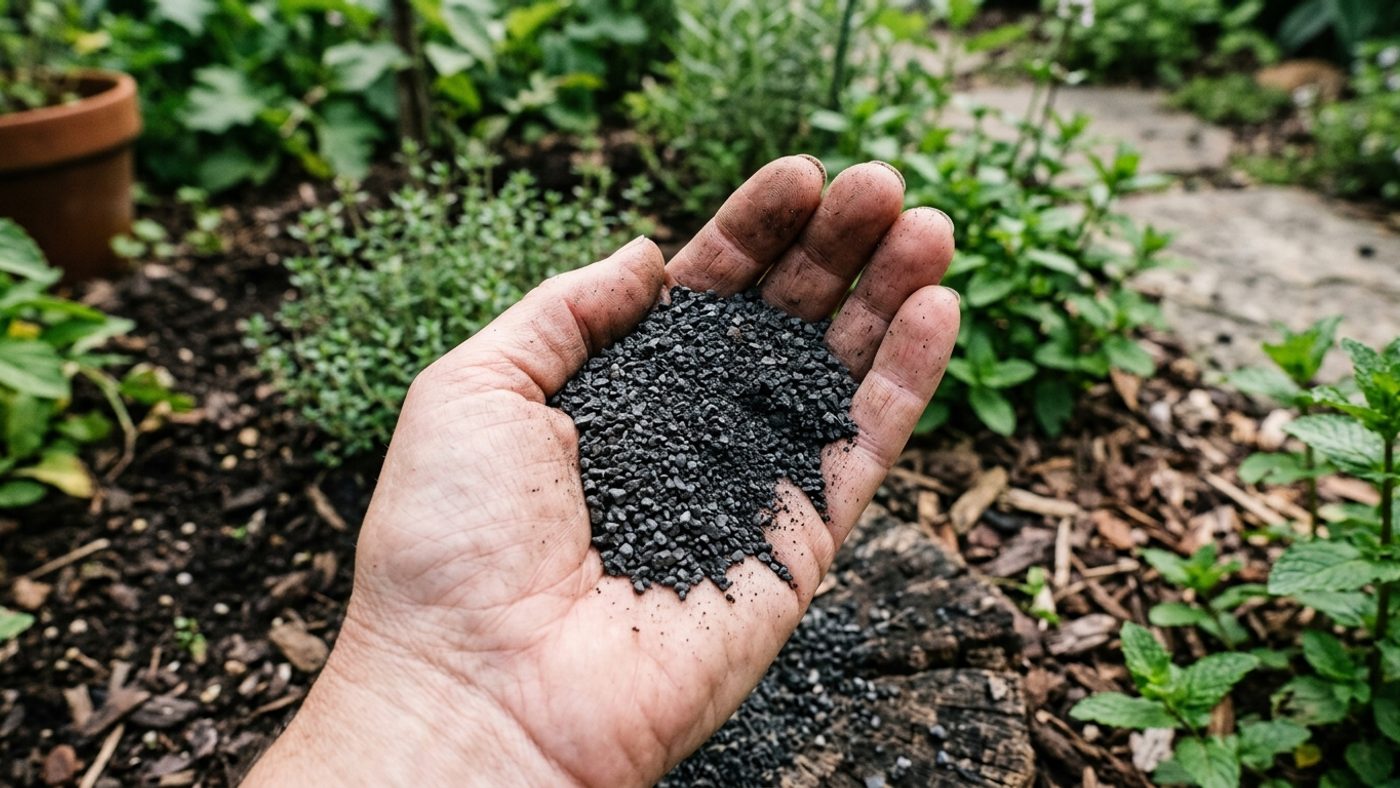
It's finely crushed rock, usually basalt or granite waste from quarrying, containing trace amounts of calcium, magnesium, potassium, iron, manganese, boron, and other minerals, bound up in silicate mineral structures. It is not a fertiliser in the conventional sense: it carries negligible nitrogen, phosphorus, or potassium in plant-available form. Whatever nutrients it holds have to be released by weathering, chemical breakdown of the rock structure, which happens over a slow, geological timescale rather than a growing-season one.
Claim-by-claim verdict
| Claim | Verdict |
|---|---|
| Restores "depleted" trace minerals in garden soil | Unproven |
| Boosts yield | Disputed |
| Improves flavour / nutrient density of produce | Unproven |
| "Glacial rock dust" recreates ice-age mineral-rich soils | Disputed as a Scotland-specific selling point |
| Feeds soil microbes and mycorrhizal fungi | Unproven |
The mechanism problem: why "fast results" claims struggle
Rock dust minerals are locked inside silicate mineral structures, released only as the rock weathers, a process governed by particle size, soil chemistry, moisture, and mineral type, and one that plays out over years, not a season. Even where a mineral is genuinely present in the rock, there's no fast pathway from crushed stone to a plant's roots within one growing season, which is why the Newcastle University trial below is notable: 15-20% yield gains in year one from ground basalt were, in the researchers' own words, a surprising and possibly weather-amplified result, not the expected outcome for a slow-weathering material.
Does Scotland's soil actually need it?
The marketing premise is "depleted soil, restore the minerals." Scotland's actual soil story cuts against that premise, but not cleanly.
Scotland's soils are geologically young, shaped over roughly 11,500 years since the last glaciation, and the period immediately after glacial retreat is genuinely mineral-rich: unleached, fertile ground supporting rapid colonisation by grassland and scrub. That's the literal opposite of "depleted."
But Scotland's soils didn't stay in that state. They are, in general, more organic, more leached, and wetter than most of the rest of Europe, shaped by a cool maritime climate over predominantly acid, weathering-resistant rock. Podzols, soils where iron, aluminium, and often carbon have been washed down out of the topsoil by rainfall, cover 23.7% of Scotland's land area: thousands of years of leaching in a wet climate, on top of that earlier mineral-rich start.
So the honest picture is mixed: Scotland's soils are young by global standards and started mineral-rich, but large parts of the country, especially uplands and areas on acid parent rock, have since leached and acidified under Scotland's climate. That leaching is real, but it isn't the "depletion from farming" rock dust marketing describes, and rock dust's slow-release minerals aren't a demonstrated fix for either podzolisation or acidity. The claim that most garden soils already hold enough nutrients for healthy growth was framed with ordinary UK soils in mind, not specifically Scotland's more leached, acid ground, but a gardener working that kind of soil is still better served testing pH and correcting it directly (lime, organic matter) than by a product whose mineral release timeline is measured in years and doesn't touch acidity at all. Acidity is also the real reason most Scottish brassicaThe cabbage family: cabbage, kale, broccoli, cauliflower, Brussels sprouts, kohlrabi, swede, turnip and more, sharing the same pests, diseases and rotation rules. Full definition → growers lime their soil in the first place, since clubrootA soil-borne fungal disease of the brassica family that swells and distorts roots, and survives in soil for years. Full definition →, a soil-borne disease that distorts and rots roots, thrives in acidic ground and is far harder to manage once it's established than to head off with a pH correction, another practical case for lime over rock dust on a veg plot specifically.
The genuine Scottish angle: basalt is a real local by-product, but at farm scale
Aberdeenshire Council's Balmedie, Pitcaple, and Craiglash quarries produce over 200,000 tonnes of aggregate a year, and the basalt rock dust generated as a crushing by-product, previously treated as waste, is now being hauled to farmland (over 15,600 tonnes to date from Balmedie and Pitcaple) through a partnership with the carbon-removal company UNDO, spread free on nearby farms for its mineral content and its carbon-drawdown potential.
That basalt is the same category of material tested in the Newcastle University trial: spring oats grown at Nafferton Farm in Northumberland, one growing season, one site, applied at industrial-arable rates in an unusually dry year the researchers themselves noted may have exaggerated the effect.
| Measure | Trial result |
|---|---|
| Application rate | 18.86 tonnes/hectare |
| Yield increase (average) | 15% |
| Yield increase, ploughed plots | 9.3% |
| Yield increase, direct-drilled plots | 20.5% |
| Soil pH change | +0.2 to 0.3 units |
| Tissue calcium, potassium | Both higher |
It's peer-reviewed, published in PLOS ONE, and it's real evidence that basalt rock dust can do something agriculturally, under specific conditions. But it doesn't tell you anything about vegetable beds, ornamental borders, or the far smaller doses a bag of garden rock dust delivers, Northumberland farmland at nearly 19 tonnes per hectare is a different world from a border dusting.
That 0.2-0.3 unit pH rise cuts both ways for a Scottish gardener. It's a genuine argument for basalt rock dust on acid, leached ground generally, but it's also a reason to think twice before using it near acid-loving plants. Rhododendrons, azaleas, blueberries, camellias, and heathers, all commonly grown in Scotland, need acid soil to thrive, and a product that measurably raises pH works against them.
There is also a Scotland-based rock dust producer in Perthshire, selling volcanic rock dust quarried in Scotland since 1997. Its own marketing describes fertility, flavour, and pest-resistance benefits, but no university or government trial has tested that specific product.
If you're weighing it up: cost, seaweed meal, and how to use it
A bag of a branded rock dust product generally costs more per kilo than compost, well-rotted manure, or a bag of garden lime, for an amendment whose evidence base is far weaker than any of those three, worth having in mind before buying.
Rock dust isn't the only mineral-based amendment sold to Scottish gardeners, and it isn't the traditional one. Seaweed meal, harvested along Scotland's coastline, has long been used here, and it breaks down within a season rather than over years, the opposite of rock dust's central weakness on leached, acid Scottish ground that could use a mineral boost sooner rather than later. No trial compares the two head-to-head directly, but seaweed meal is worth weighing as the faster-acting, more traditional Scottish option.
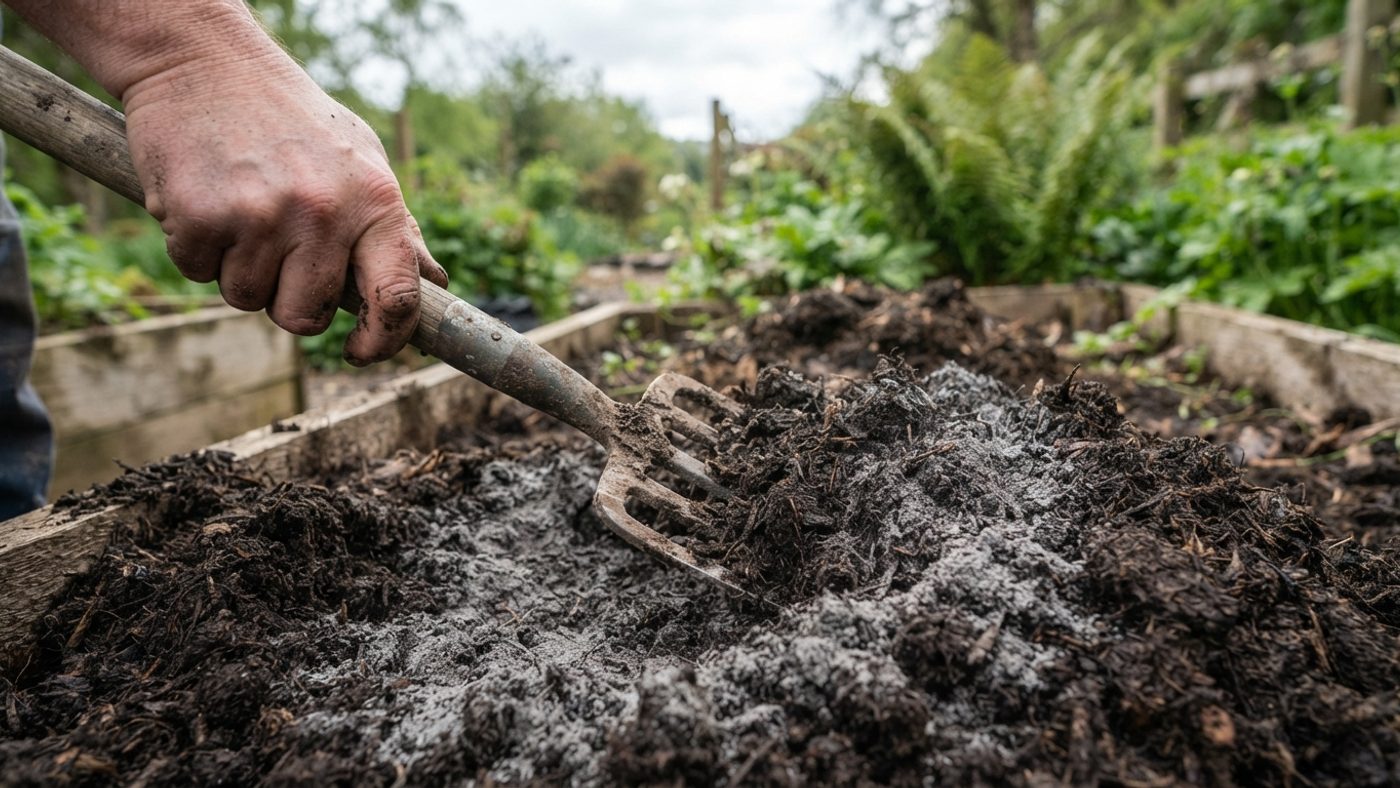
If you already have rock dust or want to try it despite the thin evidence, mixing a small amount into a compost heap rather than applying it directly to a bed is the more commonly recommended approach: it gives the slow-weathering process longer to work before the material meets plant roots, and it's a smaller, cheaper trial than dusting an entire border. Follow the application rate printed on the specific product you buy rather than a generic figure, rates vary by product, and no institution sets a standard garden dose. Two other practical points worth checking before buying: whether the product carries Soil Association organic approval, if that matters for your growing method, and whether the seller states which quarry or rock source it comes from, crushed quarry waste can vary in trace-element content depending on the parent rock, and a product that's vague about its source is harder to judge.
The bottom line for a Scottish gardener
Rock dust isn't "busted" outright, weathering rock does eventually release minerals, and there's genuine peer-reviewed evidence that basalt rock dust does something at farm scale. It just isn't the evidence the bag on the garden centre shelf is claiming. Spend the money on compost, well-rotted manure, or a soil test and targeted lime instead: on the acidic, leached ground common across Scotland, those give a faster, better-evidenced return than a mineral source that needs years to release anything at all.
Common questions
Is rock dust the same as lime?
No. Garden lime is specifically used to raise soil pH and supplies calcium (and sometimes magnesium) in a form that acts relatively quickly. Rock dust may contain calcium and magnesium too, but locked in silicate minerals that release far more slowly, and it isn’t formulated or dosed as a pH corrector.
Will rock dust harm my plants or soil if I use it anyway?
Not in typical garden application, with one exception: its pH-raising effect makes it worth avoiding near rhododendrons, azaleas, blueberries, camellias, and other acid-loving plants. Otherwise, the concern with it isn’t safety, it’s that the evidence for benefit at garden scale and garden doses is thin to absent.
If basalt rock dust worked on an oat farm in Northumberland, why wouldn’t it work in my Scottish garden?
That trial applied basalt at nearly 19 tonnes per hectare to a cereal crop over one growing season, at farm machinery scale, in an unusually dry year the researchers flagged as a possible reason the effect looked larger than expected. A bag of garden rock dust delivers nothing close to that rate, and no comparable trial has tested vegetables or ornamentals at garden dose.
Is there a genuinely Scottish rock dust product?
Basalt by-product from Aberdeenshire quarries is being spread on Scottish and Northumberland farmland through a carbon-removal partnership, and a Perthshire producer has sold Scottish-quarried volcanic rock dust to gardeners since 1997. Neither has an institutional trial verdict confirming garden-scale benefit.
My soil feels "tired", shouldn’t I remineralise it anyway?
Test it first. A basic soil test (pH and major nutrients) shows what’s actually missing, and in Scotland the more common issue is acidity from leaching rather than trace mineral depletion. Organic matter and, where indicated, lime address that faster and with better evidence than rock dust does.
Weighing up other soil additives too? See does biochar work? and do mycorrhizal fungi products work?
Sources
4 sources, recorded with what each was used for
- Beerling et al., "Initial agronomic benefits of enhanced weathering using basalt: A study of spring oat in a temperate climate", PLOS ONE, 2024: The Newcastle University/Nafferton Farm trial's yield figures, pH change, nutrient uptake, application rate, location, and the researchers' own caveats about the trial's scope and the dry season
- RHS: Soil Types Explained: The statement that most garden soils contain sufficient nutrients without additional mineral input
- Scottish Government: The Scottish Soil Framework, Chapter 3: The Diversity of Scottish Soils: The statement that Scottish soils are more organic, leached, and wetter than most of Europe, and that podzols cover 23.7% of Scotland's land area
- Aberdeenshire Council: Undoing carbon emissions with crushed basalt rock: Quarry names, aggregate tonnage, and the UNDO partnership figures