
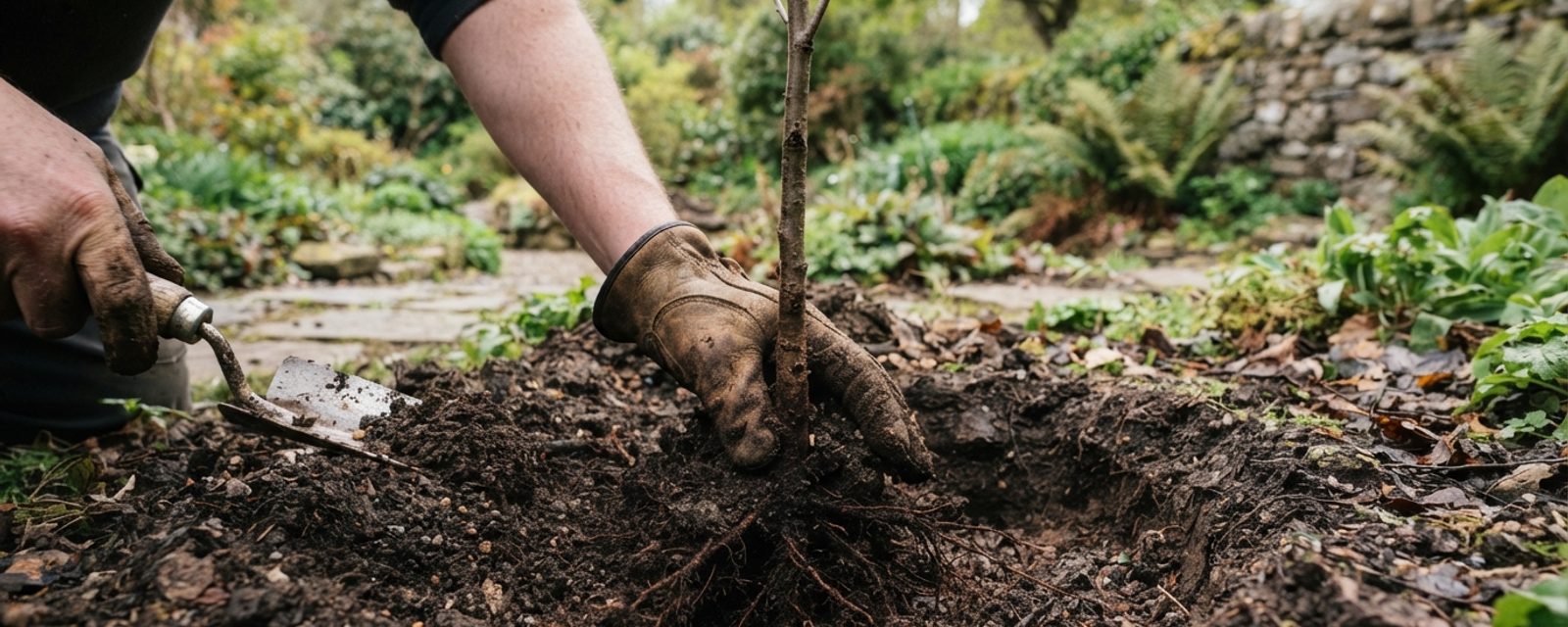
There's a till-point display at most garden centres in late spring: a rack of small foil sachets promising "bigger blooms," "stronger roots," and "up to 10 times more roots" if you dust the powder into the planting hole before you back-fill. Rose specialists sell root-dip versions with the same message. It's cheap, it's easy to add at the point you're already digging a hole, and it plays on a fact every gardener has half-heard: mycorrhizal fungi are real, and they do help plants.
That last part is true. What's much less settled is whether buying a product and sprinkling it into an ordinary flower bed or vegetable patch makes any measurable difference, because most garden soils already have their own mycorrhizal fungi working away for free, and the two things gardeners are most likely to do at the same time (feed with phosphorus, dig the ground over) are the two things known to work against the symbiosis, inoculated or not.
In short: skip it for an established bed or border, where it's unlikely to do anything a resident fungus population isn't already doing. The one situation where it's worth trying is a genuinely new-build garden on stripped, compacted subsoil, or a pot filled with fresh sterile compost, even then, it's the plausible case rather than a proven one.
What mycorrhizal fungi actually are
Mycorrhizas are partnerships between plant roots and particular soil fungi. The most common type in garden soil, arbuscular mycorrhizal fungi, sends out fine threads (hyphae) into the soil well beyond what a root could reach on its own, pulling in extra water and nutrients, phosphorus especially, since it's often scarce and immobile in natural soils, in exchange for sugars the plant makes through photosynthesis. A second type, ectomycorrhizal fungi, wraps around rather than penetrating root cells and partners mainly with trees; a third, ericoid mycorrhizal fungi, is specific to ericaceous plants, heathers, rhododendrons, azaleas, blueberries, which matters in Scotland given how much acid-loving planting the country's soils support. This distinction matters when buying a product: a sachet formulated for the arbuscular type isn't automatically doing anything for a rhododendron, blueberry or heather bed, since those need the ericoid fungus specifically, not the type most general-purpose products are built around.
Almost all garden plants form one of these relationships with some fungus; a smaller number of common vegetables, including brassicasThe cabbage family: cabbage, kale, broccoli, cauliflower, Brussels sprouts, kohlrabi, swede, turnip and more, sharing the same pests, diseases and rotation rules. Full definition → (cabbage, kale, broccoli, cauliflower) and beetroot family crops (beetroot, chard, spinach), don't form the association at all.
This is old, well-studied biology, not a marketing invention. The marketing invention is the leap from "this exists in nature" to "therefore adding a product from a sachet will improve your garden."
The four claims, graded separately
Claim 1: Mycorrhizal symbiosis is a real, beneficial phenomenon in nature
Verdict: True
This is uncontroversial in soil science. The fungi extend a plant's effective root network, improve water and nutrient (particularly phosphorus) uptake, and in some cases offer a degree of protection against root disease, describing the sugar-for-nutrients exchange and noting phosphorus uptake as a key benefit, particularly because phosphorus is often in short supply in natural soils.
Claim 2: Commercial root-dip/granule products measurably help transplants establish in an ordinary garden with existing soil biology
Verdict: Disputed, leaning unproven-to-negative
Two separate problems stack up against this claim. First, established garden beds, lawns and borders generally already carry their own resident mycorrhizal fungi, built up through the existing vegetation and soil history, adding a commercial fungus to soil where a partnership is already functioning does not necessarily improve on it.
Second, and more damagingly for the product category specifically, a 2025 meta-analysis in the peer-reviewed journal New Phytologist (Koziol et al.) examined 302 observations from 94 globally sourced commercial arbuscular mycorrhizal inoculants, and compared them against fungi grown under laboratory conditions:
| Commercial inoculant products | Laboratory-grown fungi | |
|---|---|---|
| Little or no root colonisation | 84% of treatments | far less common |
| Negligible arbuscule formation | 81% of treatments | far less common |
| Colonised roots properly AND produced a measurable growth benefit | 12% of products | 63% of treatments |
Colonisation is the thing to focus on in that table: it's the fungus actually doing its job inside the root, not just being present in the sachet. Of the commercial products that did show a growth benefit, nearly half did so with essentially no fungal colonisation detected at all, the study's authors put this down to other ingredients in the product (labelled or unlabelled fertiliser and additives) doing the work, not the fungus.
Not every product on a shelf is necessarily inert, and formulations vary between manufacturers, but the peer-reviewed evidence available does not support a confident "it works" for an ordinary, already-established garden.
Claim 3: Products help specifically in disturbed/sterile soil, new-build gardens with compacted subsoil, or containers/potting compost
Verdict: Unproven, the most credible use case in principle, but not confirmed by any trial
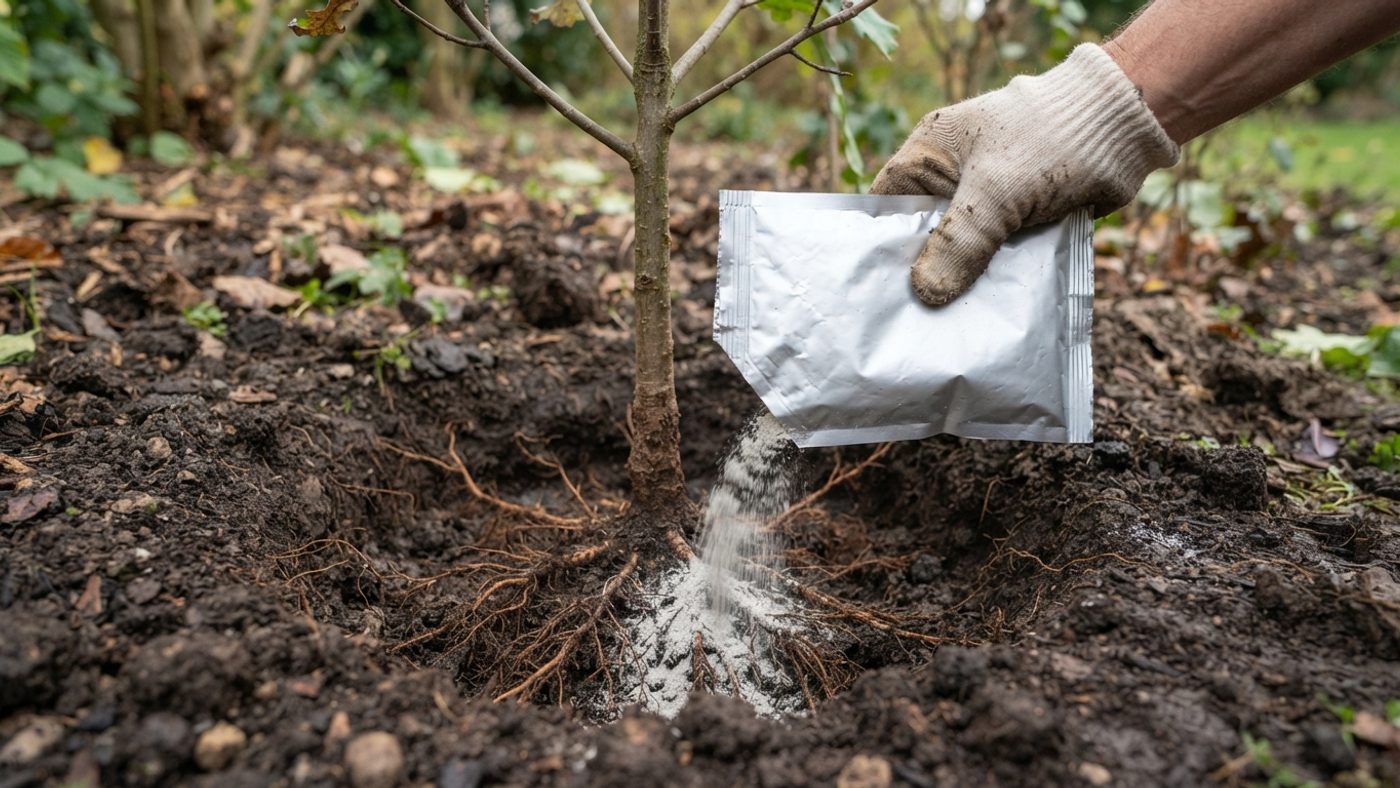
This is where the case for a product is strongest in principle, and it's backed by the same institutional sources rather than contradicted by them. Severely disturbed construction soils, degraded sites, and soilless or pasteurised growing media (containers, greenhouse compost) are the situations where compatible mycorrhizal fungi may genuinely be scarce or absent, which is the condition under which inoculation is at least biologically plausible. Mycorrhizal fungi may be less effective on frequently cultivated soils, implying the reverse is also true: soil that hasn't been repeatedly disturbed retains its fungal population better.
No trial has actually tested a commercial product's performance in genuinely sterile or heavily disturbed soil against an untreated control and measured a real growth outcome. The Koziol meta-analysis and an earlier University of Zürich evaluation (which found none of seven home-garden-marketed products it tested established symbiosis under controlled conditions) both raise doubts about whether the products colonise roots reliably at all, regardless of how depleted the starting soil is. A fungus that fails to colonise roots reliably in a lab setting has little reason to do better watered into compacted clay, that's a reasonable inference from the colonisation data, but it isn't the same as a study that tested disturbed-soil planting holes directly. Treat this claim as the most plausible use case for a product, not a proven one.
The root-dip version sold for bare-rootA plant, usually a fruit tree or hedging, sold with its roots exposed rather than in a pot, and only available while dormant. Full definition → trees, hedging and roses partners mainly with ectomycorrhizal fungi rather than the arbuscular type most of the research above covers, and the same caution applies by extension rather than by a separate trial. An established hedge line or an old rose bed is likely to have its own resident fungi already; a bare-root tree or hedging whip going into freshly stripped, disturbed ground, a common scenario on Scottish new-build plots and windswept shelter-belt planting alike, is the more plausible case for a product to matter, on the same logic as the new-build/container case above.
No study names a specific brand as reliably effective, and the peer-reviewed meta-analysis found no consistent link between a product being on the shelf and it actually colonising roots, a name on the packet, or a higher price, isn't itself a useful signal of whether a product works.
Claim 4: High-phosphorus fertiliser use suppresses the symbiosis
Verdict: True
Both institutional sources agree on this independently. Phosphorus-rich fertilisers are thought to suppress mycorrhizas, and high phosphorus levels reduce colonisation by arbuscular mycorrhizal fungi, and many vegetable gardens test high in phosphorus after years of routine feeding, meaning a gardener who both applies a mycorrhizal product and feeds with a general-purpose or high-phosphorus fertiliser at the same time may be working against their own inoculation, inoculated or not.
Where this leaves Scotland
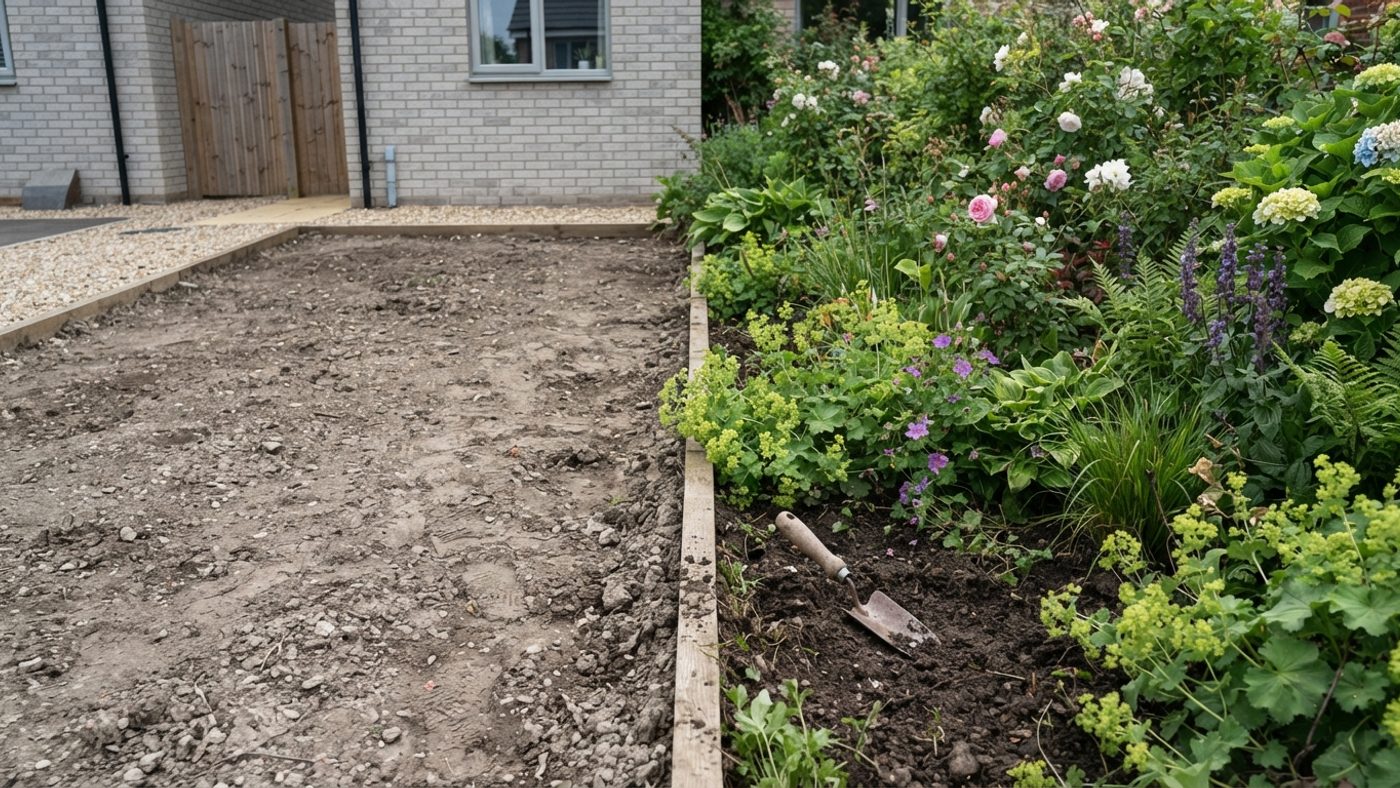
Scotland's own housing boom makes the new-build case a practical one here, not just a theoretical exception. Ground on a new housing development has typically been stripped of topsoil and recompacted by heavy machinery during construction, and may sit on imported fill rather than the site's original soil, the same "severely disturbed" condition named as the scenario where native mycorrhizal fungi are most likely to be scarce. Nothing here suggests new-build subsoil is worse in Scotland than anywhere else in the UK, but a new-build garden on compacted subsoil is a stronger candidate for a mycorrhizal product than a bed in an established garden with years of undisturbed planting behind it. The same logic extends to bare-root trees and hedging going into that same disturbed ground, since the underlying soil condition is what makes the difference, not the plant type.
A quieter connection runs through Claim 4. Vegetable gardens and allotments generally get fed more heavily and more often than an ornamental border, and it's common for a well-worked veg plot to run high in phosphorus after years of routine feeding, exactly the pattern flagged as working against the symbiosis. A keen veg grower's own feeding habits may be doing more to suppress mycorrhizal activity than any product could restore.
Whether Scotland's cooler, wetter soil conditions themselves help or hinder fungal establishment, independent of the disturbance and phosphorus factors above, remains an open question, one this article can't answer with confidence either way.
Practical takeaway
- Check what type of fungus a product actually contains before buying it for an ericaceous plant (heather, rhododendron, blueberry), a general-purpose arbuscular product isn't built for that partnership, and paying for the wrong type is money wasted twice over.
- Skip the routine high-phosphorus feed at planting time if preserving the fungal partnership matters to you; it works against the symbiosis whether or not a product has been added.
- Minimising digging and soil disturbance protects existing mycorrhizal networks more reliably than any product can rebuild them.
- A higher price or an award-style label isn't itself a signal of effectiveness, none of the institutional evidence links either to whether a product actually colonises roots. An RHS-branded product, Rootgrow, is sold commercially, but its branding shouldn't be read as an independent performance claim, since it isn't backed by a trial named above.
Common questions
Do I need to buy a mycorrhizal product when I plant something new?
Not for everyday planting into ground that’s been cultivated before, a lawn edge, an existing border, a veg bed that’s grown things for years. The exceptions are genuinely disturbed or sterile situations: new-build subsoil, or a container filled with fresh potting compost.
What about using it on a bare-root tree or hedge, rather than a border plant?
The same disturbed-ground logic applies: an established hedge line already has resident fungi, but a bare-root whip going into freshly stripped new-build ground is the more plausible case for a product to matter. Tree and shrub root-dip products partner with a different type of fungus (ectomycorrhizal, not the arbuscular type most of the vegetable-garden research covers), and no trial has tested these products specifically, so treat this as reasoning by extension, not a separately confirmed result.
I already feed my beds with a general fertiliser, does that cancel out a mycorrhizal product?
It can work against it. Phosphorus-rich fertilisers are understood to suppress the symbiosis, so heavy feeding and mycorrhizal inoculation pull in opposite directions regardless of which product you use.
Which plants don’t bother with mycorrhizal fungi at all?
Brassicas (cabbage, kale, broccoli, cauliflower, mustard, radish) and beetroot-family crops (beetroot, chard, spinach) don’t form functional mycorrhizal associations, so a product applied to these is working against the plant’s own biology, not with it.
Does Scotland’s wetter, cooler climate change any of this?
That’s genuinely an open question, the two clear Scotland-relevant points here are practical rather than climatic: new-build gardens often sit on compacted subsoil, which is the strongest theoretical case for an inoculant, and heavy feeding on a well-worked veg plot works against the symbiosis regardless of climate.
Weighing up other soil additives too? See does biochar work? and does rock dust work?
Sources
3 sources, recorded with what each was used for
- RHS: Mycorrhizal Fungi: General biology of the symbiosis, phosphorus uptake benefits, and the statement that phosphorus-rich fertilisers and frequent cultivation suppress/reduce mycorrhizal effectiveness
- University of Connecticut, Home Garden Education Office: Do Home Gardens Need Mycorrhizal Inoculants?: When inoculation may help (disturbed construction soils, soilless/pasteurised media), why established gardens see little added benefit, the effect of high phosphorus levels on colonisation, the list of non-mycorrhizal vegetable crops, and its reference to the University of Zürich evaluation of seven home-garden products
- Koziol, L. et al., Meta-analysis reveals globally sourced commercial mycorrhizal inoculants fall short, New Phytologist (2025): Peer-reviewed colonisation and growth-benefit statistics on commercial inoculant products versus laboratory-grown fungi