
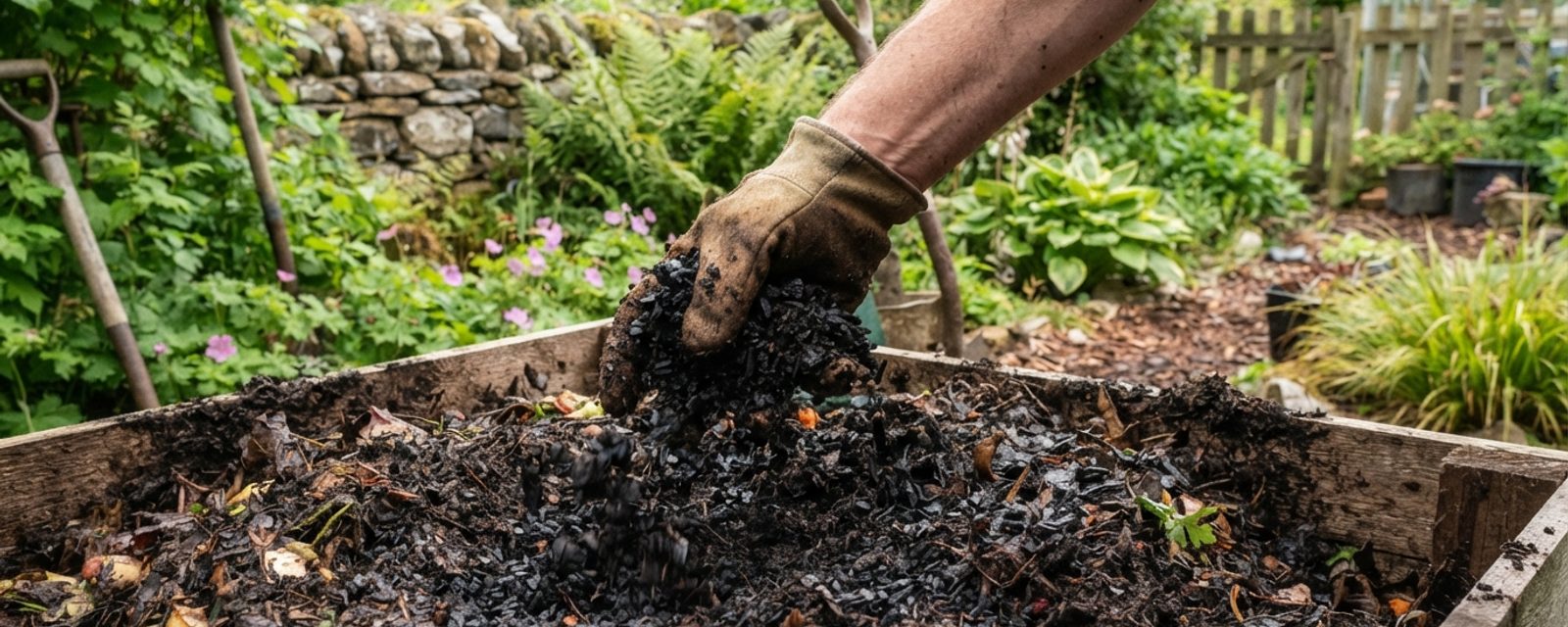
Sales copy for biochar likes to start in the Amazon. Centuries ago, indigenous farmers along the Amazon basin built up patches of dark, exceptionally fertile soil, terra preta, by mixing charred wood and plant waste into the ground. Some of those patches are still more fertile than the surrounding rainforest soil today, hundreds of years after they were last farmed. Modern biochar sellers lean hard on that story, plus a second pitch: because biochar is made by heating wood or plant waste with little oxygen (pyrolysis) rather than burning it, the carbon in it resists decomposition for centuries, so spreading it on your garden is framed as "carbon-negative gardening."
Both halves of that pitch have something real behind them. Neither is the whole story, and the parts that are true don't automatically transfer to a raised bed in Fife or an allotment in Ayrshire. Biochar is not one product with one effect, it's a broad category (feedstock, pyrolysis temperature, and application rate all change what you get), and its evidence base is genuinely split by soil type. It tends to help most on poor, low-fertility, sandy soils, and Scotland doesn't have much of that soil.
What biochar actually is
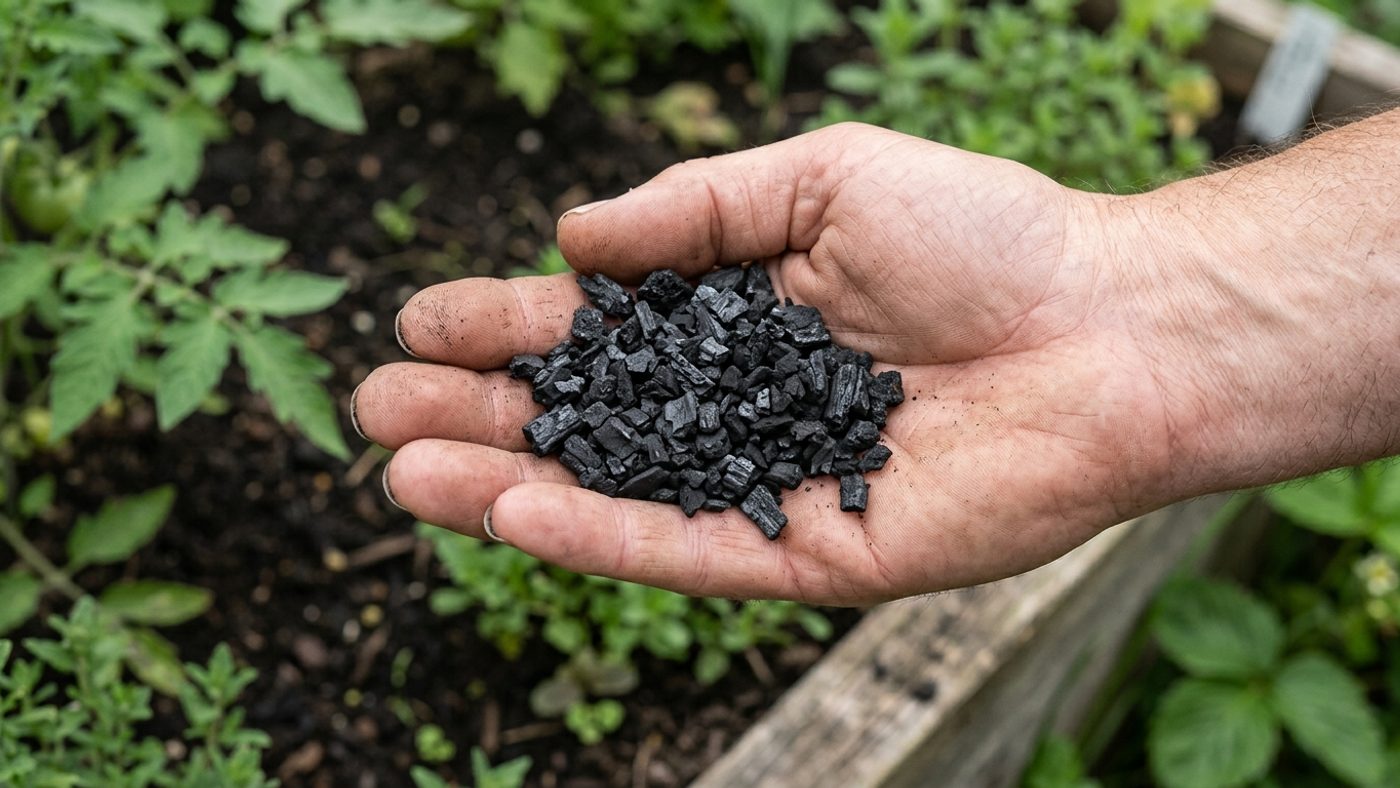
Biochar is organic material, wood, crop residue, manure, carbonised at 300-1000°C in the near-absence of oxygen. The process, pyrolysis, drives off bio-oils and gases and leaves behind a solid residue that's at least 80% elemental carbon. Different feedstocks and pyrolysis temperatures produce biochars with different pH, porosity, and nutrient content, "biochar" on a shelf label doesn't tell you much on its own, "not all biochars are created equal."
That variability matters for everything that follows. A study that found a benefit used a specific biochar, made a specific way, at a specific rate, on a specific soil. None of that necessarily carries over to a bag bought online.
On price and how much to buy: commercial biochar products vary too much in feedstock, processing and rate for a single UK price or coverage figure to mean much. Follow whatever rate the manufacturer states on the bag, since that rate is tied to how that biochar was made. Given the mixed evidence below, treating a first bag as a trial on one bed, rather than a purchase for the whole plot, is the lower-risk way to find out whether it's worth it on your own soil.
One quality marker worth checking a bag for: the European Biochar Certificate (EBC), an industry standard that assesses biochar production against sustainability and quality criteria. It isn't a government or scientific body, so it doesn't carry the same weight as the institutional sources graded below, but it's a real label to look for beyond a supplier's own marketing claims.
Grading the four claims
Rather than one verdict on "does biochar work," the claims sold under that name need separating out. Institutional evidence disagrees with itself on two of the four; it's more settled on the other two.
| Claim | Verdict |
|---|---|
| Improves soil fertility / crop yield | Disputed |
| Improves water retention | Disputed |
| Sequesters carbon / climate benefit | True |
| Needs to be "charged" before use | True |
Fertility: disputed, and soil-dependent
There are studies that show no plant effects of biochar application on its own, or in some cases, detrimental effects, and many trials are relatively limited experimental assessments. That caution is borne out in the field data, which points in genuinely different directions depending on soil type:
| Trial | Soil / crop | Result |
|---|---|---|
| Utah State University Extension, 2018-2020, 4 sites | Corn (non-sandy) | +11% yield in 2018, then -10% in 2019 at the same site |
| Utah State University Extension, 2018-2020, 4 sites | Alfalfa (non-sandy) | No yield response across all 3 years |
| Utah State University Extension, 2018-2020, 4 sites | Wheat (non-sandy) | Yield fell ~5 bushels/acre at 10 tons/acre biochar |
| Peer-reviewed systematic review (PubMed Central) | Sandy-textured soils, multiple crops | Yield up ~20%; total soil NPK up 36%; available NPK up 34% |
Utah State's trial covered corn, alfalfa and wheat on non-sandy soil, and its own conclusion was blunt: biochar produced "no consistent benefit... to yield, crop quality, or available soil water," and at a cost of around $3,580 per acre, it was "not an economically feasible option for growers" without a subsidy. The systematic review's sandy-soil result is the strongest positive figure in either trial, but its own conclusion is that "sandy-textured soils are more likely to benefit from biochar amendments in the long run than other textured soils." Moderately well-drained and/or clay soils may not always respond as positively.
The trials that show a clear yield benefit are mostly run on the soil type where biochar has the least trouble competing with existing organic matter and drainage. The trials run on other soil types, including a multi-year, multi-crop dataset, found nothing consistent. That split is why fertility gets a disputed verdict rather than a single figure. It's also worth noting all of these trials were run on food crops (corn, wheat, alfalfa) themselves, nothing here suggests biochar poses any particular risk near vegetables, the pH caution below is specific to acid-loving ornamentals and fruit, not food crops generally.
Water retention: disputed
The marketing case for water retention is straightforward: biochar's porous structure holds water and makes it available to roots between rainfall or irrigation events. Improved water and nutrient retention is among biochar's claimed benefits, and one grower reported needing "significantly less" irrigation on beds mixed with 10% biochar.
But the same Utah State University trial that measured yield also measured soil water availability directly, across three years and multiple crops in an arid, irrigation-dependent growing region, arguably closer to the conditions where a water-retention effect should show up most clearly. It found no such thing: "no consistent benefit of biochar to yield, crop quality, or available soil water." A grower's own account and a controlled multi-year field measurement point in different directions here, so the claim stays disputed rather than confirmed either way.
Carbon sequestration: true
This is the part of the pitch with the least daylight between sources. Biochar's carbon is chemically stable in a way fresh organic matter isn't, taking "centuries or even millennia" to decompose, described elsewhere as "stable carbon-based compounds that take thousands of years to decompose." The UK Biochar Research Centre, based at the University of Edinburgh, treats biochar as "a leading Carbon Dioxide Removal technology" within the wider carbon-credit market it tracks.
Whether that translates into a meaningful climate benefit at the scale of one garden is a separate question from whether the mechanism is real, the mechanism is real. It only holds, though, if the feedstock is genuinely waste material: this depends on the biochar being "sustainably sourced" and traceable, and Forest Stewardship Council certification is one marker to check for. Biochar made from virgin wood that would otherwise have grown as a tree, rather than from waste that would otherwise have rotted or been burned, has a much weaker carbon case. There's no equivalent of an AGMThe RHS's Award of Garden Merit: a UK-wide trials award for reliable performance, not a Scotland-specific recommendation. Full definition → award to look for on a bag beyond that FSC sourcing check.
Charging biochar first: true
Raw biochar is highly porous and chemically active, and it will pull nitrogen out of the surrounding soil as it settles in, the same porosity that eventually helps it hold nutrients works against you in the first weeks. Mixing biochar with compost or nutrients and letting it sit for "several weeks" before use, specifically "to prevent initial yield reduction" from this nitrogen tie-up, is the standard fix, and it's worth monitoring plants for signs of nitrogen deficiency in the first few months after applying biochar. Pre-charged, "nutrient-enriched" commercial biochar products exist specifically to sidestep this problem. On its own, straight out of the bag, biochar has no nutrient value to offer, it needs to be loaded with some first, typically by mixing it into compost or a liquid feed before it goes anywhere near a bed.
One caution that applies whatever your soil type: acid-loving plants
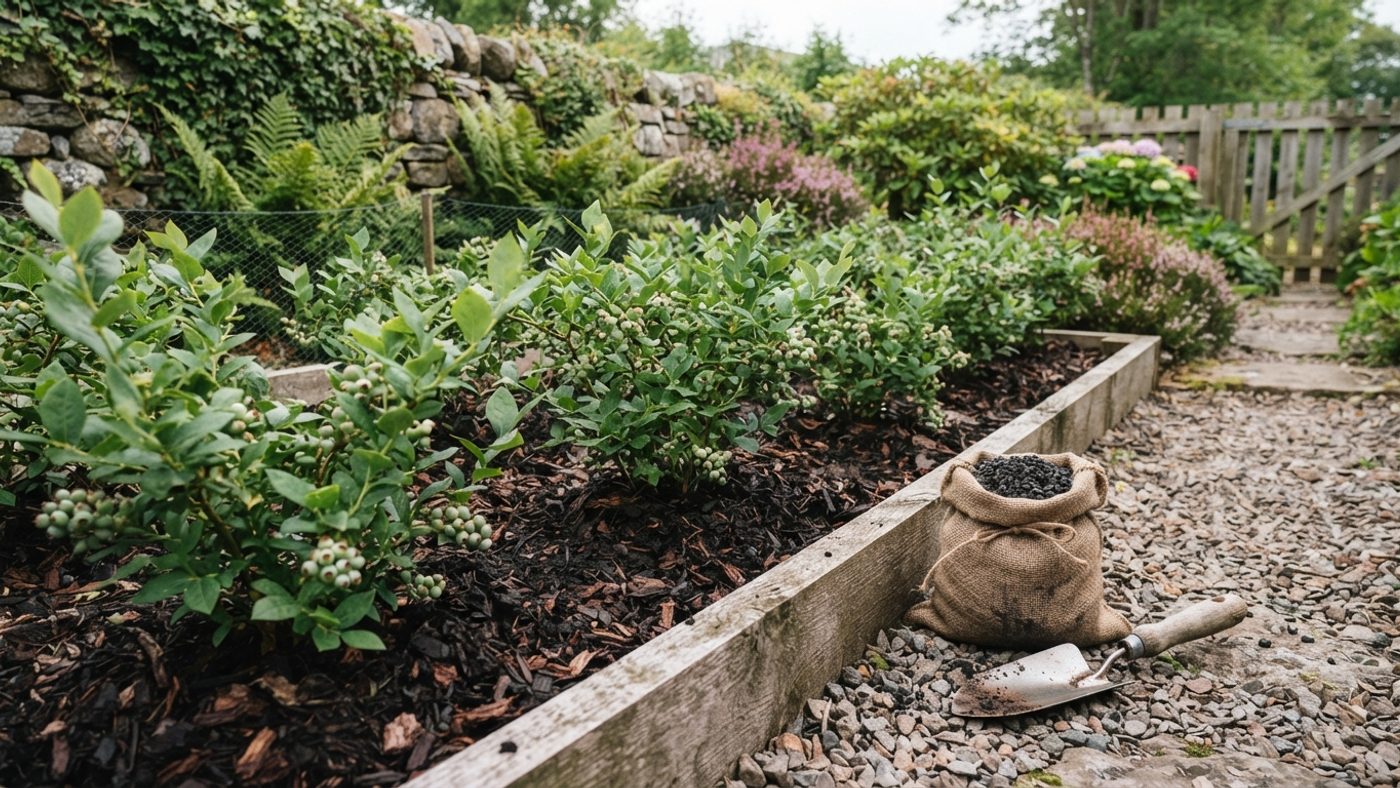
Biochar tends to raise soil pH, in much the same direction as adding lime. Raising soil pH by adding alkaline biochars will be detrimental to the growth of acid-loving plants such as rhododendrons, and it's worth avoiding around ericaceous (acid-loving) plants generally. Rhododendrons, azaleas, blueberries and heathers are all common in Scottish gardens, so this isn't a marginal caveat, check what a bed is growing before adding biochar anywhere near it, regardless of which of the four claims above is the reason you're buying it.
Two further checks are worth making before buying, separate from whether biochar works: quarry or off-cut waste used as feedstock can carry heavy metals or polycyclic aromatic hydrocarbons if the pyrolysis process was poorly controlled, and a supplier who can't say what feedstock and temperature they used is one to be cautious of. If you're making your own from manure or straw waste rather than buying a bag, persistent herbicide residues in that material can survive both digestion and pyrolysis and go on to damage sensitive crops such as tomatoes, potatoes and beans.
The Scotland angle
Peaty soils (more than 35% organic matter) are extensive in Scotland's north-west and generally acidic and "not very fertile," and clay-heavy ground needs substantially more liming material than sandy or loam soils to shift pH by the same amount. Most biochar trial data comes from sandy or loam soils closer to the texture that produced the clearest 20% yield gain in the systematic review above, the same texture profile named as responding best.
There is a plausible theoretical mechanism that cuts the other way: because biochar raises soil pH similarly to lime, it could in principle do some of the work a lime application already does on acidic Scottish ground. That mechanism has actually been tested here, not just theorised: a three-year trial (2011-2013) tested biochar on sandy clay, sandy silt loam and clay loam from Dundee, measuring plant biomass, carbon cycling and soil biodiversity, a real, direct Scottish-soil biochar trial, which most of the claims graded above don't have. Its dataset has been published, but its results aren't summarised anywhere a gardener can easily check. Whether biochar's pH effect actually helps Scottish clay and peaty soils in practice is a genuinely open question: a trial that could answer it exists, but the answer itself remains unclear.
On water retention, Scotland's climate is wetter than most places biochar is marketed toward. The one direct field measurement of soil water availability, run in an arid, irrigation-dependent US growing region, found no consistent benefit, a claim that's already unproven where dry conditions should make it easiest to detect has less reason still to hold up somewhere already getting more rain.
On sourcing and production: the UK Biochar Research Centre is genuinely based in Edinburgh, and forestry residue is a plausible feedstock for Scottish-produced biochar given the scale of the country's forest estate. What exists so far is research interest in that idea and a private afforestation project using biochar, not an institutional supply chain a home gardener could currently point to.
The verdict for a home gardener
A raised bed filled with bought-in growing medium sidesteps the soil-type question somewhat, since it isn't native clay or peat to begin with, but no trial specifically covers biochar's behaviour in a raised bed rather than open ground, so treat that as an extension of the same soil-type logic above, not a separate exemption from it.
For fertility specifically, biochar is competing with cheaper, better-established options, garden compost, well-rotted manure, that most Scottish soils respond to reliably regardless of texture; biochar's case is narrower and more soil-dependent than either. The carbon-storage case holds up regardless of soil type, but only matters if that's specifically what you're buying it for, it won't show up as a visible difference in your beds. Whatever soil you're on: charge it in compost for a few weeks before use rather than applying it straight from the bag, follow the manufacturer's stated rate rather than guessing, and keep it away from rhododendrons, blueberries, heathers and other acid-loving plants.
Common questions
Is biochar the same as the charcoal in my barbecue bag?
No, and using it is not recommended. Barbecue charcoal and briquettes often contain additives, coal, tars or resins; ash from log-burning stoves can carry harmful chemicals or microplastics, worth knowing given how common wood-burning stoves are in Scottish homes, since that ash isn’t a substitute either. Garden biochar needs to come from a supplier who can confirm the feedstock and confirm it’s free of contaminants.
Do I need to buy pre-charged biochar, or can I charge it myself?
Either works, but raw biochar straight from the bag will tie up nitrogen in your soil for weeks if you don’t prepare it first. Mixing it into compost or a liquid feed and letting it sit for a few weeks before applying it avoids this. Pre-charged, nutrient-enriched biochar products exist specifically so you can skip that step.
I’ve got heavy clay soil, is biochar worth trying?
The strongest yield evidence is on sandy, low-fertility soils, and the trial evidence on clay soils is thinner and less consistent. There’s a plausible reason biochar’s pH-raising effect could help acidic Scottish clay, but no confirmed Scottish field trial result to back that up specifically. It’s a reasonable small-scale experiment on part of a bed rather than something to apply confidently across a whole plot.
Will biochar reduce how much I need to water?
Don’t count on it. It’s a commonly repeated claim, but the one field trial that measured soil water availability directly over multiple years found no consistent benefit, even in a considerably drier climate than Scotland’s.
Is biochar safe to use near rhododendrons, blueberries or heathers?
Not without caution. Biochar tends to raise soil pH, and this can harm acid-loving plants. Keep it away from ericaceous beds and borders rather than assuming it’s a universal soil improver.
Weighing up other soil additives too? See does rock dust work? and do mycorrhizal fungi products work?
Sources
9 sources, recorded with what each was used for
- RHS: Biochar: Definition, claimed benefits, evidence caveats, charging, application-rate guidance, ericaceous-plant pH warning, FSC sourcing
- USDA Climate Hubs (Northeast): Digging into Biochar: Application rates, water retention claim, pH/salt limitations, charging instructions
- Utah State University Extension: Biochar Impacts on Crop Yield and Soil Water Availability: Multi-year field trial results on yield and soil water
- Cornell Cooperative Extension (Warren County): Biochars and Their Uses in Agriculture: Soil-texture-dependent response, nitrogen deficiency risk
- Peer-reviewed systematic review: Biochar improves the nutrient cycle in sandy-textured soils and increases crop yield: Sandy-soil yield and nutrient-cycling data
- UK Biochar Research Centre, University of Edinburgh: Carbon sequestration framing
- SRUC: Technical Note TN656, Soils information, texture and liming recommendations: Scottish soil texture, peaty/clay soil characteristics, lime requirements by soil type
- SRUC: Soil biodiversity, carbon cycling and crop plant biomass responses to experimental biochar amendment of agricultural soil (Dundee, UK): Existence of a Scottish biochar field trial (results not accessible via this page)
- European Biochar Certificate: What the EBC quality label assesses (industry standard, not an institutional verdict source)