
Vine Weevil is a common pest that affects strawberries and blueberries in Scotland. Here is what it looks like, how to spot the damage, and which controls have been tested.
What does it look like?
Adults: Weevil-type beetles about 9mm long, dull black with dirty yellow marks on the wing cases.
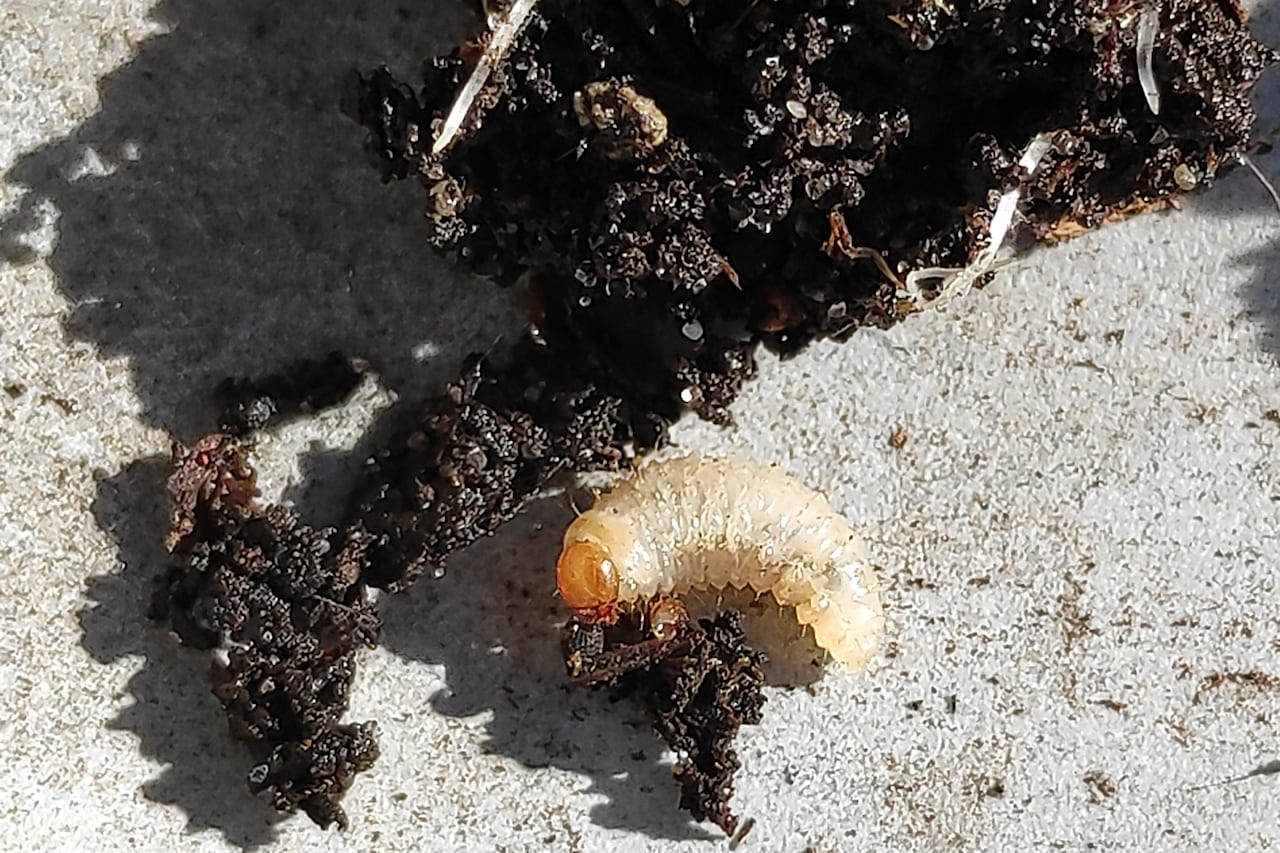
Larvae: Plump, C-shaped, white, legless larvae with light brown heads, up to 10mm long.
The larvae are what you find when you tip out a dead container plant: the C-shape and brown head are the identification.
Is this pest active now?
Adults: Summer: leaf notching
Larvae (the damaging stage): Autumn to spring: root damage, and the lethal stage
Symptoms
The visible damage is harmless and the lethal damage is invisible. Adults notch leaves conspicuously but barely matter; larvae kill plants underground with no warning until the plant wilts. Notched leaves in summer are effectively an early warning, months ahead, to check the roots before autumn.
Adults: Irregular-shaped notches in leaf margins during summer. Adults rarely cause enough damage to affect the vigour of plants.
Larvae: Plants can wilt and die during autumn to spring as a result of the larvae devouring the roots.
Life cycle
Adults notch leaves through summer; larvae devour roots from autumn to spring, which is when plants wilt and die.
Why this matters in Scotland
Plants growing in pots and containers, outdoors or under cover, are most likely to be severely damaged. Containers are also a standard response to poor drainage, which many Scottish gardens have plenty of.
Heavy, wet-holding soil is common enough in Scottish gardens that containers and raised beds are a routine workaround for it, not a special case. That means a Scottish grower is often pushed toward exactly the growing setup vine weevil exploits most, for reasons that have nothing to do with vine weevil at all.
Controls: what actually works
All the methods below are backed by real evidence, not just repeated folklore.
Biological control — pathogenic nematodes watered into the compost
Three nematode species are sold for this: Steinernema kraussei, Heterorhabditis megidis and H. bacteriophora.
Temperature ranges: Steinernema: 5-20C · Heterorhabditis: 12-20C
The two nematode species work at different soil temperatures. Steinernema species are active from 5-20C; Heterorhabditis species need a narrower 12-20C. Larvae do their damage from autumn to spring, when Scottish soil is at its coldest and least likely to hold 12C for long. A Heterorhabditis product applied then risks sitting below its working range for weeks at a time. Steinernema kraussei, active from as low as 5C, is the species with the wider margin for a Scottish autumn.
Tolerate adult leaf notching
RHS: 'Adults rarely cause enough damage to affect the vigour of plants.' The notching is cosmetic.
But treat the notches as a warning: they mean adults are present and laying, and the larvae are the stage that kills. Tolerate the damage, act on the signal.
Natural predators of vine weevil
Vine Weevil Nematodes eat vine weevil, and this site has a full page on how to get more of them in your garden.
Frequently asked questions
What should I do first if I find vine weevil in my garden?
Start with biological control — pathogenic nematodes watered into the compost. After that, tolerate adult leaf notching.
Will vine weevil kill my plants?
They rarely kill established plants. The damage is usually cosmetic on outer leaves, and natural predators often bring numbers under control without you doing anything.
When are vine weevil most active in Scotland?
Adults are active Summer: leaf notching; larvae do the main damage Autumn to spring: root damage, and the lethal stage. Scottish timings may lag behind UK-generic advice, so use the Frost Date Calculator to adjust for your region.
Should I just leave vine weevil alone?
In most gardens, yes. vine weevil are food for birds, wasps and predatory insects, and a healthy garden carries some without trouble. Tolerance is also RHS's official position now, for that same reason.
Sources
1 source, recorded with what each was used for
- RHS1: widespread in Britain, adult and larval identification, leaf notching vs root destruction, container vulnerability, affected ground-grown plants including strawberries, three nematode species with temperature ranges, no pesticide recommendation