
Raspberry Viruses is a common disease that affects raspberries, blackberries and tayberries in Scotland. Here is what it looks like, the conditions it needs, and the controls that actually work.
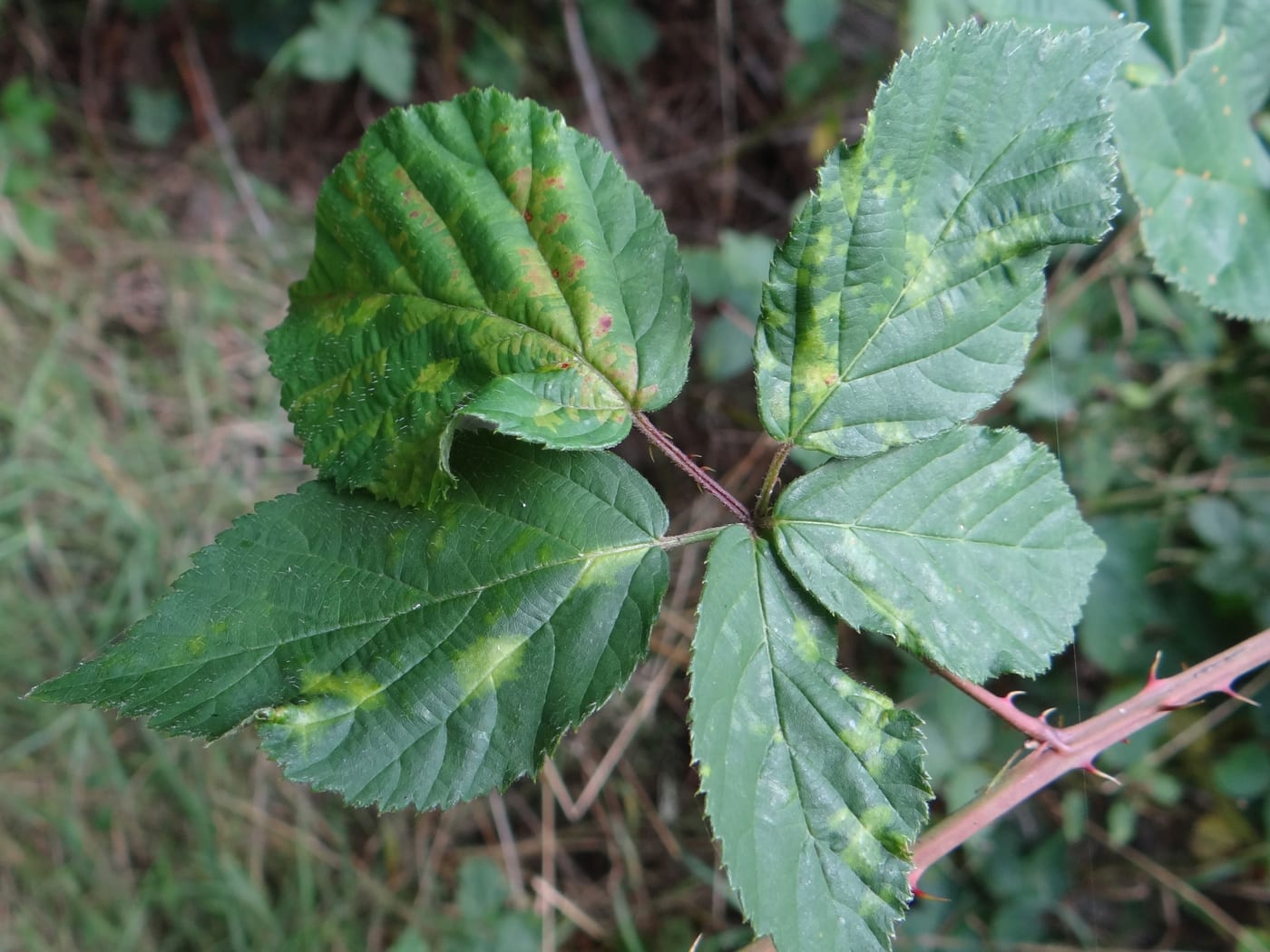
What does it look like?
Symptoms vary a lot depending on which virus or combination of viruses is present, the cultivarA plant variety that arose or was bred under cultivation and is kept true by deliberate propagation, rather than a naturally occurring wild species. Full definition →, and growing conditions, so no single sign confirms it on its own. The common UK viruses are Black raspberry necrosis virus, Raspberry bushy dwarf virus, Raspberry leaf blotch virus, Raspberry leaf mottle virus and Raspberry vein chlorosis virus. Look for yellow or pale green spotting, blotching, mottling or flecking on the leaves, yellowing along the leaf veins, leaves that curl or pucker, weak spindly shoots, stunted growth, reduced fruit production, and dry, crumbly fruit that fails to swell properly.
What causes it
Spread depends entirely on the vector rather than the weather. Most of the named viruses travel on aphids, feeding just long enough to pick up and pass on the virus between plants; a smaller number are spread by soil-dwelling nematodes, by pollen and seed, or simply on pruning tools and hands moving between infected and healthy canes.
This pest follows its vector’s activity rather than a fixed calendar.
Symptoms
The practical pattern to watch for is a planting that crops less and less over successive years despite otherwise normal care: canes get weaker, fruit gets smaller and drier, and yield keeps dropping. Canes can also become stiff, brittle and progressively shorter year on year under some of these viruses, matching the same declining pattern.
Life cycle
Aphid-vectored viruses spread whenever aphids are active and moving between plants, typically from spring through to autumn. Nematode-vectored viruses persist in the soil around infected roots even after the plants themselves are removed, which is why replanting on the same site is a specific risk in its own right.
Why this matters in Scotland
The large raspberry aphid, the main vector for several of these viruses, has evolved in Scotland to overcome the resistance genes bred into modern raspberry cultivars, so variety resistance alone can't be relied on the way it once could.
Controls: what actually works
All the methods below are backed by real evidence, not just repeated folklore.
Always buy plants certified as virus-free
The single most effective control, and the one RHS and UC IPM both lead with. Starting clean avoids the whole problem rather than managing it after the fact.
Destroy infected plants as soon as yield starts to fall
There's no cure once a plant is infected, and an infected plant acts as a source aphids can spread from, so removing it protects the rest of the planting as much as it deals with the individual plant. Burn or bin the removed material rather than composting it.
Remove wild brambles and wild raspberry canes growing near the cultivated planting
Wild canes can carry the same viruses without an owner noticing or managing them, acting as a permanent, unmanaged source aphids can spread from into a cultivated row nearby.
Avoid replanting cane fruit on the same site where a virus problem occurred
Nematode-vectored viruses persist in the soil around old roots even after the plants are gone, so a new planting on the same ground can become infected again before it's had a chance to establish.
Control weeds around the planting
Some weeds act as alternative hosts a virus can persist in between raspberry seasons, so keeping the area weed-free removes one more route back into the cultivated canes.
Sterilise pruning tools between plants
Some of these viruses spread on tools and hands moving between infected and healthy canes, so wiping secateurs with disinfectant between plants closes off one more transmission route.
Frequently asked questions
What should I do first if I find raspberry viruses in my garden?
Start with always buy plants certified as virus-free. After that, destroy infected plants as soon as yield starts to fall. Work through the rest in order of how well-evidenced they are if the first two aren’t enough on their own.
Is there a spray that works?
No. There are no amateur chemical treatments available for raspberry viruses. The controls that work are cultural: the measures listed above.
How much of this advice is actually proven?
Every control listed above is evidence-based, not just repeated folklore. None of it is a guess.
Sources
2 sources, recorded with what each was used for
- RHS1: affected crops, named UK viruses, vectors, symptoms, conditions, and the certified-stock/destroy/weed-control/no-replanting controls
- UC IPM16: independent corroboration of the disease category and vectors, named California viruses and symptoms, the wild-caneberry-removal control RHS doesn't name, and confirmation no pesticide is recommended