
Pea and Bean Weevils is a minor pest that affects peas and broad beans in Scotland. Here is what it looks like, how to spot the damage, and which controls have been tested.
What does it look like?
Adults are greyish-brown, 4-5mm long, and drop to the ground the moment they're disturbed, which makes them genuinely hard to actually catch in the act. Larvae are creamy white, legless grubs with pale brown heads, feeding out of sight underground on root nodules rather than on visible growth.
What causes it
Growth stage decides whether this feeding actually matters: a small seedling can genuinely be checked in its growth by heavy feeding, while an established plant shrugs off the same damage with no lasting effect. A seedling growing quickly through that vulnerable window outgrows the risk; one growing slowly stays exposed to it for longer.
Is this pest active now?
Adults are active and feeding from April to July, with one generation a year rather than several waves to track.
Symptoms
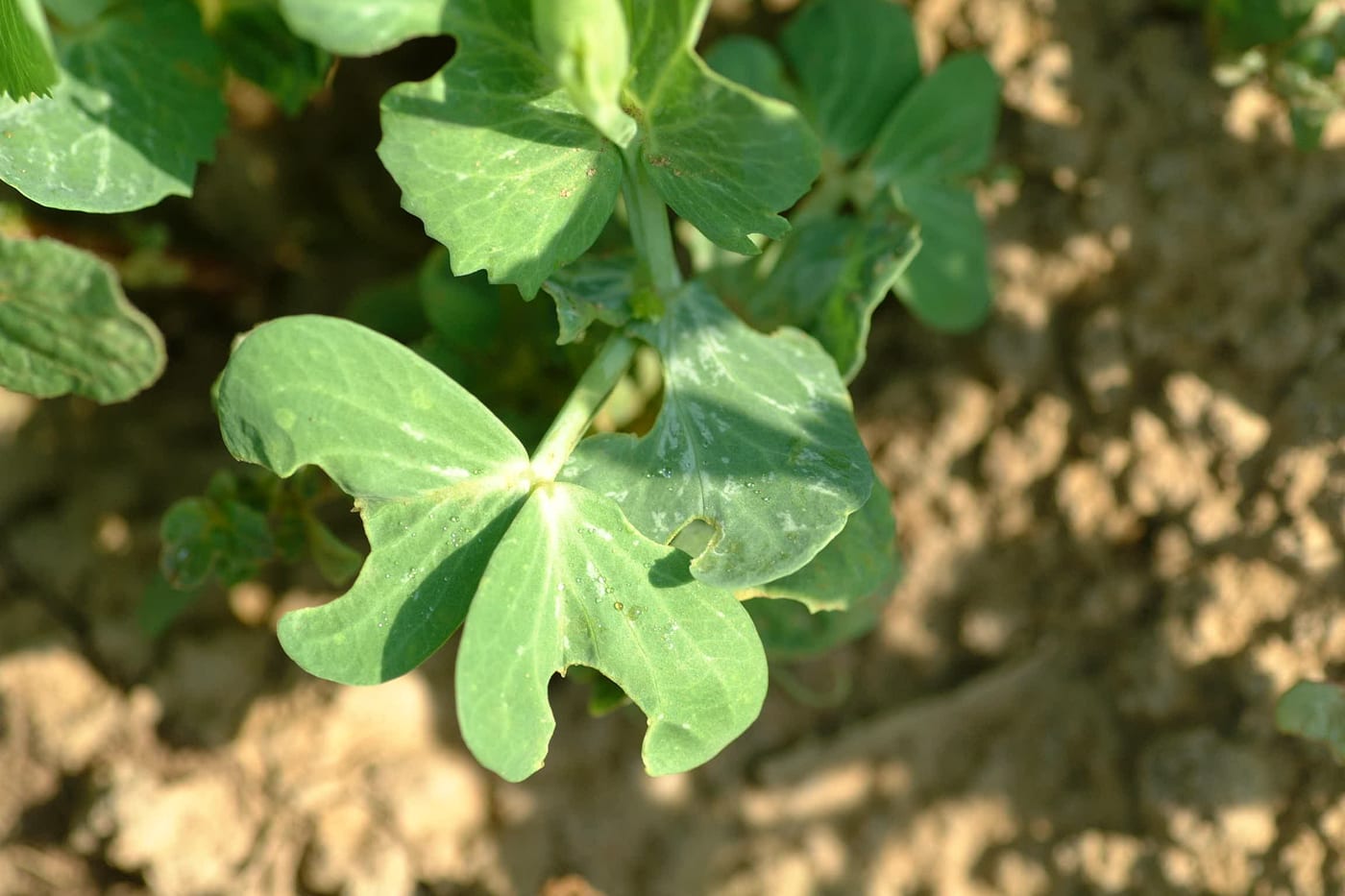
A series of U-shaped notches around the edges of leaves is the sign to look for. The actual leaf area lost is generally small on an established plant despite how extensive the nibbling can look; a small seedling is the exception, since the same amount of feeding costs it proportionally more.
Life cycle
Adults overwinterKeeping a plant alive and intact through the cold months, whether left outdoors, moved under cover, or stored dormant. Full definition → in sheltered places, then lay eggs in the soil near host plants in late spring. Larvae feed unseen on the root nodules that fix nitrogen for the plant, through summer, before pupating in the soil, and the next generation of adults emerges in late summer.
Why this matters in Scotland
A cooler Scottish spring works against the exact thing that protects a seedling from this pest: growing quickly through the vulnerable stage.
A slower start here means more weeks at the size where feeding can actually check growth, compared with a warmer spring further south. Watering well and an earlier, sheltered start under fleeceA lightweight, breathable fabric laid or draped over plants to trap a little warmth and keep off frost, wind and some flying pests. Full definition → or clochesA small, portable clear cover placed over an individual plant or short row to trap warmth and keep off wind, rain and pests. Full definition → both work directly against that longer window.
Controls: what actually works
All the methods below are backed by real evidence, not just repeated folklore.
Fleece or cloches: cover seedlings during their vulnerable stage
A cover gives seedlings both physical protection and an earlier start, so they're bigger and less exposed by the time it comes off.
Watering: keep seedlings well-watered to grow through it quickly
Healthy, well-watered seedlings grow faster through the stage where feeding can check their growth, so they spend less time exposed to it than a stressed or under-watered seedling would.
Tolerate notching on established plants
Seeing notched leaves on an established plant isn't a cue to reach for a spray or start treating it: there's no amateur chemical option for this pest anyway, and the plant is already coping fine on its own.
Frequently asked questions
What should I do first if I find pea and bean weevils in my garden?
Start with fleece or cloches. After that, watering. Work through the rest in order of how well-evidenced they are if the first two aren’t enough on their own.
Will pea and bean weevils kill my plants?
They rarely kill established plants. The damage is usually cosmetic on outer leaves, and natural predators often bring numbers under control without you doing anything.
When are pea and bean weevils most active in Scotland?
Check the seasonal activity section above. Scottish timings can run a few weeks behind the UK-generic figures.
Should I just leave pea and bean weevils alone?
In most gardens, yes. pea and bean weevils are food for birds, wasps and predatory insects, and a healthy garden carries some without trouble. Tolerance is also RHS's official position now, for that same reason.
Sources
1 source, recorded with what each was used for
- RHS1: identification, symptoms, the seedling-vulnerability mechanism, life cycle and overwintering, fleece and cloches, watering, tolerance on established plants, absence of a chemical control