
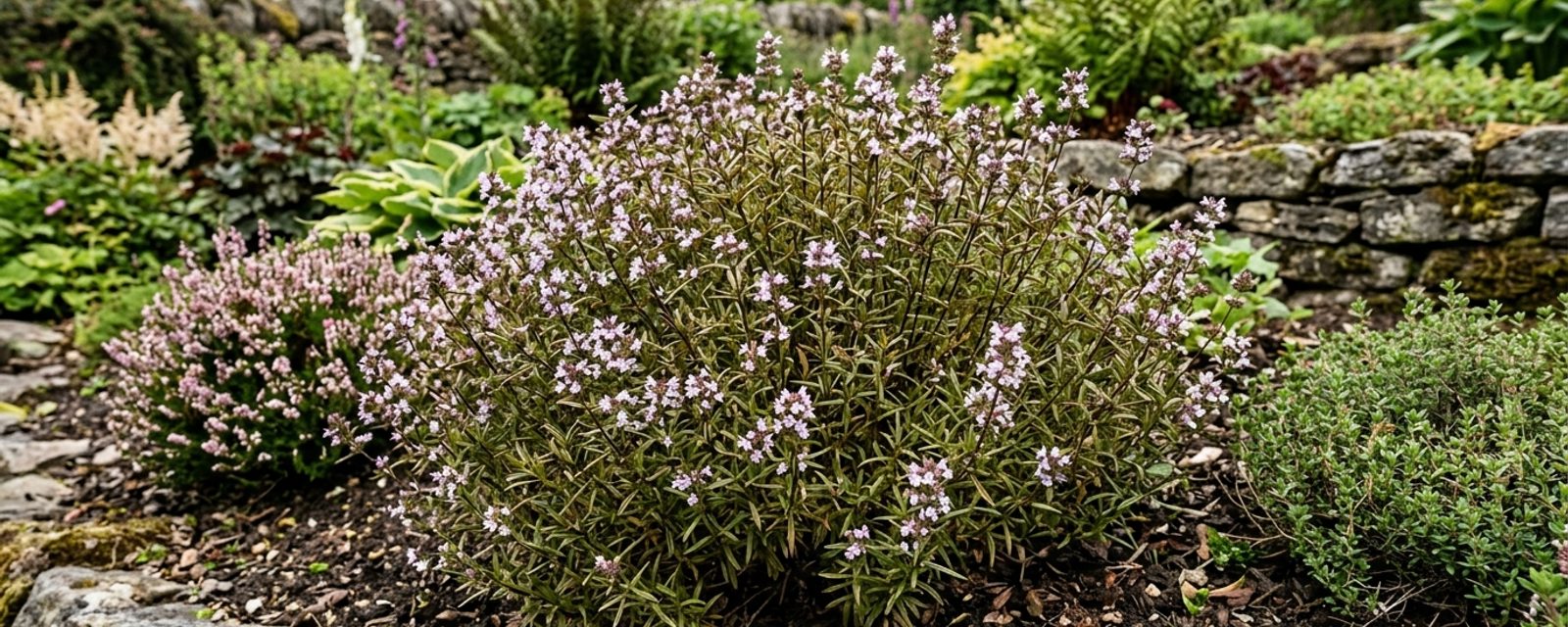
Satureja hortensis
Summer savory asks a genuinely different question of a Scottish garden than its perennial relative: not "will it survive winter," since it never has to, but simply whether the summer gave it enough sun and drainage.
This is an annual herb, not a shorter-lived version of winter savory: a genuinely different plant, with a milder, more delicate flavour close to thyme, traditionally used in bean and lentil dishes, stuffings and sausages, and a key ingredient in herbes de Provence. It lives for one summer, dies at the first autumn frost regardless of the winter that follows, and is grown fresh from seed each year.
Sowing and planting
Sow indoors in spring, scattering seed thinly on the compost surface without covering it, at around 20°C; it germinatesA seed sprouting: breaking dormancy and putting out its first root and shoot, given the right warmth and moisture. Full definition → in two to three weeks. Transplant once seedlings have several true leaves, hardening offGradually getting young plants raised indoors used to outdoor conditions over 7–14 days before planting out, so cold, wind and direct sun don't shock or damage them. Full definition → first, and plant out once the soil is starting to warm. Space plants at least 20cm apart; left to grow, a mature plant reaches about 45cm tall and 30cm wide. This is the one thing worth getting right, since there's no winter to make up for it later: choose a spot in full sun with light, well-drained soil, ideally on the alkaline side, and avoid damp ground or shade, where it does poorly. It grows just as well in a pot as in a bed, a genuine option for anyone without open ground.
Care through the season
Water regularly while plants establish, and keep the soil from drying out completely during a hot spell, though this isn't a thirsty plant once it's growing well. Feeding isn't necessary in reasonable soil. Regular harvesting of shoot tips keeps growth compact and encourages fresh leaves rather than early flowering.
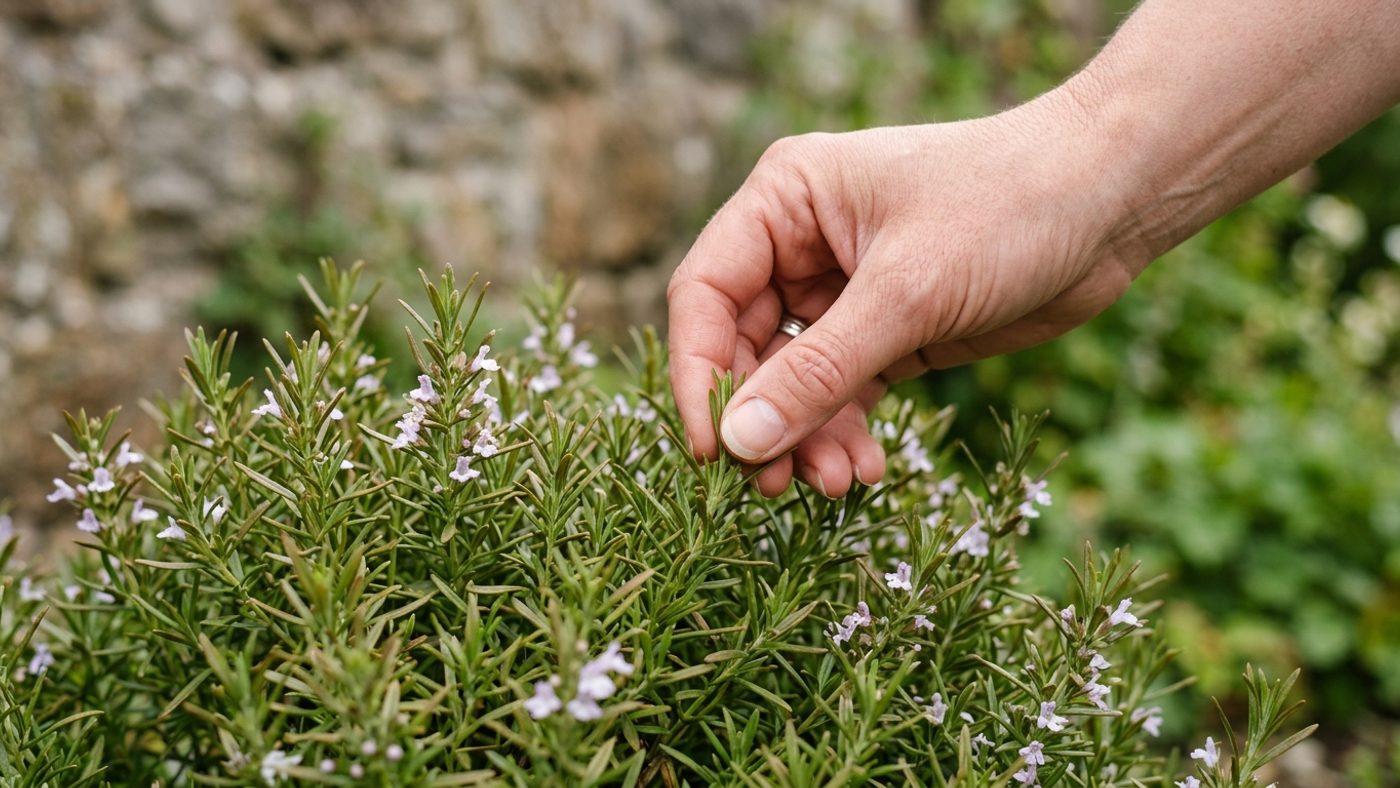
Its small lilac flowers are genuinely good for pollinators, rich in nectar and pollen and popular with bumblebees. This sits against the harvesting advice below to pick before flowering for the best flavour, so if you want both, keep pinching most plants for the kitchen and leave one or two unpinched to flower for the bees.
Harvesting
Begin picking once plants are established, from mid-summer, and continue until the first autumn frost kills the plant off. Flavour is best before flowering; cut back after the flowers appear and the plant usually produces a second flush of fresh leaves, extending the harvest into autumn. Leaves are best used fresh, or dried by hanging sprigs somewhere warm, dark and well-ventilated.
Growing it near broad beans
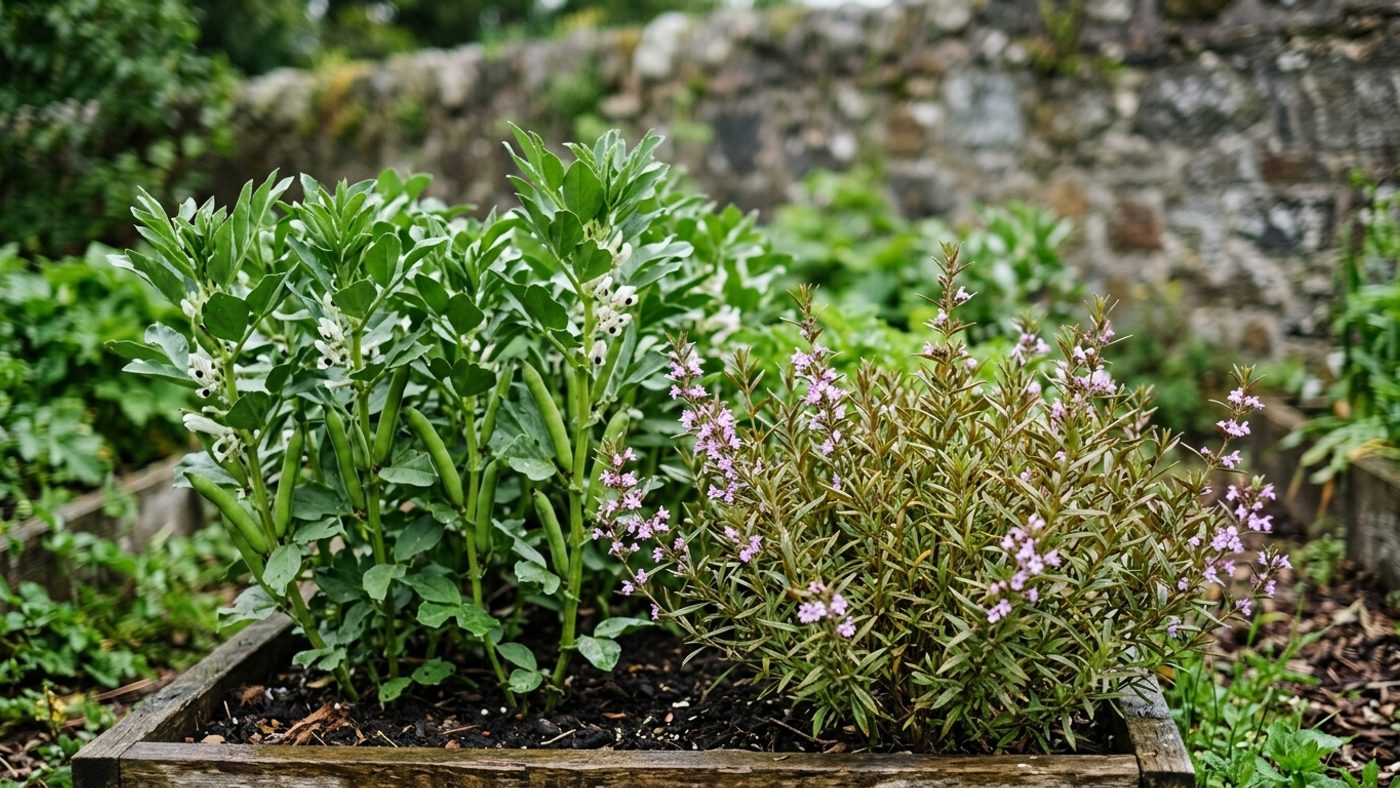
Summer savory is a traditional companion for broad beans: it's said to help deter aphids and, cooked together, to improve the beans' flavour. Treat this as folklore worth trying rather than a proven pest control, since it isn't a tested result.
Best Savory Varieties for Scotland → compares summer, winter and creeping savory head-to-head — no named cultivarsA plant variety that arose or was bred under cultivation and is kept true by deliberate propagation, rather than a naturally occurring wild species. Full definition → exist within summer savory itself, but which of the three species to grow is the real decision worth making first.
Common problems
Grown in warm, sunny, well-drained conditions, summer savory is generally healthy and trouble-free, with no specific pest or disease to watch for.
Common questions
Is summer savory just a shorter-lived version of winter savory?
No, a genuinely different plant: summer savory is a milder annual living one season, while winter savory is a hardier, longer-lived perennial with an earthier flavour. Milder is a flavour distinction, not a sign of being inferior. Full sourced breakdown: <a href="/tools/garden-myths/summer-savory/">Summer Savory Myths →</a>
Does summer savory need protecting over winter in Scotland?
No: as an annual it's grown fresh from seed each spring rather than kept alive from year to year, so there's simply nothing left to protect once autumn frost arrives.
Is it worth growing summer savory next to broad beans?
Unproven either way: no institutional source has tested it, so treat it as a low-risk extra rather than real blackfly control. Pinch outRemoving the soft growing tip of a stem to stop upward growth and make the plant branch out sideways instead. Full definition → broad beans' soft growing tips once the first pods set instead; that's the step with real evidence behind it. Full sourced breakdown: <a href="/tools/garden-myths/summer-savory/">Summer Savory Myths →</a>
When is the best time to pick summer savory leaves?
Before the plant flowers, when the flavour is at its best. Harvest from mid-summer once plants are established, and cut back after flowering: this usually triggers a second flush of fresh leaves you can pick into autumn, right up until the first frost kills the plant off.
Sources
2 sources, and what each was used for
- RHS: annual habit, sowing method and timing, site/soil, spacing, harvest window and method, flavour notes relative to winter savory, pest/disease-free status
- gardenersworld.com: a genuinely independent second growing guide for this species specifically: mature size (45cm x 30cm), pH direction (alkaline), corroborates spring sowing and full sun/free drainageSoil that lets water pass through quickly rather than pooling, so roots aren't sitting in wet ground after rain. Full definition →, June-October harvest window, and the companion-planting claim with broad beans (aphid deterrence, flavour), plus pollinator value (bees, nectar/pollen-rich flowers)