
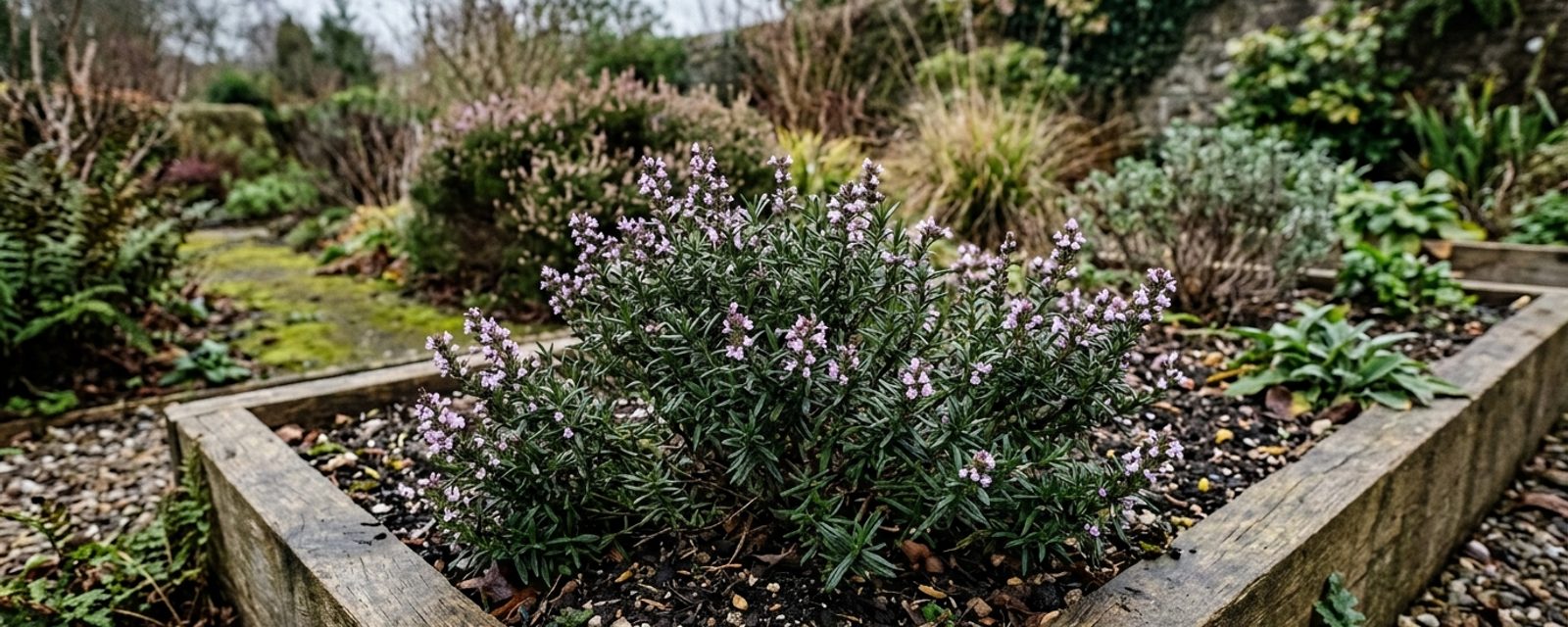
Satureja montana
Winter savory is a genuinely different plant from summer savory, not just another name for it, carries a real H5 hardiness ratingThe RHS's H1a–H7 scale for how much cold a plant can survive outdoors, H1a being tender indoor-only and H7 hardy anywhere in the UK. Full definition →, and asks for less upkeep than almost any other herb.
It's a semi-evergreen perennial with an earthy, peppery flavour, hardy throughout most of the UK. Like thyme, sage and oregano, the real work in a Scottish garden is getting the drainage right, not fighting the cold.
Choosing a type
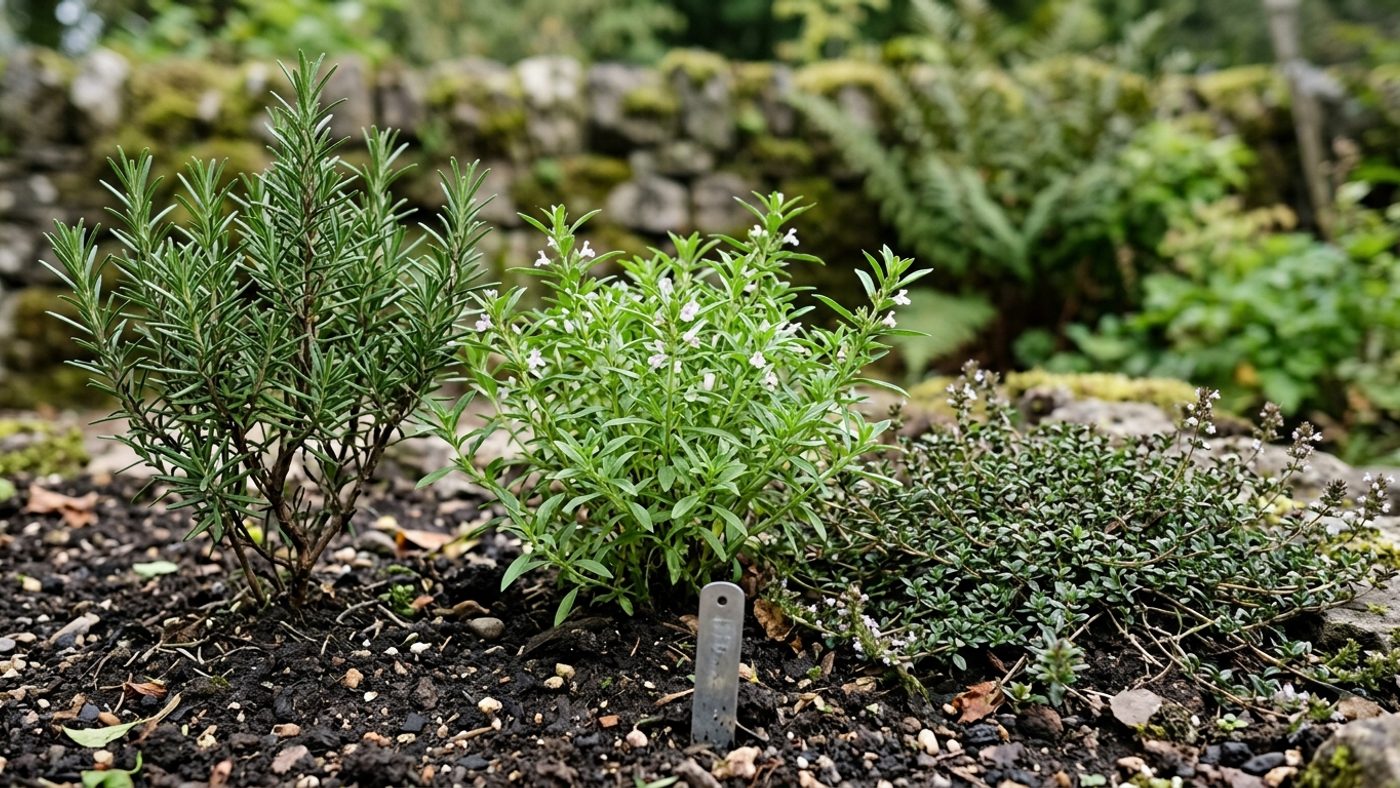
Winter savory is the perennial of the three savory types: semi-evergreen, hardy, and picked most or all year in milder regions. Summer savory is an annual with a milder, more delicate flavour, traditionally a key ingredient in herbes de Provence, lasting one season before it's composted. A third type, creeping savory, is a low, spreading perennial ground cover with a strong, spicy flavour. For a permanent bed plant, choose winter savory; for the milder traditional flavour, grow summer savory fresh each year — see its own guide for the full growing detail.
Site and soil
Choose a spot in full sun with free-drainingSoil that lets water pass through quickly rather than pooling, so roots aren't sitting in wet ground after rain. Full definition → soil, ideally on the alkaline side; avoid waterlogged conditions in the ground or in containers. Space plants at least 20cm apart. For containers, use a minimum 20cm wide and deep pot with peat-freeCompost made without peat, which is harvested from a slow-forming, carbon-storing wetland habitat that peat extraction damages. Full definition → soil-based compost mixed with up to 25% horticultural grit.
Sowing and planting
Sow indoors in spring: scatter seed thinly on the compost surface without covering, at around 20C; it germinatesA seed sprouting: breaking dormancy and putting out its first root and shoot, given the right warmth and moisture. Full definition → in two to three weeks. Transplant once seedlings have several leaves, hardening offGradually getting young plants raised indoors used to outdoor conditions over 7–14 days before planting out, so cold, wind and direct sun don't shock or damage them. Full definition → first, and plant out in spring once the soil is starting to warm.
Care through the year
Water newly planted savory through its first year until established; after that, it's drought-tolerant, though container plants need watering through dry spells. Skip feeding on open ground entirely, since savory should thrive even in poor soil; container plants over a year old can take a general-purpose granular feed in late spring or early summer. Regular harvesting of shoot tips keeps plants compact. Trim summer savory after flowering for a fresh autumn flush, remove faded flower stems on winter and creeping savory for tidiness, and give winter savory a light spring prune to prevent straggly growth.
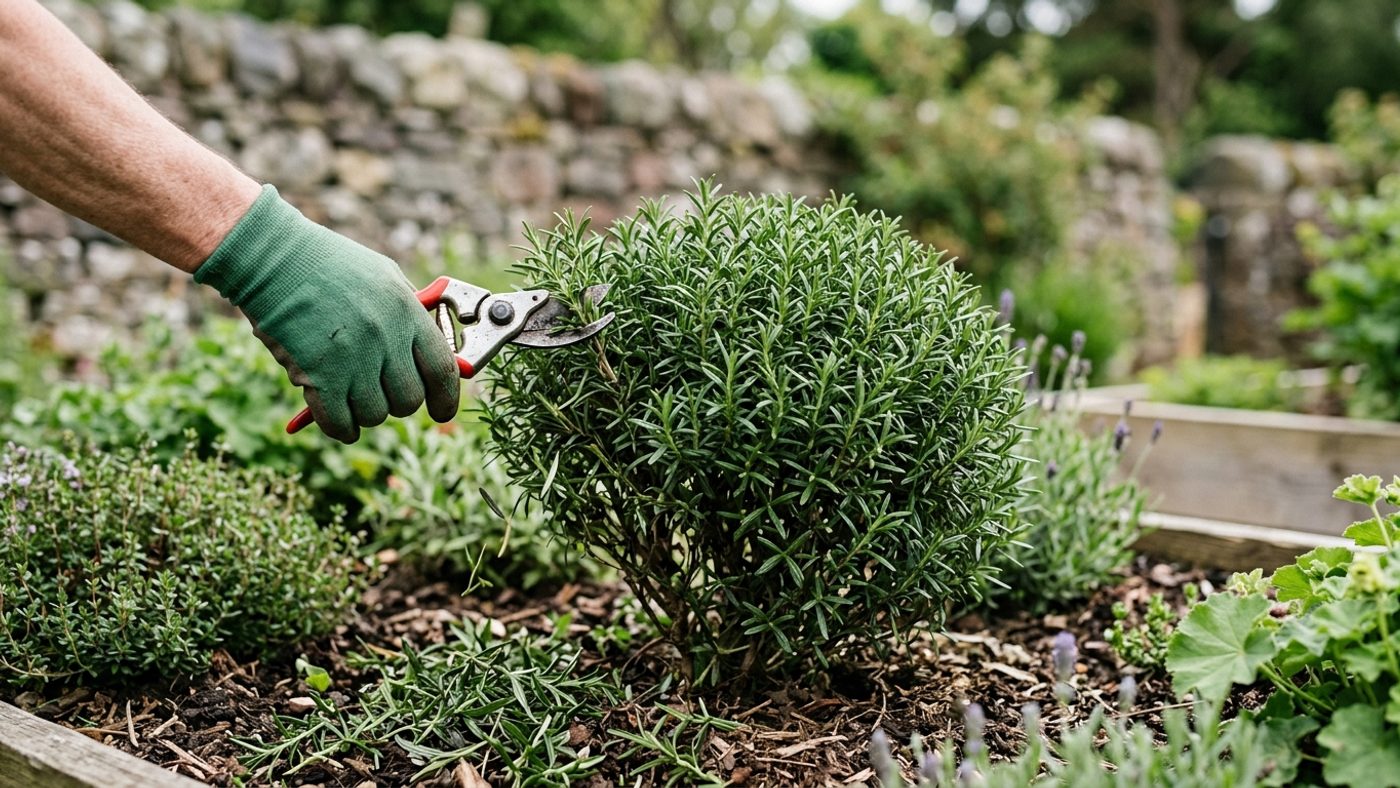
Propagate from softwood cuttings taken from summer's new growth, or by layeringPropagating a new plant by pinning a low, flexible stem into the soil while still attached to the parent, so it roots before being cut free. Full definition → stems in spring or autumn; savory can also self-seed.
Winter
Growth slows or stops over winter, though winter savory keeps its leaves except in very cold weather. Container plants benefit from a bright, cool, frost-free spot such as a greenhouse or porch for continued leaf production; in high-rainfall regions, ground plants may need a well-ventilated clocheA small, portable clear cover placed over an individual plant or short row to trap warmth and keep off wind, rain and pests. Full definition → against excess winter rain. Summer savory is an annual and doesn't survive winter at all: compost spent plants in autumn and regrow from seed each spring.
Harvesting
Begin once plants reach about 10cm tall. Winter and creeping savory can be picked most or all year, with reduced growth over winter; summer savory is harvested from mid-summer until it dies off in autumn frost, with the best flavour before it flowers. Leaves are best used fresh, stripped and finely chopped, or dried by hanging sprigs somewhere warm, dark and well-ventilated.
Varieties
Three types exist in total (summer, winter, creeping savory). None carries AGMThe RHS's Award of Garden Merit: a UK-wide trials award for reliable performance, not a Scotland-specific recommendation. Full definition →; winter savory's genuine H5 hardiness rating is the real distinguishing fact instead. Creeping savory, a low ground-cover form with a strong, spicy flavour, is a decorative ground-cover type rather than a main culinary pick.
★ Our pick for Scotland
Winter savory (the species)
Satureja montana · semi-evergreen perennial · H5
The perennial of the three savory types, with an earthy, spicy flavour and a genuine H5 hardiness rating.
Why this one: No AGM award exists for any savory. Winter savory is the realistic default for a Scottish garden wanting a reliable outdoor perennial, backed by a genuine H5 rating.
Also worth considering
Summer savory
Satureja hortensis · annual · milder flavour
A genuinely different plant, not just a variant: an annual with a milder, more delicate flavour than winter savory, traditionally a key ingredient in herbes de Provence, for a gardener who prefers that milder taste over year-round hardiness.
Best Savory Varieties for Scotland → compares all named savory varieties head-to-head, with the practical detail that doesn't fit in a summary card.
Common problems
Savory grown in warm, sunny, well-drained conditions is generally healthy and trouble-free, with no specific pests or diseases named at all.
Common questions
Are winter savory and summer savory really different plants?
Yes, genuinely different: summer savory is a milder annual lasting one season, while winter savory is a semi-evergreen perennial with an earthier, spicier taste that lives for years. They aren't interchangeable. Full sourced breakdown: <a href="/tools/garden-myths/winter-savory/">Winter Savory Myths →</a>
Does winter savory need feeding?
No: grown in the ground, savory doesn't need feeding at all and should thrive even in poor soil. Only container plants over a year old benefit from an occasional feed. Full sourced breakdown: <a href="/tools/garden-myths/winter-savory/">Winter Savory Myths →</a>
Is winter savory prone to pests or disease?
No: no specific pests or diseases are named for savory; plants grown in warm, sunny, well-drained conditions are generally healthy and trouble-free. Full sourced breakdown: <a href="/tools/garden-myths/winter-savory/">Winter Savory Myths →</a>