
Leek moth tunnels into leeks, onions and shallots, but whether it’s actually established in Scotland yet is genuinely uncertain: it’s mainly a southern English pest that’s spreading north. Here is what it looks like, so you can recognise it if it does turn up, and the controls that actually work if it has.
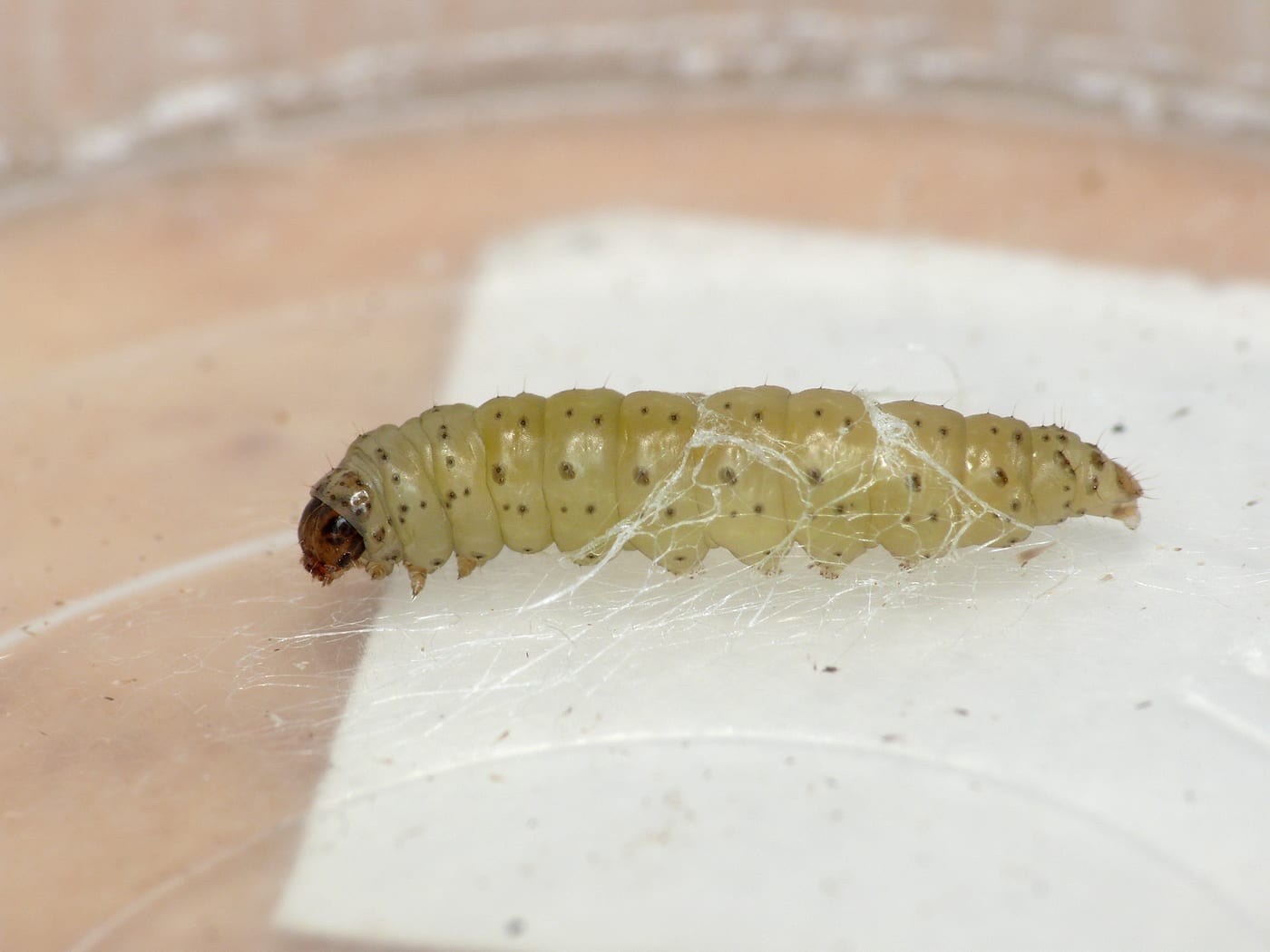
What does it look like?
Adults: Small, inconspicuous brown moths, 5-6mm.
Caterpillars: Creamy-white with brown heads and small legs, reaching 11mm when fully grown.
Is this pest active now?
May to June: First generation
August to October: Second generation, the more numerous
These are UK-generic timings. Scottish onset may differ. Use the Frost Date Calculator to adjust for your region.
Symptoms
White patches on foliage where caterpillars consume the internal tissues; tunnels in stems and bulbs; secondary rots developing; and young plants sometimes killed outright.
Life cycle
Two generations a year, with larvae feeding on plants in May to June and August to October. The second generation is the more numerous. Caterpillars mine foliage before boring into stems and bulbs, pupate in silk cocoons on the foliage, and adult moths overwinterKeeping a plant alive and intact through the cold months, whether left outdoors, moved under cover, or stored dormant. Full definition → in sheltered locations.
Why this matters in Scotland
That's not the same as saying it's absent from Scotland altogether, though.
Nobody has actually mapped where the northward spread has reached, so probably not yours yet, but worth watching for, is the more honest position than either extreme. If it does turn up, the same mesh and hand-picking measures that work further south work here too.
Controls: what actually works
All the methods below are backed by real evidence, not just repeated folklore.
Insect-proof mesh covering plants throughout the growing season
Cover with insect-proof mesh for the growing season. Crop rotationMoving each crop family to different ground each year, on a multi-year cycle, so pests and diseases that build up in soil don't get a repeat host. Full definition → is essential alongside it: mesh laid over ground that already holds overwintering moths traps them in with the crop.
A physical barrier the moth simply can't get through works regardless of how effective any other control is, which is why it's worth doing even against a pest that may not have reached your area yet.
Encourage natural predators — ground and rove beetles
Search for and crush the white silk cocoons on foliage
Natural predators of leek moth
These 2 creatures eat leek moth, and each has its own page here on how to get more of them in your garden: what to plant, or what to order and when.
Frequently asked questions
What should I do first if I find leek moth in my garden?
Start with insect-proof mesh covering plants throughout the growing season. After that, encourage natural predators — ground and rove beetles. Work through the rest in order of how well-evidenced they are if the first two aren’t enough on their own.
Will leek moth kill my plants?
They rarely kill established plants. The damage is usually cosmetic on outer leaves, and natural predators often bring numbers under control without you doing anything.
When are leek moth most active in Scotland?
Check the seasonal activity section above. Scottish timings can run a few weeks behind the UK-generic figures.
Sources
1 source, recorded with what each was used for
- RHS1: adult and caterpillar identification, affected alliums, damage, two generations with May-June and August-October timings, overwintering, southern England distribution and northward spread, comparison with allium leaf mining fly, mesh with rotation, ground and rove beetles, crushing cocoons