
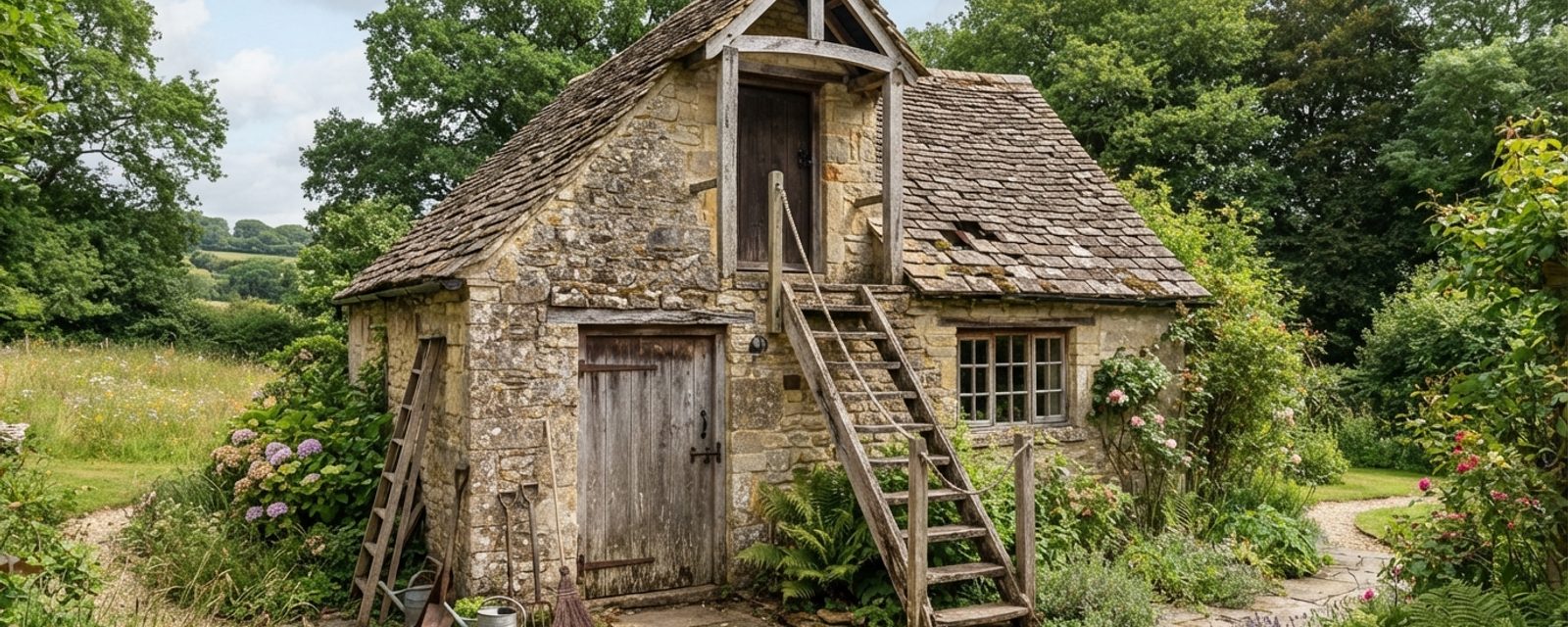
You're three days into ripping out the base of an old garden shed, or you've opened up the loft to convert it, or you've started draining the pond that's been silting up for a decade, and you've just found something. Droppings and a faint ammonia smell in the roof void. A newt in the pond mud. A sett-shaped hole under the hedge line that definitely wasn't there when you last looked closely. A nest, mid-build, in the eaves you were about to strip out.
Work has stopped, and the question is not "is this a problem for my project", it's "am I now breaking the law by continuing." The honest answer is: it depends what you've found, and in some cases, yes, continuing without a licence would be a criminal offence. This is a guide to the general legal framework that applies across Scotland when that happens, who to contact, and what the licensing process actually involves.
NatureScot is Scotland's devolved nature conservation regulator, the body responsible for licensing wildlife-related work in Scotland, separate from Natural England (which covers England) and Natural Resources Wales. Everything below applies to Scotland specifically; figures and processes from English or Welsh guidance don't transfer directly.
The short version: most garden work never triggers this
Ordinary gardening, digging beds, cutting hedges outside the main bird nesting period (broadly March to August, though what actually matters legally is whether a nest is in active use, not a fixed calendar date), clearing undergrowth, general maintenance, does not require a licence and rarely brushes up against wildlife law at all. This regime exists for a specific, narrower situation: a protected species or the physical structure it depends on (a roost, an active nest, a sett) has actually been found, work cannot proceed without disturbing or damaging it, and there is no way to simply work around it. If you can shift the job, delay it, or route around what you've found, you probably don't need a licence at all, you just need to not disturb it. Licensing is for the cases where avoidance genuinely isn't possible.
Which species actually come up in Scottish garden and building work
Several separate legal regimes apply, not one uniform rule. The species most likely to be found unexpectedly during ordinary domestic building or garden work in Scotland, and the law that protects each, are:
| Species | Legal basis | What's protected |
|---|---|---|
| Bats (all UK species) | Conservation (Natural Habitats, &c.) Regulations 1994, Regulation 39 | The animals themselves, plus roosts, protected even when unoccupied |
| Great crested newts | Conservation (Natural Habitats, &c.) Regulations 1994, Regulation 39 | The animals, their breeding ponds, and resting places |
| Wild birds' active nests | Wildlife and Countryside Act 1981 (as amended for Scotland), Section 1 | Nests while being built or in use; eggs; the birds themselves |
| Badgers and their setts | Protection of Badgers Act 1992 (as amended for Scotland) | Setts currently in use, and the animals |
| Red squirrels | Wildlife and Countryside Act 1981, Schedules 5 and 6 (as amended for Scotland) | The animals and their dreys (nests) |
| Otters | Conservation (Natural Habitats, &c.) Regulations 1994, Regulation 39 | The animals, plus holts and other resting places, protected even when unoccupied |
| Water voles | Wildlife and Countryside Act 1981, Schedule 5 (as amended for Scotland) | Burrows and other places of shelter only, see note below |
| Adder, slow-worm, common lizard | Wildlife and Countryside Act 1981, Schedule 5 (as amended for Scotland) | Killing or injuring the animal (no habitat protection, no licence to permit it) |
| Pine martens | Wildlife and Countryside Act 1981, Schedules 5 and 6 (as amended for Scotland) | The animals, plus den sites, protected even when unoccupied, except inside an occupied dwelling house |
A note on great crested newts specifically: they're genuinely rare in Scotland, NatureScot-commissioned survey work puts the total number of known sites across the whole country at under 150, concentrated in Dumfries and Galloway, the Lothians, the Borders, and pockets around Inverness (with the Highland population understood to be a distinct, likely native population, genetically separated from the rest of Britain for thousands of years). If you're not in one of those areas, a newt in your pond is far more likely to be a smooth or palmate newt, neither of which carries this level of protection. If you're unsure which species you've got, that uncertainty is itself a reason to get a professional identification before draining or filling anything in.
Otters and water voles are worth flagging separately for anyone working on a pond, burn, ditch or riverbank feature specifically, since that's the context they most often turn up in rather than a shed base or loft. A holt (an otter's den, often a hole in a bank or under tree roots) is protected on the same European Protected Species basis as a bat roost, including while unoccupied. Water voles are a genuine oddity in Scots law: their burrows and other places of shelter are protected under the Wildlife and Countryside Act 1981, but in Scotland that protection currently covers the burrow, not the animal itself, unlike bats, otters and great crested newts. Disturbing or damaging an occupied burrow is still an offence; it's the animal in the open that isn't separately protected here, a genuine difference from the rest of the table.
Reptiles turn up in a different context again: log piles, compost heaps, rockeries and overgrown ground being cleared. Adders, slow-worms and common lizards are protected against intentional or reckless killing or injury, but, unlike every other species in the table, there's no habitat protection and no licence route that permits killing or injuring one; the only way to work legally around reptiles is to avoid harming them in the first place, usually by having someone experienced check and clear the area by hand before machinery or heavy disturbance starts. Pine martens are increasingly found denning in roof spaces and outbuildings, particularly in rural and Highland Scotland, and their den sites carry the same protection-when-unoccupied principle as a bat roost or otter holt, with one domestic-specific exception: the law doesn't apply to disturbing a pine marten inside an occupied dwelling house, though damaging or destroying the den structure itself is a separate matter.
For what counts as disturbance, the "roost protected even when empty" rule, and how to contact NatureScot's Bats in Houses service, see the bat-friendly gardens guide.
The legal thresholds aren't the same for every species
These aren't interchangeable rules with different penalties boltedA plant switching early into flowering and seed production, usually triggered by stress, after which leaves, roots or bulbs turn bitter or unusable. Full page → on, the underlying tests differ by regime:
| Legal regime | Covers | Offence threshold |
|---|---|---|
| European Protected Species (Regulation 39) | Bats, great crested newts, otters | Deliberately or recklessly capture, injure, kill or disturb the animal; or damage/destroy/obstruct access to its breeding or resting place, the strictest of the three regimes |
| Wildlife and Countryside Act 1981, Section 1 | Wild birds' active nests | Intentionally or recklessly take, damage or destroy a nest while in use or being built, or take/destroy eggs |
| Protection of Badgers Act 1992, Section 3 | Badger setts | Intentionally or recklessly damage, destroy, obstruct or disturb a sett currently in use, or cause a dog to enter it |
| Wildlife and Countryside Act 1981, Schedules 5/6 (as amended for Scotland) | Red squirrels, water vole burrows | Intentionally or recklessly kill, injure or disturb a red squirrel or its drey; for water voles, damage or disturb the burrow only |
A few extra points worth knowing before you rely on the table above. For bats and great crested newts specifically, a roost or resting place is protected whether or not the animal is using it at the time you disturb it, the law protects the structure, not just whoever's currently living in it. The Scottish version of the Wildlife and Countryside Act 1981 also extends the England and Wales nest-protection wording by adding "recklessly" alongside "intentionally," and protection is tied to a nest being actively in use or under construction, not to birds generally visiting your garden. For badgers, NatureScot's own licensing guidance uses a 30-metre buffer around a sett entrance as the distance within which development work is treated as capable of causing interference, extended further for more disruptive work such as piling or blasting.
When you actually need a NatureScot licence
Once avoidance genuinely isn't an option, NatureScot decides whether to grant a licence against a three-part test derived from the underlying regulations (this "three tests" structure applies specifically to European Protected Species licensing under Regulation 44, bats and great crested newts, and NatureScot's other species licences work on a comparable but not identical basis):
- Purpose, the work must fall within a purpose the law recognises as licensable. For private building and development work, this is typically preserving public health or safety, or overriding public interest reasons including social or economic benefit, an ordinary loft conversion or extension generally qualifies as this kind of legitimate development purpose; the test isn't aimed at screening out routine home improvement, it's aimed at the other two tests below.
- No satisfactory alternative, NatureScot must be satisfied there's genuinely no other way to achieve what you need that would avoid the impact.
- Favourable conservation status, the licensed activity must not be detrimental to maintaining the species at a favourable conservation status in its natural range.
A licence application that doesn't survive all three tests will be refused, completing the paperwork is not the same as being granted the licence, and NatureScot treats licensing as a last resort after avoidance and mitigation, not a routine formality.
What actually happens, step by step
One shortcut worth knowing before the full process below: NatureScot publishes General Licences covering a small set of specific birds and purposes, for example, removing an active nest of certain species like feral pigeon or herring gull where it's genuinely a public health or safety problem. Where a General Licence covers your exact situation, it can be relied on directly without an individual application. Most garden birds aren't on a General Licence for this purpose, though, so the full process below is the one that applies to the great majority of nest, roost and sett finds.
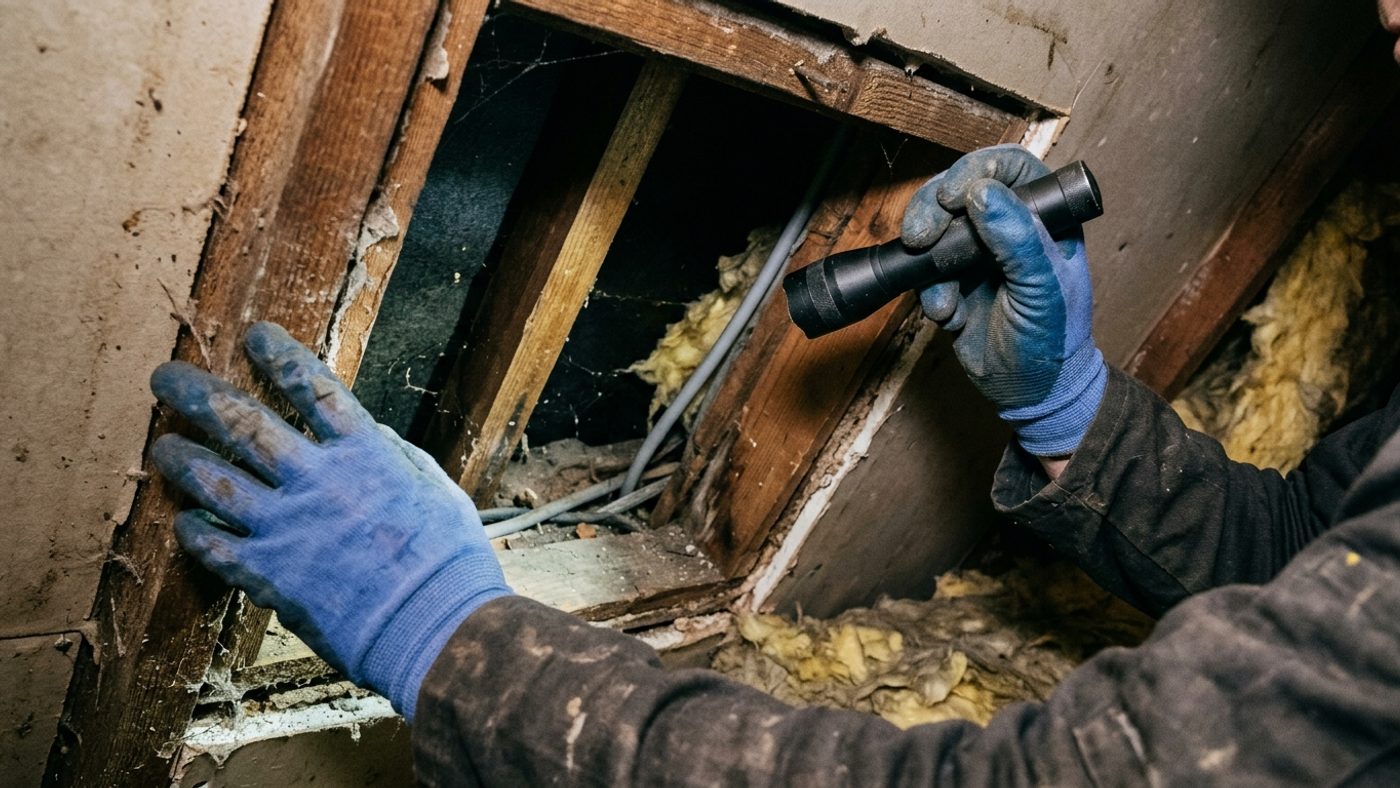
- Stop work in the affected area. Not necessarily the whole site, but stop anything that would disturb, damage or destroy what you've found.
- Get it identified properly, by someone qualified to do it. For bats, this usually means a licensed bat surveyor carrying out a Preliminary Roost Assessment, and, if that assessment can't rule out a roost, further survey work timed to the species' active season, since bats can't be reliably surveyed for presence/absence in winter. Great crested newt surveys are similarly season-locked, generally only viable in spring and early summer when the species is breeding and detectable in the pond itself. For badgers, an ecologist confirms whether a sett is currently in use. NatureScot's own species licensing pages list what a surveyor needs to hold to work legally with a given species, check that before engaging anyone, rather than assuming a general ecologist is automatically qualified for every species. Do not attempt to disturb, handle, or move any of these species yourself to "check", doing so risks committing the offence you're trying to avoid.
- Get a mitigation plan drawn up, usually by the same ecologist or surveyor, setting out how the work will avoid, minimise or compensate for the impact, timing works outside a sensitive period, providing replacement roosting or nesting features, exclusion and one-way methods to let animals leave a structure safely before work proceeds, and so on.
- Apply to NatureScot. Not every licence needs a long formal application, NatureScot's guidance notes that for some licences, an email with the required supporting information is enough, and each species' licensing guide sets out exactly what's needed for that species. General enquiries and applications go through NatureScot's Licensing Team on 01463 725364, or email [email protected]. Applications for development-related work should generally wait until the necessary planning permissions are already in place.
- NatureScot assesses the application against the relevant tests and either grants the licence (often with specific conditions attached, timing restrictions, methods, monitoring, reporting), asks for more information, or refuses it.
- Work proceeds under licence conditions, typically supervised by the ecologist who prepared the mitigation plan, with any reporting the licence requires completed afterwards.
On timescales: NatureScot's own guidance for bat licences indicates applications can take up to around eight weeks to process, though many are quicker; other species vary by complexity and time of year. The bigger constraint in practice is usually the survey season, not the application itself, since bat emergence and re-entry surveys only run in the warmer months and hibernation surveys only in winter, a bat roost found outside the right survey window can mean waiting for the next season before a licence application is even possible. Found bats in a loft in October, for example, and the realistic timeline is: no useful survey until the following spring or summer, then the roughly eight-week licence turnaround on top, the affected part of the project is genuinely on hold for the best part of a year, not weeks. Build in a real buffer, and start the survey and application process as early as possible once you know a protected species is involved.
On cost: NatureScot does not generally charge for the licence application itself. The real cost sits with the professional survey and mitigation work, which depends on the species, how many survey visits a season requires, and site complexity. Get quotes directly from a licensed surveyor or ecologist once you know what you're dealing with.
What if you just carry on anyway
Continuing work that disturbs, injures, kills, or damages the resting place of a protected species, or interferes with a sett or an active nest, without a licence where one was required is a criminal offence, and the maximum penalties in Scotland are not trivial. Following the Animals and Wildlife (Penalties, Protections and Powers) (Scotland) Act 2020, the most serious offences under Regulation 39 (covering bats and great crested newts) and under the Protection of Badgers Act 1992 can now be tried either summarily or on indictment:
| Conviction route | Maximum prison term | Maximum fine |
|---|---|---|
| Summary | 12 months | £40,000 |
| Indictment | 5 years | Unlimited |
Actual prosecutions are relatively uncommon, and most incidents that come to light are resolved through advice, warnings, or requirements to put mitigation in place after the fact rather than through court. Scottish Government wildlife crime statistics for 2024–25 recorded 8 bat persecution offences and 20 badger persecution offences nationally (14 of the badger offences involving digging, damage or obstruction of setts), small numbers nationally, and where a conviction does follow, a fine is the most common outcome, averaging roughly £3,075 for badger offences in the same report. Those figures describe offences that were investigated and recorded, not the outcome for someone who does the right thing: the legal exposure above attaches to continuing work regardless of what's been found, not to finding something in the first place. Stopping, getting a proper survey, and applying for a licence is the route that keeps a project out of these statistics altogether.
The practical difference between the two outcomes above usually comes down to a few days at the start of a project: whether work stopped the moment something was found, or carried on regardless in the hope it wouldn't matter.
Common questions
I've found a bat in my loft during a conversion, do I have to call NatureScot myself, or can my builder just deal with it?
Stop work in that part of the loft and get a licensed bat surveyor involved before anyone (builder included) disturbs the area further. The surveyor will confirm whether it's an active roost and, if so, guide you through survey and licensing. NatureScot's Bats in Houses advice service is the first port of call, see the bat-friendly gardens guide for that contact route.
We're filling in an old, overgrown pond, do we need to check for great crested newts first?
Only if you're in an area where they're known to occur, mainly Dumfries and Galloway, the Lothians, the Borders, and parts of the Highlands around Inverness. Elsewhere in Scotland, any newts you find are far more likely to be smooth or palmate newts, which don't carry the same legal protection. If you're unsure or in a known area, get an ecologist to check before draining or filling.
I found an old badger hole but haven't seen a badger in years, is it still protected?
The law protects setts that show current signs of use, not every historic hole. Signs of use include fresh digging, bedding material, well-worn paths, or spoil heaps at the entrance. If it looks disused, get a professional opinion before assuming it's safe to disturb, the "currently used" test is a factual question, not a guess.
How much does a NatureScot licence actually cost?
NatureScot does not generally charge a fee for the licence application itself; the real cost is the professional survey and mitigation plan work, which varies by species, site complexity and time of year needed for surveys.
Can I get in trouble if I genuinely didn't know a protected species was there?
The offences under Regulation 39 and the Protection of Badgers Act generally require the act to be done "deliberately or recklessly", genuine, reasonable lack of awareness is a different legal position from knowingly proceeding. That said, once you've found something, continuing without checking is no longer a case of not knowing.
Does this apply to small domestic projects, or only large developments?
It applies regardless of project size, the law doesn't have a size threshold. A homeowner converting a single loft or filling in a garden pond is subject to exactly the same protections and licensing requirements as a commercial developer, though the scale of survey and mitigation work will usually be proportionate to the scale of the job.
Sources
17 sources, recorded with what each was used for
- Conservation (Natural Habitats, &c.) Regulations 1994, Regulation 39: Offence wording covering bats and great crested newts, including roost-protection-when-unoccupied
- Wildlife and Countryside Act 1981, Section 1, as amended for Scotland: Nest protection thresholds and the Scotland-specific "recklessly" addition
- Wildlife and Countryside Act 1981, Schedule 5: Red squirrel, water vole, reptile and pine marten protected-species status
- Protection of Badgers Act 1992, Section 3: Sett-interference offence wording and the Scotland-specific amendment
- Animals and Wildlife (Penalties, Protections and Powers) (Scotland) Act 2020, Explanatory Notes: Current maximum penalties under Regulation 39 and the Protection of Badgers Act 1992
- NatureScot: European protected species licensing: The three-tests licensing framework
- NatureScot: Guidance note for application for a licence relating to European Protected Species: Application process (email-based applications, species-specific guides)
- NatureScot: Badgers and licensing: The 30-metre sett buffer and badger licensing scope
- NatureScot: Protected species — red squirrels: Red squirrel legal status
- NatureScot: Protected species — otters: Otter EPS status and holt protection when unoccupied
- NatureScot: Protected species — water voles: The burrow-only protection nuance for Scotland
- NatureScot: Protected species — pine martens: Pine marten status, den protection when unoccupied, dwelling-house exception
- NatureScot: Standing advice for planning consultations — Reptiles: Reptile protection scope (no habitat protection, no licence route)
- NatureScot: General licence for birds GL03/2026: The General Licence route for specific species/purposes
- Scottish Government: Wildlife Crime in Scotland 2024 — Bat persecution: Bat offence figures
- Scottish Government: Wildlife Crime in Scotland 2024 — Badger persecution: Badger offence figures and average fine
- NatureScot Commissioned Report 570: Nativeness of great crested newts in the Scottish Highlands: Newt distribution and rarity in Scotland