
A row of peas or broad beans sown one evening can be gone by morning, seed and all, with only a few scattered husks left on the soil surface to explain it. It's mice or voles, not a disease or an insect. Every method of controlling them involves killing the animal, so barriers and tolerance are the actual recommendation here, not a fallback.
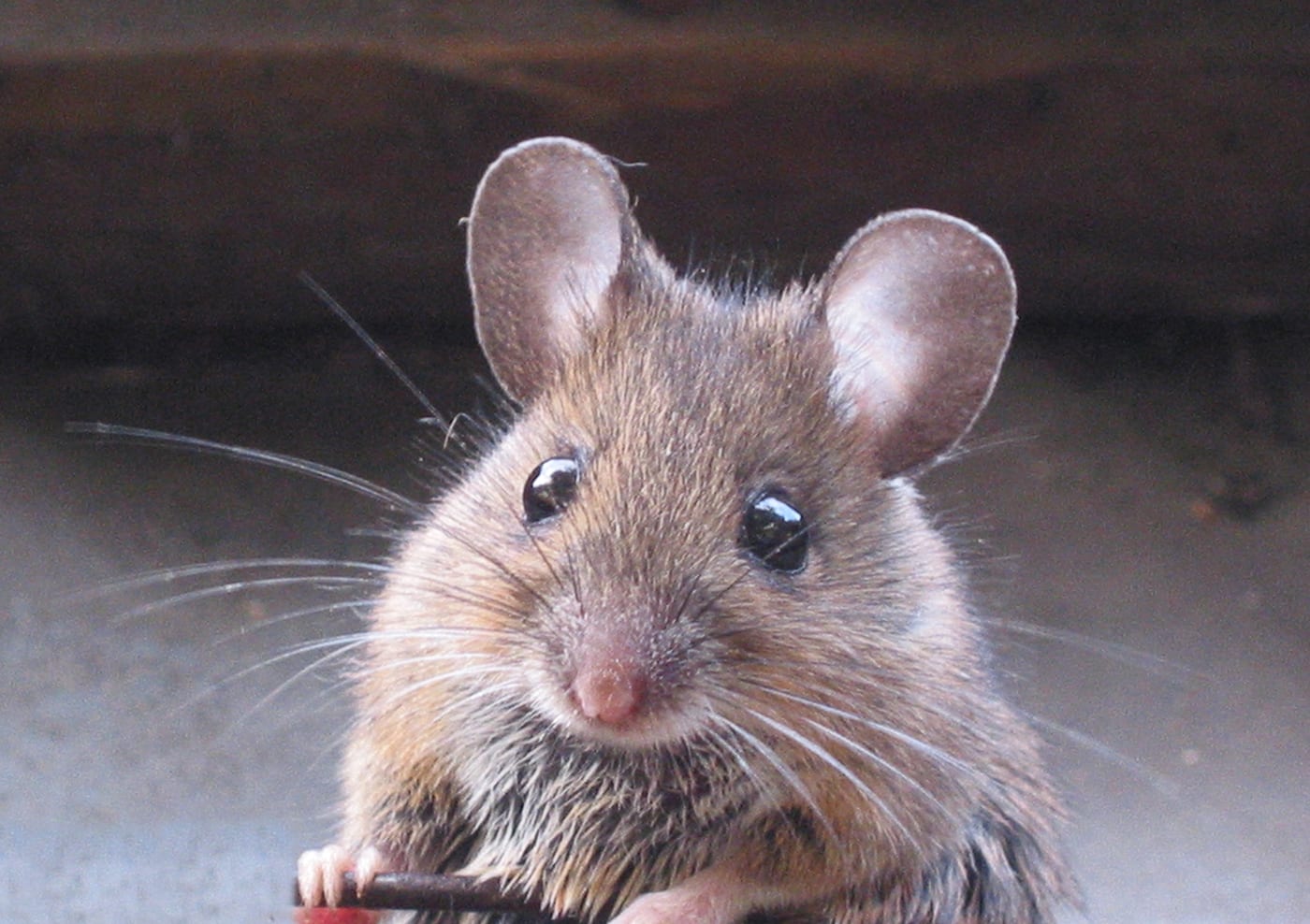
A wood mouse, the common mouse species in UK gardens. Voles look visually distinct, rounder-bodied with a shorter tail and smaller ears, and no vole-specific photograph is included here.
Telling mice from voles
Mice have tails longer than their bodies and an extended, forward-facing head. Voles have a shorter tail and a rounder head in profile. Four species turn up in British gardens: the wood mouse, the short-tailed vole, the bank vole, and, mainly in southern England and Wales, the yellow-necked field mouse. For a gardener working out what's eating the seed bed, the distinction rarely changes what to do about it, but it's useful for knowing what's actually there.
What the damage looks like
Paired grooves from gnawing incisors show up on stems, corms and stored fruit. Holes appear in soil where they've dug down to reach germinatingA seed sprouting: breaking dormancy and putting out its first root and shoot, given the right warmth and moisture. Full definition → seed. Pea and bean seedlings can vanish overnight, leaving only scattered remnants on the soil surface rather than any obvious sign of an animal at work, since both species are active mostly at night. In cold weather they move into greenhouses and cold frames looking for shelter and food, and a single visit there can wreck many seedlings in one go.
Why this matters in Scotland
Peas, broad beans and sweetcorn are all staples of a Scottish vegetable garden, and all get direct-sown, which is exactly what puts them in the way of this. Peas and broad beans share the same vulnerable window: recently sown seed and fresh seedlings, so sowing indoors sidesteps the risk on both. Sweetcorn's attack window is entirely different: mice go for the ripening cobs alongside birds, squirrels, rats and badgers, not the seed, so indoor sowing does nothing for that crop, and a cob cover is what actually matters there.
Strawberries and apples are also grown widely in Scotland, but mice and voles don't show up as a real problem on either, only on peas, broad beans and sweetcorn. The same is true of french beans and runner beans: it's specifically broad beans that carries the risk, not beans generally.
Controls: what actually works
All the measures here are backed by real evidence.
Sow vulnerable seed (peas, broad beans, sweetcorn) indoors in modulesA tray divided into small individual cells, each sown with its own seed or seedling, so each plant grows undisturbed roots until it's ready to plant out. Full definition → or pots rather than direct into open ground
This removes the exact vulnerable window entirely, seed and very young seedlings at ground level: nothing is exposed at soil level until the plant is well past the stage a mouse or vole can destroy outright.
Use barriers over vulnerable sowings and contained, rodent-proof storage for harvested produce
This is the preferred alternative to lethal control: a barrier a mouse or vole physically can't get through works without the ethical cost of trapping or poisoning.
On sweetcorn specifically: net plants once cobs form, or cover individual cobs with bags or cut plastic bottles
Sweetcorn's real exposure isn't the seed stage the way peas and broad beans are: mice go after the ripening cobs themselves, alongside birds, squirrels, rats and badgers, so indoor sowing doesn't remove the risk here the way it does on the other two crops. Individual cob covers work because they physically block access at exactly the stage that matters.
Tolerate low populations rather than controlling them
Populations are normally low and don't sustain at a high level for long, kept there by a wide range of natural predators, so intervention often isn't solving a problem that would otherwise get worse on its own.
Frequently asked questions
How do I stop mice and voles eating my sown seed?
For peas and broad beans: sow indoors in modules or pots instead of direct into open ground, at least for the vulnerable early stage. Once a plant is past germination and into real growth, it's no longer the easy target a bare seed or fresh seedling is. Sweetcorn is different: mice go for the ripening cobs, not the seed, so indoor sowing doesn't help there, and covering individual cobs with bags or cut plastic bottles is the control that matters instead.
Should I trap or poison them?
Start with barriers and contained storage instead: they solve the same problem without the ethical weight of killing anything. If you decide you need to go further than that, the RSPCA's guidance on humane practice is worth reading first.
Will the population just keep growing if I do nothing?
Usually not: garden populations are normally low and don't sustain at a high level for long, kept in check by a genuinely wide range of predators, cats, foxes, stoats, weasels, owls and other birds of prey among them. Tolerating a low background level is often just letting that natural balance do the work.
Why do they suddenly show up in my greenhouse in winter?
Cold weather pushes them indoors looking for shelter and food, and a greenhouse or cold frame full of overwinteringKeeping a plant alive and intact through the cold months, whether left outdoors, moved under cover, or stored dormant. Full definition → seedlings is exactly what they're after. This is when a single visit can do the most damage in one go, since there's nowhere else for them to be.
Sources
4 sources, recorded with what each was used for
- RHS: identification, symptoms, host list, seasonal activity, life cycle, predator list, tolerance stance, barriers and contained storage, absence of detailed lethal control
- RHS: confirming mice and voles directly on broad beans' own growing page
- RHS: confirming mice and voles directly on peas' own growing page
- RHS: confirming mice directly on sweetcorn's own growing page