
Gooseberry Sawfly is a common pest that affects gooseberries and redcurrants in Scotland. Here is what it looks like, how to spot the damage, and which controls have been tested.
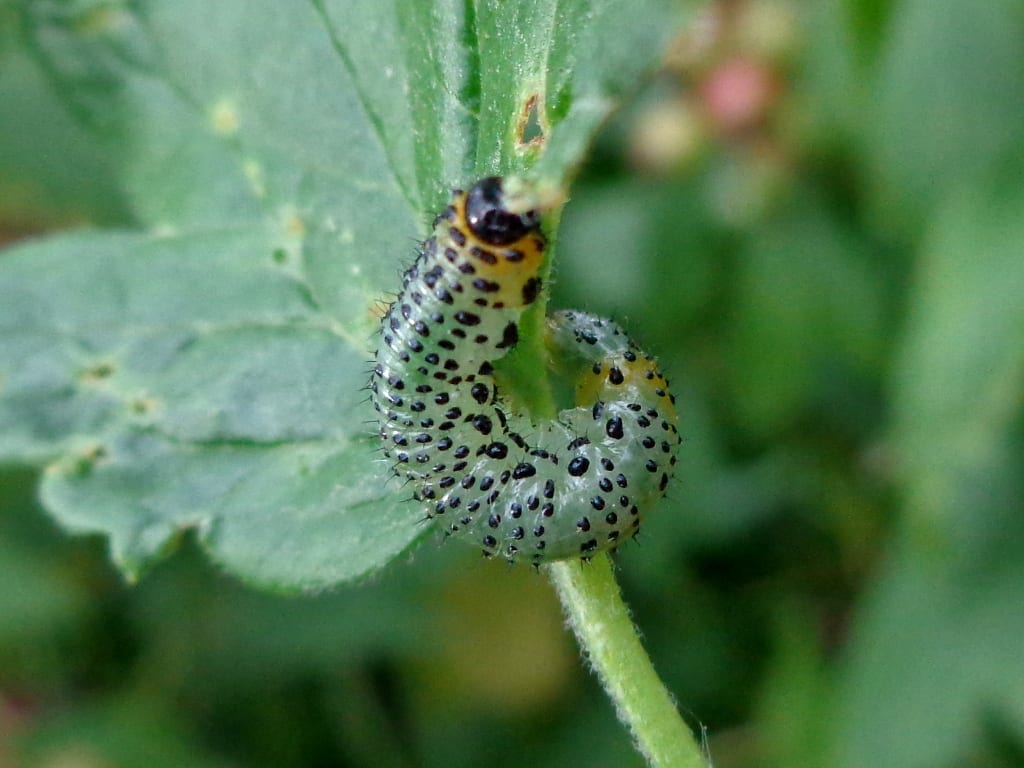
What does it look like?
It's the larva that does the damage and gives the pest away: caterpillar-like, pale green, and for the common species up to 20mm long with black spots and a black head. Adults are rarely what a gardener actually notices, small sawflies with yellow-and-black or black-and-pale-legged colouring depending on the species.
What causes it
Eggs are laid on the underside of leaves low down in the centre of the bush, out of easy sight, so the first generation of larvae can already be feeding well before anyone spots damage on the outer, visible foliage. Checking only what's easy to see from the outside misses exactly where this pest starts.
Is this pest active now?
Watch from April through September, the full window across all three species' overlapping generations.
Symptoms
Larvae eat their way upward and outward from where the eggs were laid, and a bush can go from a few chewed leaves to serious leaf loss in days. Complete defoliation rarely kills the bush outright, but it can genuinely reduce that year's cropping.
Life cycle
How many generations a bush faces in a season depends on the species: the common gooseberry sawfly runs three, active late April to June, then July, then August to September; the small gooseberry sawfly can run up to four from late April onward; the pale spotted species has just one, in May and June. All three pupate in cocoons in the soil.
Why this matters in Scotland
Gooseberries and redcurrants are two of the more widely grown soft fruit in Scottish gardens, and there's no particular way Scotland's climate is known to change how this pest behaves.
Catching the first generation early matters more here than it might elsewhere, since a bush already stripped once has less of the growing season left to recover cropping from a second or third generation on top.
Controls: what actually works
All the methods below are backed by real evidence, not just repeated folklore.
Check bushes regularly from April, starting at the centre of the bush
This is where the check actually needs to start: leaves further out on the bush stay clean far longer, and waiting to spot damage there means the first generation is already well established.
Hand-pick larvae and destroy them
Picking off and destroying larvae as soon as they're found stops a small early problem from becoming a stripped bush, and needs nothing beyond the regular check itself.
Biological control: pathogenic nematodes watered into the soil
Applied in cool, damp weather, the nematodes infect larvae with a bacterial disease. Useful where hand-picking alone isn't keeping up, though it needs that specific weather window to work.
Hoe or turn over soil around the base of the bush
Disturbing the soil exposes overwinteringKeeping a plant alive and intact through the cold months, whether left outdoors, moved under cover, or stored dormant. Full definition → cocoons to birds and other predators, taking a bite out of next year's first generation before it even starts.
Frequently asked questions
What should I do first if I find gooseberry sawfly in my garden?
Start with check bushes regularly from april, starting at the centre of the bush. After that, hand-pick larvae and destroy them. Work through the rest in order of how well-evidenced they are if the first two aren’t enough on their own.
Will gooseberry sawfly kill my plants?
Not usually outright, but it can genuinely cost you part of that year's harvest, not just something cosmetic a plant shrugs off. See the controls above for what actually reduces that risk.
When are gooseberry sawfly most active in Scotland?
Check the seasonal activity section above. Scottish timings can run a few weeks behind the UK-generic figures.
Should I just leave gooseberry sawfly alone?
In most gardens, yes. gooseberry sawfly are food for birds, wasps and predatory insects, and a healthy garden carries some without trouble. Tolerance is also RHS's official position now, for that same reason.
Sources
5 sources, recorded with what each was used for
- RHS1: identification, symptoms, the centre-of-bush egg-laying trigger, life cycle and generations by species, monitoring, hand-picking, nematode drench, encouraging predators, tolerance framing, absence of a chemical control
- RHS1: confirming gooseberry sawfly directly on gooseberries' own growing page
- RHS1: confirming gooseberry sawfly directly on redcurrants' own growing page
- RHS1: confirming blackcurrants' own growing page does not name this pest, supporting its exclusion from affected_crops
- Garden Organic8: twice-weekly monitoring frequency and starting point, hand-picking, and hoeing to expose overwintering cocoons