
Currant and Gooseberry Leaf Spot is a common disease that affects blackcurrants, redcurrants and gooseberries in Scotland. Here is what it looks like, the conditions it needs, and the controls that actually work.
What does it look like?
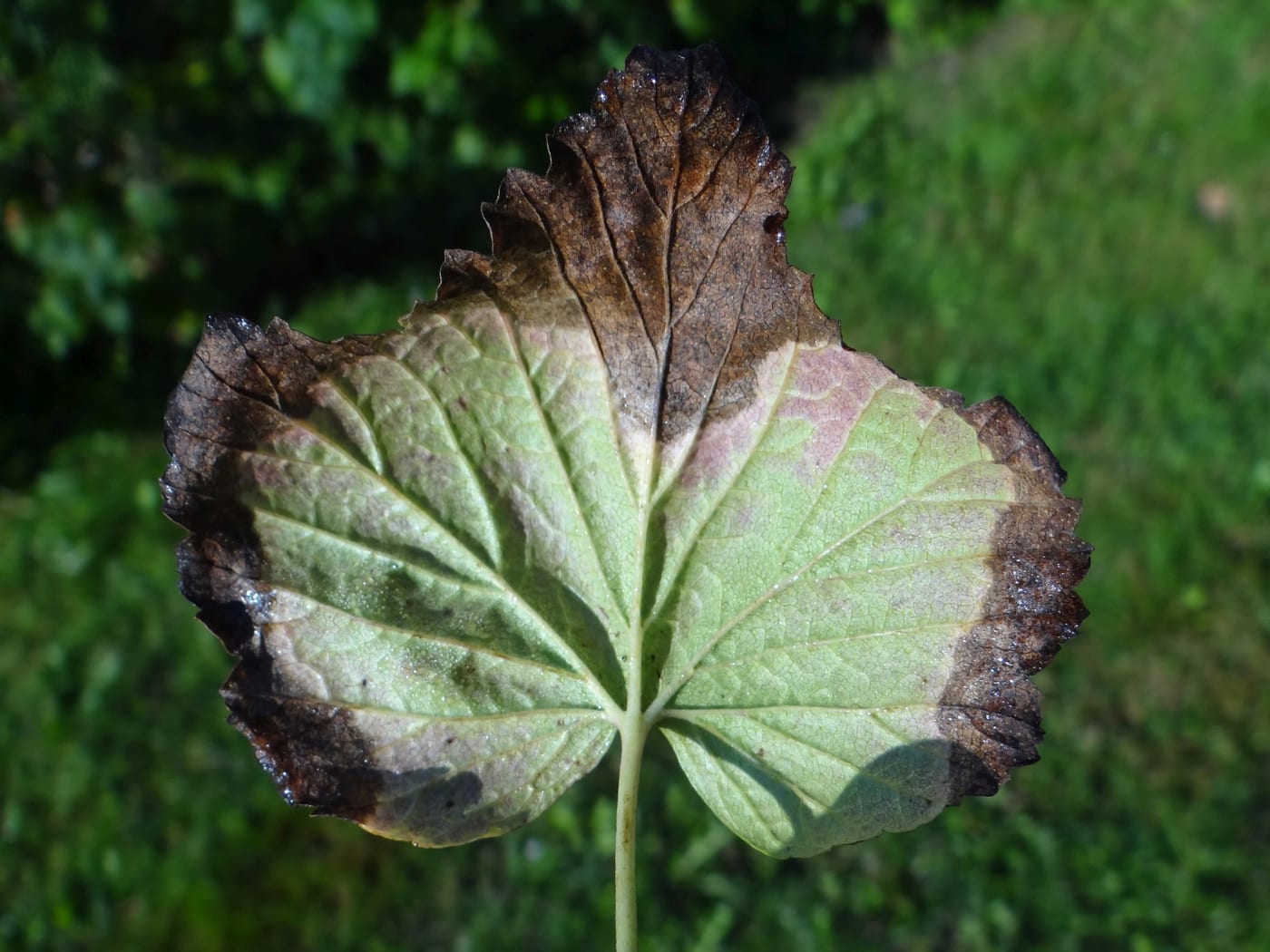
Very small, dark brown or black spots appear on the leaves, often with tiny fungal fruiting bodies visible on them as minute droplets. As the disease progresses the spots multiply and coalesce into larger brown areas.
What causes it
A weak plant, or one growing on light soil that dries out and stresses it, is particularly vulnerable to infection taking hold in the first place. Rain splash is what actually carries the summer spores from leaf to leaf, so a wet spell during the growing season is what turns early spotting into the kind of spread that strips a bush.
Is this disease active now?
Watch from June, when the first spots typically appear, through late summer as rain-splash spread keeps the infection moving.
🌱 Plants at risk
Currant and Gooseberry Leaf Spot also affects these crops:
Symptoms
In a severe case, the coalescing spots lead to complete defoliation as early as the start of July, well before a normal end-of-season leaf drop. Fruit can shrivel before it has the chance to ripen.
Life cycle
The fungus overwinters on fallen leaves left on the ground. Spores released from that leaf litter in spring infect the new season's young foliage, and a second wave of summer spores, spread by rain splash, keeps the infection moving through the growing season.
Why this matters in Scotland
No Scotland-specific figure exists for this disease, but the way it spreads is rain-dependent, and a wetter Scottish summer means more chances for that spread to happen.
More rainy spells during the growing season plausibly means more infection cycles stacking up over a summer, not just one bad wet week doing all the damage.
Controls: what actually works
All the methods below are backed by real evidence, not just repeated folklore.
Remove and dispose of fallen leaves in autumn, by composting, burial or burning
The fungus overwinters on leaf litter on the ground, so clearing it away breaks the link between one year's infection and the next spring's spore release.
Choose a resistant cultivarA plant variety that arose or was bred under cultivation and is kept true by deliberate propagation, rather than a naturally occurring wild species. Full definition →: 'Ben Connan', 'Ben Hope' or 'Rondom'
A resistant variety avoids the problem at the planting stage rather than needing ongoing management once a bush is already susceptible.
Feed stressed plants with a balanced fertiliser, and use a foliar feedA liquid fertiliser applied directly onto a plant's leaves rather than the soil, absorbed faster than a root feed. Full definition → after severe defoliation
A weak plant is more vulnerable in the first place, so keeping a bush well fed supports its resistance, and a foliar feed after a bad defoliation helps it recover the growth it lost.
MulchA layer of material spread over the soil around plants to suppress weeds, retain moisture, and improve soil structure as it breaks down. Full definition → and maintain soil moisture, particularly on light soils
Light soils are a particular risk factor, and mulching addresses that directly by holding moisture the plant would otherwise struggle to keep.
Frequently asked questions
What should I do first if I find currant and gooseberry leaf spot in my garden?
Start with remove and dispose of fallen leaves in autumn, by composting, burial or burning. After that, choose a resistant cultivar. Work through the rest in order of how well-evidenced they are if the first two aren’t enough on their own.
Is there a spray that works?
No. There are no amateur chemical treatments available for currant and gooseberry leaf spot. The controls that work are cultural: the measures listed above.
When are currant and gooseberry leaf spot most active in Scotland?
Check the seasonal activity section above. Scottish timings can run a few weeks behind the UK-generic figures.
Sources
4 sources, recorded with what each was used for
- RHS1: identification, symptoms, the light-soil and weak-plant risk factors, rain-splash spread mechanism, life cycle and overwinteringKeeping a plant alive and intact through the cold months, whether left outdoors, moved under cover, or stored dormant. Full definition →, leaf clearance, resistant cultivars, feeding, mulching, absence of a fungicide
- RHS1: confirming this disease directly on blackcurrants' own growing page
- RHS1: confirming this disease directly on redcurrants' own growing page
- RHS1: confirming this disease directly on gooseberries' own growing page