
Cuckoo Spit is a minor pest that affects lavender in Scotland. Here is what it looks like, how to spot the damage, and which controls have been tested.
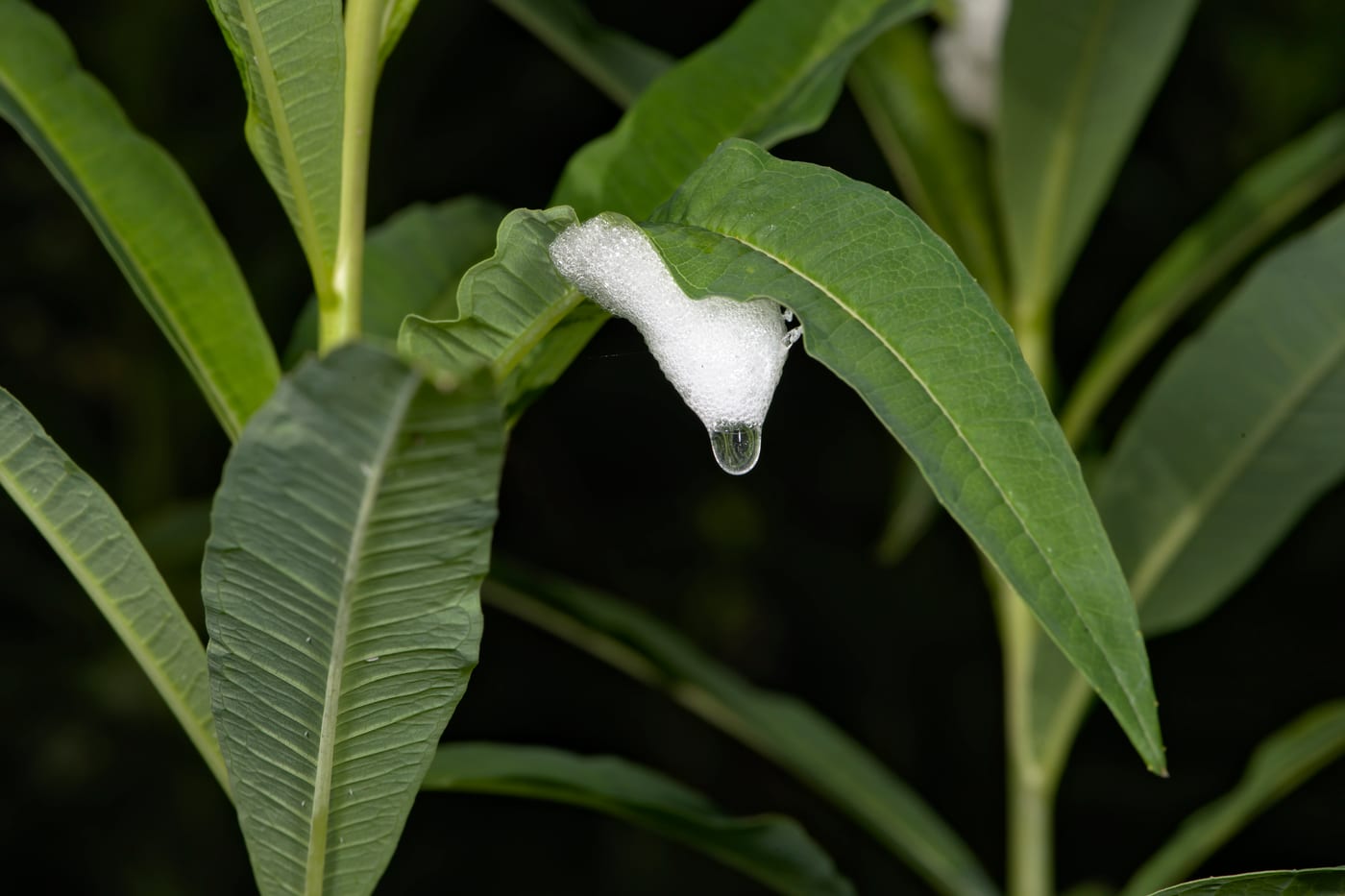
What does it look like?
Blobs of white frothy liquid on young stems and leaves, usually appearing from spring into summer. Each blob hides a single creamy white nymph up to 4 to 6mm long, the insect that made it. Lavender is far from the only host: chrysanthemum, dahlia, fuchsia, rosemary, rose and willow are among the other plants it turns up on.
Is this pest active now?
The froth is a spring-and-summer sign: nymphs produce it roughly May to July. Once nymphs mature into adults in mid to late summer, the spit stops appearing, even though the insects are still around on the plant.
Symptoms
Plant growth is usually unaffected. If a nymph happens to be feeding right at a shoot tip, that can cause some distorted growth, but that’s the exception rather than the rule. The froth itself does no harm.
Life cycle
Adults lay overwinteringKeeping a plant alive and intact through the cold months, whether left outdoors, moved under cover, or stored dormant. Full definition → eggs in plant stems during late summer. Those eggs hatch the following spring, and it’s the nymphs, not the adults, that secrete the white froth. Adults themselves live openly on plants through mid to late summer, producing no spit and causing no noticeable damage despite being sap-sucking insects.
Why this matters in Scotland
Froghoppers are a known vector for Xylella fastidiosa, a serious bacterial plant disease causing real damage in Southern Europe. Xylella isn’t established in the UK, but the Scottish Government was one of the funders, alongside Defra and the Biotechnology and Biological Sciences Research Council, of BRIGIT, a UK research project working to understand and prevent its introduction.
A genuine Scottish stake in the wider biosecurity picture behind an insect most gardeners assume is only a cosmetic curiosity.
Controls: what actually works
All the methods below are backed by real evidence, not just repeated folklore.
Leave them alone
The simplest control there is: do nothing. There’s no real benefit to removing them, and it takes away part of the garden’s biodiversity for nothing in return.
Frequently asked questions
What should I do first if I find cuckoo spit in my garden?
Start with leave them alone.
Will cuckoo spit kill my plants?
They rarely kill established plants. The damage is usually cosmetic on outer leaves, and natural predators often bring numbers under control without you doing anything.
When are cuckoo spit most active in Scotland?
Check the seasonal activity section above. Scottish timings can run a few weeks behind the UK-generic figures.
Should I just leave cuckoo spit alone?
In most gardens, yes. cuckoo spit are food for birds, wasps and predatory insects, and a healthy garden carries some without trouble. Tolerance is also RHS's official position now, for that same reason.
Sources
1 source, recorded with what each was used for
- RHS1: identification, symptoms, life cycle, active timing, tolerance guidance, Xylella vector risk and the BRIGIT project