
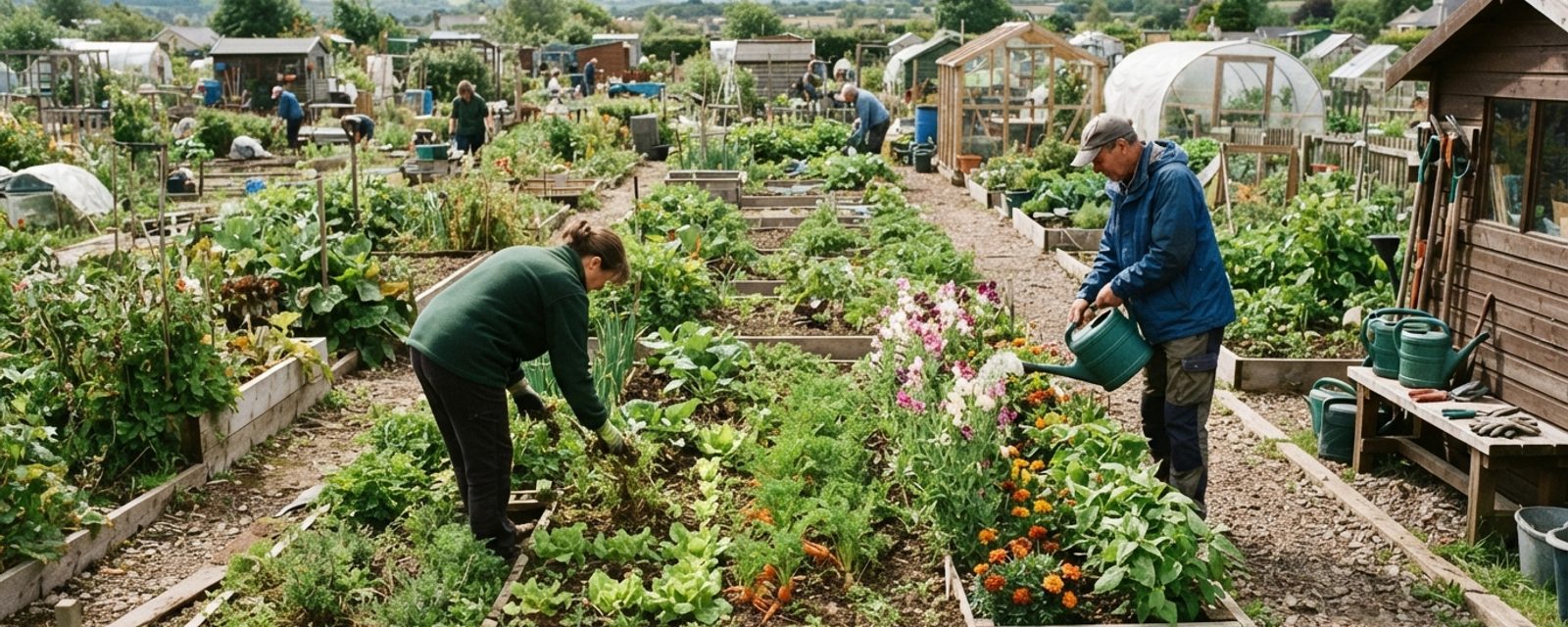
If you've registered for an allotment in a Scottish city recently, you already know the honest starting point: the list is long, and a full plot might not clear for years. Under the Community Empowerment (Scotland) Act 2015, councils are required to work toward keeping that wait to no more than five continuous years, and to keep the waiting list itself at no more than half the number of allotments they hold, but that's a target for local authorities to work toward, not a guarantee attached to your name on a list. See getting an allotment in the UK for how that statutory cap works, how it compares with England and Wales having no equivalent cap at all, and what real wait times and rents look like, worth reading first if you haven't registered yet.
There's an option sitting in plain sight while you wait: a smaller plot, or a plot shared with someone else, is very often available faster than a full one, sometimes immediately.
What a half-plot actually is
Scotland's statutory reference point for a "standard" allotment size comes from the 2015 Act itself: section 109 lets anyone requesting an allotment specify a smaller area if they want one under 250 square metres, and treats 250 square metres as the size a request is assumed to be for if no smaller area is specified. That 250 sq m figure lines up with the old convention of a "ten-rod plot" (a rod being roughly 25.3 sq m), which is why plot sizes are still sometimes described in rods rather than square metres.
A half-plot, in that framework, works out to roughly 125 square metres, about five rods, or very roughly the footprint of a doubles tennis court. Councils and site associations don't all draw the line in exactly the same place, and some offer quarter-plots too.
| Plot size | Area | In rods | Rough comparison |
|---|---|---|---|
| Full plot | ~250 sq m | ~10 rods | A doubles tennis court and a bit more |
| Half-plot | ~125 sq m | ~5 rods | A doubles tennis court |
| Quarter-plot | ~60 sq m | ~2.5 rods | A large driveway or double garage footprint |
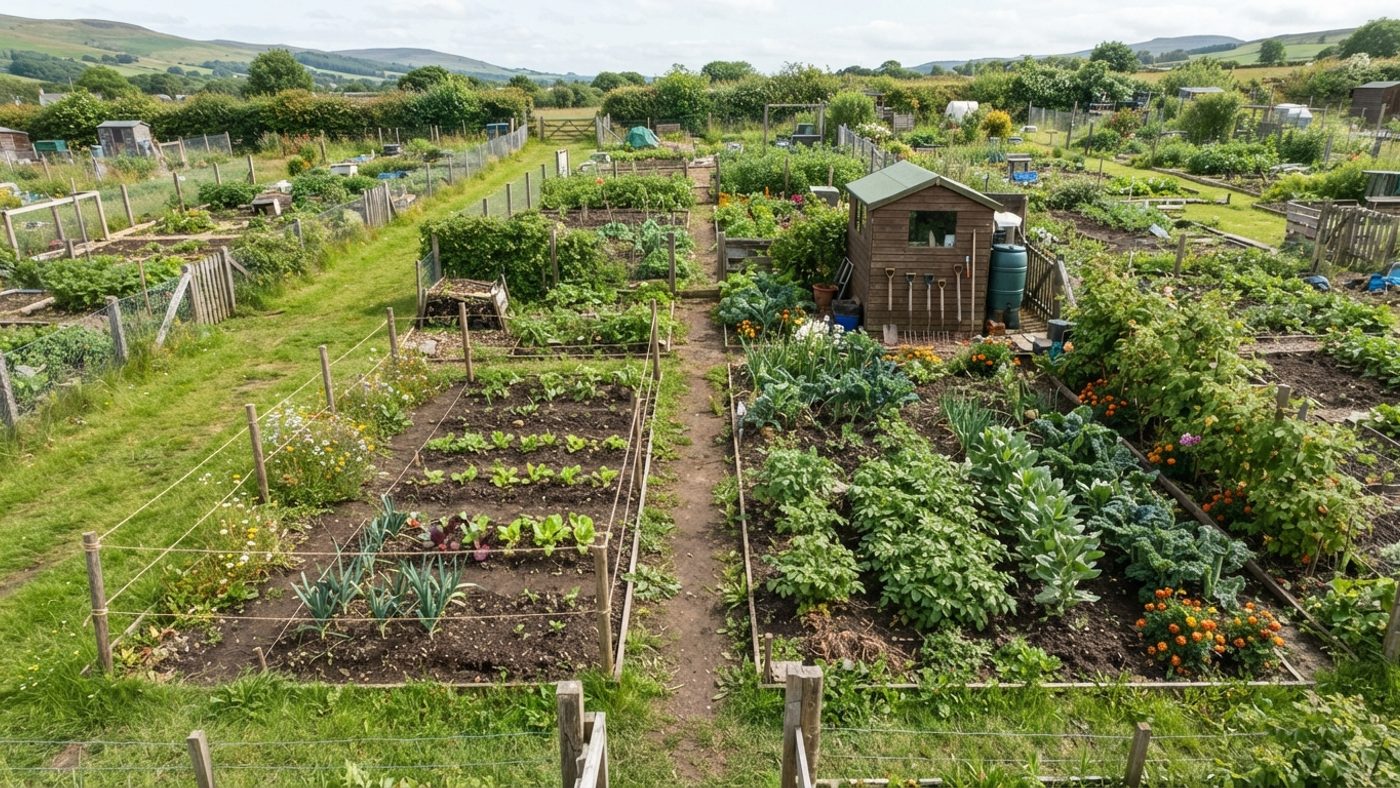
These are the sizes most sites cluster around, not a fixed national standard, always confirm the actual figure for your own site.
Scottish Government guidance to local authorities on the Act is explicit that this isn't meant to be a way for councils to quietly shrink provision: authorities are told not to cut waiting lists by restricting the size of allotments on offer, and to try to match plot sizes to what people actually ask for, offering something close to the dimensions requested, rather than an arbitrary carve-up. A half-plot is meant to be a genuine, requestable size in its own right, not a downgrade imposed on you.
The same Act also directs authorities to have regard to applicants who may need an accessible plot, closer to parking, with easier paths or the option of raised beds, when allocating allotments. If mobility or access is a factor for you, it's worth raising directly with the council or association at the point you register, alongside specifying a smaller area.
Why half-plots exist in the first place
Two pressures drive it. Demand: waiting lists in Scotland's cities have been long enough, for long enough, that local authorities have a statutory duty to actively manage them, and offering smaller plots is one of the more straightforward ways a site can bring more names off the list without needing more land. And manageability: a full 250 sq m plot is a serious commitment, regular weekly digging, watering, and weeding, not something you take on lightly if you're new to growing, working full-time, or gardening alone.
Half-plots sit at the intersection of those two problems: more tenants fit onto the same ground, and a new or time-limited grower gets a size they can realistically keep cultivated.
The statutory waiting-list duty is about people who don't yet hold any allotment at all, so accepting a half-plot ends your wait rather than leaving you on the list at reduced priority. If you'd specifically rather hold out for a full plot, say so when you register and confirm directly with the council or association how offers of a smaller plot are handled, rather than assuming.
What you can realistically grow on a half-plot
A half-plot isn't a token growing space. At roughly 125 square metres, it's still large enough for a proper mixed vegetable plot: a rotation of potatoes, brassicasThe cabbage family: cabbage, kale, broccoli, cauliflower, Brussels sprouts, kohlrabi, swede, turnip and more, sharing the same pests, diseases and rotation rules. Full definition →, alliums, and legumes across a few beds, room for a soft fruit bed or a couple of fruit bushes, a compost bay, and paths between beds without everything feeling cramped. What it won't comfortably hold is everything at once, a greenhouse or polytunnel alongside a full rotation, a large asparagus or rhubarb bed that's permanently out of rotation, and a sizeable area given over to sweetcorn or pumpkins, which take up disproportionate ground for what they return.
The practical difference from a full plot is less about what crops are possible and more about how much you're growing of each. Where a full-plot tenant might grow four rows of potatoes, a half-plot tenant grows two. It's a smaller version of the same allotment, not a different kind of growing space.
Scotland's frost dates and site exposure apply at any plot size, half or full, a half-plot doesn't change either, only how much ground you're managing against them. Check Scotland's regional frost dates when planning what to fit into a smaller rotation, and site anything wind-sensitive (climbing beans, tall brassicas) away from the most exposed edge of the plot.
Informal plot-sharing: the part with real legal texture
A council-issued half-plot is one route in. A different route, plot-sharing, where two people informally split the work and cost of a single plot between them, is not the same arrangement, and it's worth understanding exactly how it differs before you set one up.
Under the 2015 Act, an allotment tenancy sits with one named tenant (or, where a joint request is made, with the named joint applicants, both must live in the local authority's area). The Act is direct about what that tenant can and can't do with the plot afterwards: they must not hand the tenancy on to someone else ("assign" it) or let someone else take it over in part ("sublet" it) without the local authority's consent, in plain terms, neither swapping who the plot legally belongs to, nor bringing in a second official tenant, can happen without the council signing off. Any sublet made without consent is void. In practice, that means a formal, council-recognised sharing arrangement, where a second person is added to the tenancy or takes on a genuine sub-lease, has to go through the council, not around it. See allotment rules: what you can and can't do with your plot for what subletting restrictions and eviction notice look like in more detail.
An informal handshake arrangement, where a friend, neighbour, or family member works your plot alongside you without their name going on the tenancy, sits in a different, greyer space. It isn't a sublet in the strict legal sense as long as the named tenant remains the one actually responsible for the plot, but it's still worth checking your specific site's rules before you start, since some sites' own regulations restrict or require notification of regular co-workers even short of a formal sublet. Don't assume "informal" means "invisible", tell your site or council what's happening rather than finding out their policy the hard way at an inspection.
Whichever version you go with, the practical questions are the same and worth settling before the first spade goes in the ground, not after a dispute:
- Whose name is on the tenancy, and what happens if that person leaves the site, moves away, or gives up gardening? Informally, the plot reverts entirely to whoever's name the council has on file, the other person has no standing with the council at all.
- How are costs split? Rent, any deposit, shared tools, seed and plant costs, decide the split before the season starts, not when the first invoice arrives.
- Who holds the shed key, and what happens to shared kit (a water butt, a compost bay, tools) if the arrangement ends? Worth agreeing at the start, not once someone's already locked out.
- How is the work split, and what happens if one person's contribution drops off? Uneven effort is the single most common reason informal plot-shares break down. A rough weekly or seasonal expectation, agreed upfront, heads off most of the resentment.
- Does either of you need to check insurance or liability cover? Some site associations require public liability cover, or require anyone regularly working a plot to be registered with them for insurance purposes, worth asking directly rather than assuming an informal co-worker is automatically covered.
- How often will you actually communicate? Shared plots work best with a standing check-in, even a five-minute conversation at the plot each week, rather than assuming the other person will flag problems as they come up.
None of this needs to be a formal contract. A short written note between the two of you, covering who's doing what and what happens if either person wants out, is enough to prevent most disputes, and it costs nothing to write.
How to actually find or apply for one
This varies by council and by site, and there's no single UK-wide (or Scotland-wide) process, see getting an allotment in the UK for why that's the case and how to find your specific council's or association's waiting list. The half-plot-specific steps are:
- Ask directly whether half-plots (or quarter-plots) are offered, rather than assuming they're not, not every site advertises them prominently, and availability can change site to site even within the same council.
- Specify the smaller area when you register, if you know from the start that's what you want. Under section 109 of the 2015 Act, you're entitled to specify an area under 250 sq m in your original request, rather than being offered a full plot by default and having to ask to downsize later.
- Check whether the site is council-run or independently managed. Many sites are run by their own allotment association under a lease from the council, and those associations often set their own plot sizes, rules on co-workers, and waiting-list processes separately from the council's.
- For plot-sharing specifically, talk to the site or association before you start, not after. Ask what their rules actually say about a second person regularly working a plot that isn't in their name, and about insurance or liability cover. Some associations run their own informal matching lists for people looking to share, rather than leaving you to find a plot-share partner on your own, worth asking about directly.
- Already hold a full plot and want to split it instead? That's a different situation from applying fresh, and it still runs through the council or association rather than being a private arrangement, ask what their process is for a sitting tenant to bring in a second person or hand back part of the ground.
New tenants, half-plot or full, are sometimes subject to a probationary period or an early cultivation check before the tenancy is confirmed, ask your site what applies locally, since this varies rather than following one fixed rule. The same duty to actively cultivate a plot applies at half size as it does at full size, a half-plot left unworked is grounds for the same eviction process covered in allotment rules: what you can and can't do with your plot, taking on less ground doesn't lower that bar.
The Scottish Allotments and Gardens Society is a good general starting point for understanding how Scottish allotment sites are typically governed, including the role of independent site associations, if you want context beyond your own council's paperwork.
Common questions
Is a half-plot half the rent of a full plot?
Rent is generally set by area, which is why a half-plot would be expected to cost proportionately less than a full one, but the exact figure and how it scales is set locally by each council or association rather than fixed by law, check the fee schedule for your specific site rather than assuming a fixed rate applies everywhere.
Can I share a plot with a friend without telling the council?
You can informally split the work on a plot that's in one person's name, but check your site's own regulations first, some restrict or require notification of regular co-workers even where no formal sublet is involved. A genuine sublet or assignment of the tenancy requires the local authority's consent under section 130 of the Community Empowerment (Scotland) Act 2015, and is void without it.
Will taking a half-plot put me further down the list for a full plot later?
This depends on the individual council or association, so ask directly when you apply. Many sites let existing half-plot tenants move up to a full plot, or take on an adjoining half, once one becomes available, rather than starting over.
What happens to a shared plot if one person drops out?
If the arrangement was informal, the plot legally stays with whoever's name is on the tenancy, the other person has no standing with the council. Agreeing in advance, in writing, what happens if one of you leaves avoids this becoming a dispute mid-season.
Are half-plots only available through the council, or can allotment associations offer them too?
Both. Many Scottish sites are run by independent allotment associations leasing land from the council, and those associations often set their own plot sizes and waiting-list rules, so it’s worth asking both the council and any site association directly.
Sources
4 sources, recorded with what each was used for
- Community Empowerment (Scotland) Act 2015, Part 9: Allotment tenancy definition (s.107), area-request rules including the 250 sq m threshold and accessibility considerations in allocation (s.109), waiting-list maintenance (s.111), the waiting-list/5-year duty (s.112), site regulations (s.115), and the assignment/subletting prohibition (s.130)
- Community Empowerment (Scotland) Act 2015, section 109: The exact wording on specifying an area under 250 square metres when requesting an allotment, and joint-request rules
- Part 9 of the Community Empowerment (Scotland) Act 2015: Allotments, guidance for local authorities (gov.scot): Guidance that councils should not cut waiting lists by restricting plot sizes, and should try to match plot size to what applicants request
- Scottish Allotments and Gardens Society (SAGS): General context on how Scottish allotment sites and associations are governed