
Potato blight is the disease that can end a maincropThe main, usually latest-sown and longest-growing type of a crop, grown for bulk and storage rather than an early harvest. Full definition → in a fortnight. It thrives in the warm, wet conditions Scotland supplies so reliably, and there is no amateur fungicide that stops it. Here is what to watch for, when to act, and the controls that actually give you a crop.
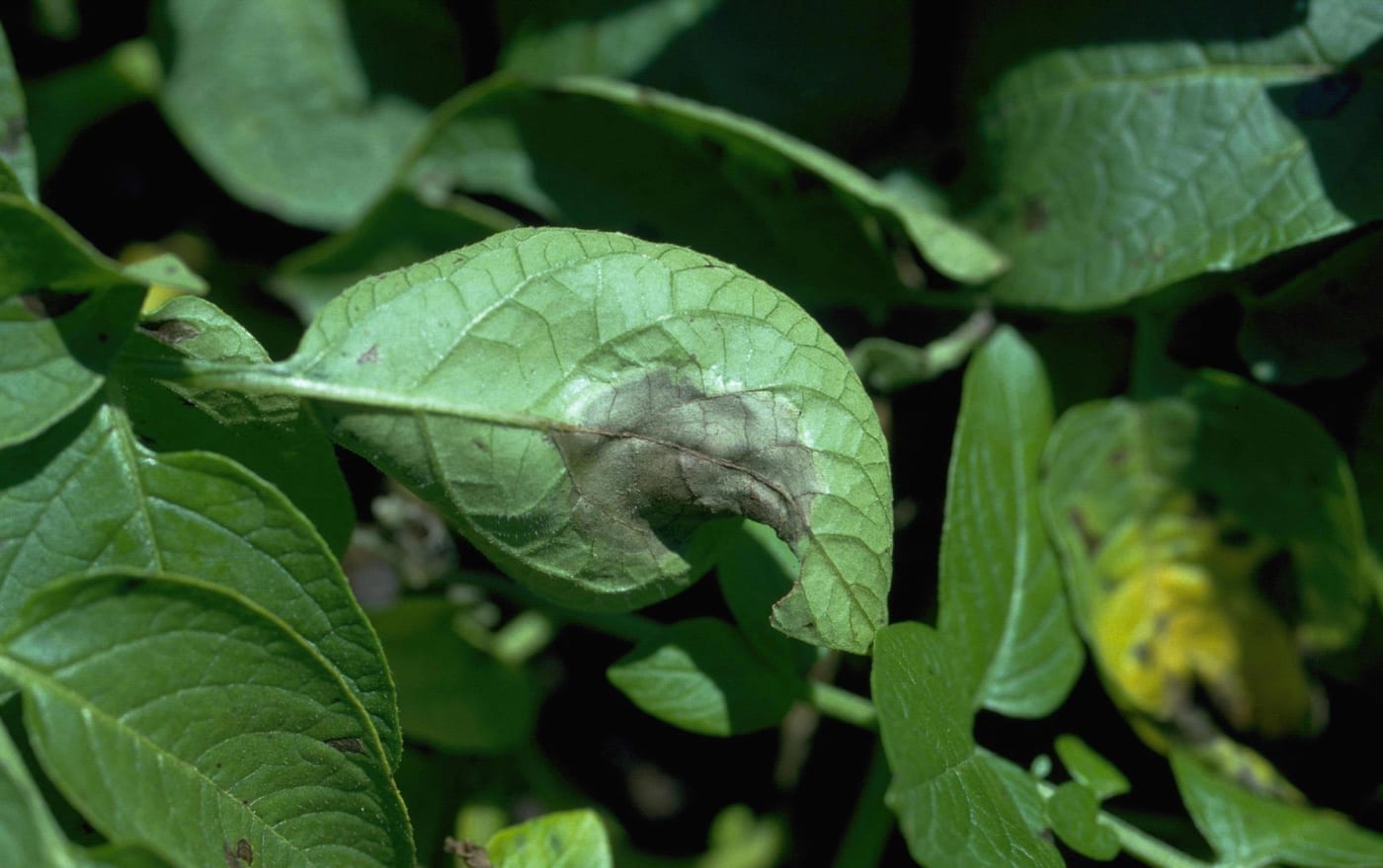
What does it look like?
On leaves: Rapidly spreading, watery rot of the leaves, which soon collapse, shrivel and turn brown.
On stems: Brown lesions on stems.
On tubersA swollen underground stem or root a plant uses to store energy, which can also grow into a new plant, the classic example being a potato. Full definition →: Reddish-brown decay below the tuber skin, progressing to soft rot as bacteria colonise the affected tissue.
What causes it
Infection needs prolonged surface wetness, several hours of it, rather than just a passing shower, which is why a spell of settled damp weather is the real trigger rather than any single wet day.
Potato blight and tomato blight are the same organism, Phytophthora infestans. If you also grow tomatoes, a wet spell that starts an outbreak here is a real risk to them too, especially outdoors, so check them as well. See Tomato Blight →
Life cycle
Overwinters: Survives winter in affected potato tubers left in the ground.
Spread: Wind-blown spores from other gardens and commercial crops are the primary infection source for home gardeners.
Because spores blow in, a clean garden is not a safe garden. This is why forecasting matters more than hygiene alone.
🏴 The Hutton Criteria: Scotland's blight warning system
The UK's national blight warning system was developed in Scotland, at the James Hutton Institute, and is named after it.
A Hutton Criteria is met when there are two consecutive days with a minimum temperature of 10C and at least six hours of relative humidity at or above 90%.
What it replaced: It superseded the Smith Period, a 1950s model unchanged for around 60 years, which required at least 11 hours at 90%+ relative humidity. Blight had been appearing on crops before a Smith Period was recorded, so the older model was missing outbreaks.
Validation: Tested against over 2,000 historic reports of potato late blight outbreaks, the Hutton Criteria showed a significant improvement in predicting outbreaks.
Controls: what actually works
All the methods below are backed by real evidence, not just repeated folklore.
Chemical control
RHS: 'There are currently no fungicides available for use by gardeners' against blight.
What actually works: No fungicide will save a crop once blight takes hold, so this is won earlier: choose a resistant variety, keep to a rotationMoving each crop family to different ground each year, on a multi-year cycle, so pests and diseases that build up in soil don't get a repeat host. Full definition →, and watch the Hutton Criteria forecasts closely enough to strip foliage before infection spreads.
Grow blight-resistant varieties
Athlete, Alouette, Carolus and the Sarpo varieties (Sarpo Axona, Sarpo Mira) all carry useful blight resistance, though none is completely immune.
Cultural controls: 4-year rotation, earth upDrawing soil up around a plant's base as it grows, most often potatoes, to keep light off developing tubers and support tall stems. Full definition → tubers, harvest early-maturing varieties, remove foliage once ~25% of leaves are infected, dispose of infected material by burial, green waste collection or burning — never compost
Removing foliage at 25% infection is the decisive intervention: it stops spores reaching the tubers. Pair this with the Hutton Criteria: the forecast tells you when to look, the 25% rule tells you when to act.
Use tubers from a blighted crop promptly; don't store them
RHS: 'Use the tubers from blighted crops as soon as possible, and avoid storing them if at all possible.'
This answers the question most gardeners actually have once blight has appeared: can I still use what's in the ground? Tubers from an infected crop are still usable, but don't keep them — eat them soon after lifting rather than storing them through winter as you would a healthy crop.
Monitor blight risk forecasts (Hutton Criteria)
Monitor using BlightSpy forecasts. The underlying UK risk model is the Hutton Criteria.
Scottish grower notes
In Scotland a major early source of blight is discarded potato ‘dumps’ and self-sown volunteers from last year's crop — they sprout early and can trigger an outbreak, so clearing them reduces the risk to your plants. And no potato variety is completely blight-resistant: resistant types lower the risk but don't remove the need to watch the forecast.
Farm Advisory Service (FAS) Scotland. Written for growers, but the cultural advice (clear dumps and volunteers, no variety is fully resistant) applies to gardens too.
Frequently asked questions
What should I do first if I find potato blight in my garden?
Start with grow blight-resistant varieties. After that, cultural controls. Work through the rest in order of how well-evidenced they are if the first two aren’t enough on their own.
Is there a spray that works?
No. There are no amateur chemical treatments available for potato blight. The controls that work are cultural: the measures listed above.
How much of this advice is actually proven?
Every control listed above is evidence-based, not just repeated folklore. None of it is a guess.
Sources
2 sources, recorded with what each was used for
- RHS1: causal organism, symptoms on leaves/stems/tubers, warm wet conditions and surface wetness requirement, June onset, overwinteringKeeping a plant alive and intact through the cold months, whether left outdoors, moved under cover, or stored dormant. Full definition → in tubers, wind-blown spore spread, no amateur fungicides, resistant cultivarsA plant variety that arose or was bred under cultivation and is kept true by deliberate propagation, rather than a naturally occurring wild species. Full definition →, cultural measures, forecast monitoring
- FAS Scotland14: potato dumps and self-sown volunteers as a key early blight source in Scotland; no fully blight-resistant variety