
Currant Aphids is a minor pest that affects blackcurrants and redcurrants in Scotland. Here is what it looks like, how to spot the damage, and which controls have been tested.
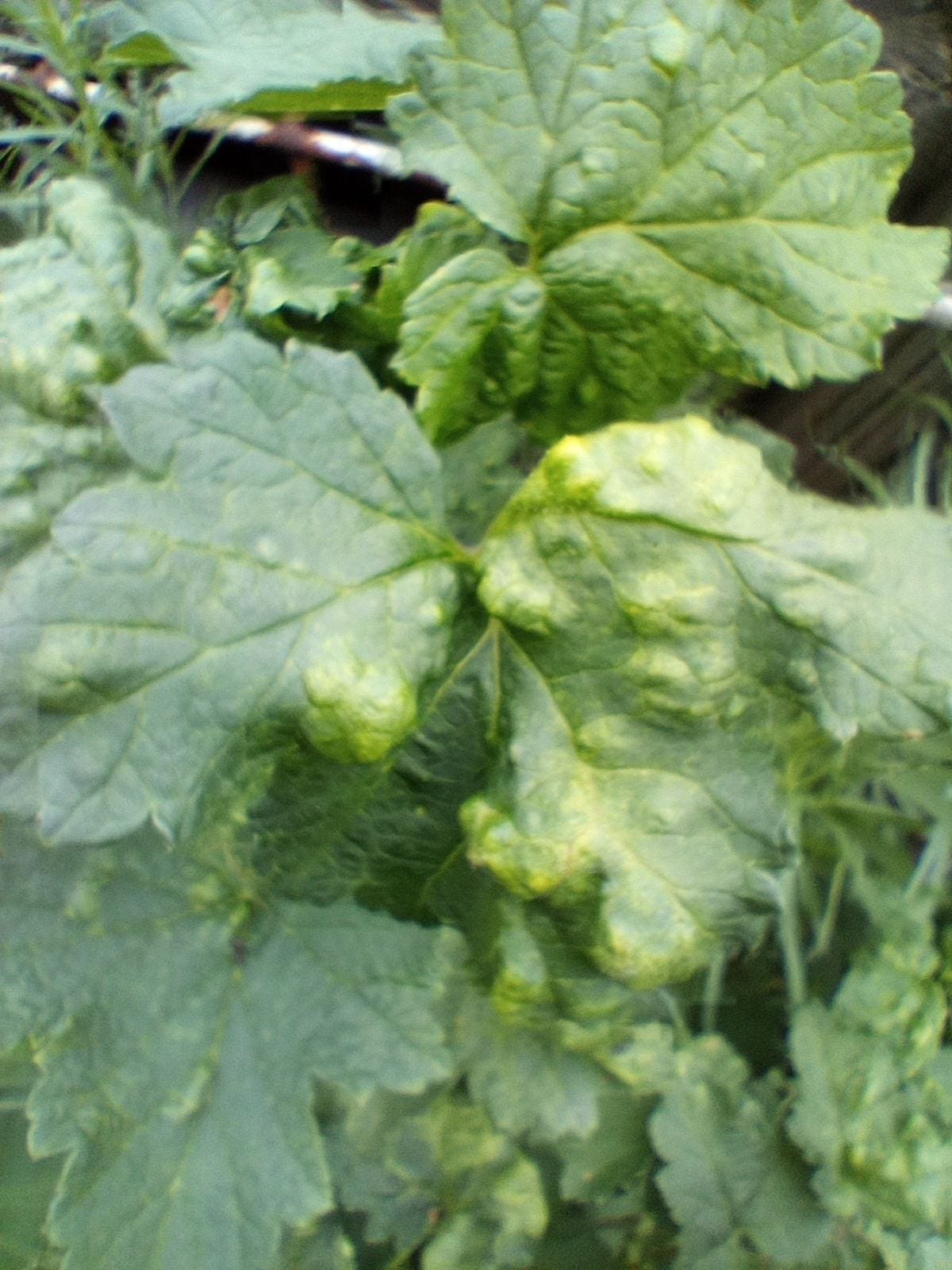
What does it look like?
Three separate species cause this: the currant-sowthistle aphid is green with pale legs at 2-3mm, the currant blister aphid is yellow at 1.5-2.5mm, and the permanent currant aphid is dark green or black at around 2.3mm. All three are small enough that the damage they leave behind is usually what identifies them, not the aphid itself.
What causes it
Two of the three species need a second host plant nearby to complete their year: the currant-sowthistle aphid needs sowthistle, a common tall yellow-flowered garden weed, and the currant blister aphid needs hedge woundwort, a low purple-flowered weed often found at the edge of borders. A garden with either weed growing near the currants gives those two species somewhere to retreat to for summer, rather than needing to travel far to keep the cycle going.
Is this pest active now?
Check year-round for the permanent currant aphid. The currant-sowthistle and currant blister aphids are worth checking for specifically in spring and again in autumn, when they're actually present rather than away on their summer host.
Symptoms
Each species leaves a different mark: the currant-sowthistle aphid causes distorted leaves with yellowish mottling, the currant blister aphid puckers leaves into reddish or yellowish blisters at the shoot tips, and the permanent currant aphid stunts and compresses the shoot tips themselves. Heavy feeding from any of the three can coat nearby fruit in honeydew, inviting sooty mould that affects how the fruit looks without damaging the fruit itself.
Life cycle
All three species overwinterKeeping a plant alive and intact through the cold months, whether left outdoors, moved under cover, or stored dormant. Full definition → as eggs laid on the currant stems the previous autumn, hatching in spring around March to April to start the cycle again.
Why this matters in Scotland
These aphids occur in gardens across northern Britain, and unlike big bud mite on the same bushes, they're not known to spread any plant virus while they feed.
Big bud mite and the reversion virus it carries force a bush to be dug up and replaced. These aphids cost some leaf distortion and occasionally honeydew on the fruit, a real difference in scale on the same crop.
Controls: what actually works
All the methods below are backed by real evidence, not just repeated folklore.
Hand removal: squash or wipe off small colonies
Colonies are usually small and localised enough that direct removal by hand deals with them before they spread across the plant.
Natural predators: encourage ladybirds, hoverflies, parasitoid wasps and earwigs
All four are named as natural enemies that feed on aphids generally, and a garden that doesn't reach for a spray gives them the chance to do that job.
Frequently asked questions
What should I do first if I find currant aphids in my garden?
Start with hand removal. After that, natural predators.
Will currant aphids kill my plants?
They rarely kill established plants. The damage is usually cosmetic on outer leaves, and natural predators often bring numbers under control without you doing anything.
When are currant aphids most active in Scotland?
Check the seasonal activity section above. Scottish timings can run a few weeks behind the UK-generic figures.
Should I just leave currant aphids alone?
In most gardens, yes. currant aphids are food for birds, wasps and predatory insects, and a healthy garden carries some without trouble. Tolerance is also RHS's official position now, for that same reason.
Sources
2 sources, recorded with what each was used for
- RHS1: identification of all three species, symptoms, life cycle and host migration, hand removal, encouraging predators, absence of a specific chemical control
- James Hutton Institute2: confirming presence in northern Britain specifically, absence of virus transmission, honeydew and sooty mould risk on fruit, breeding programmes screening for resistant genotypes