
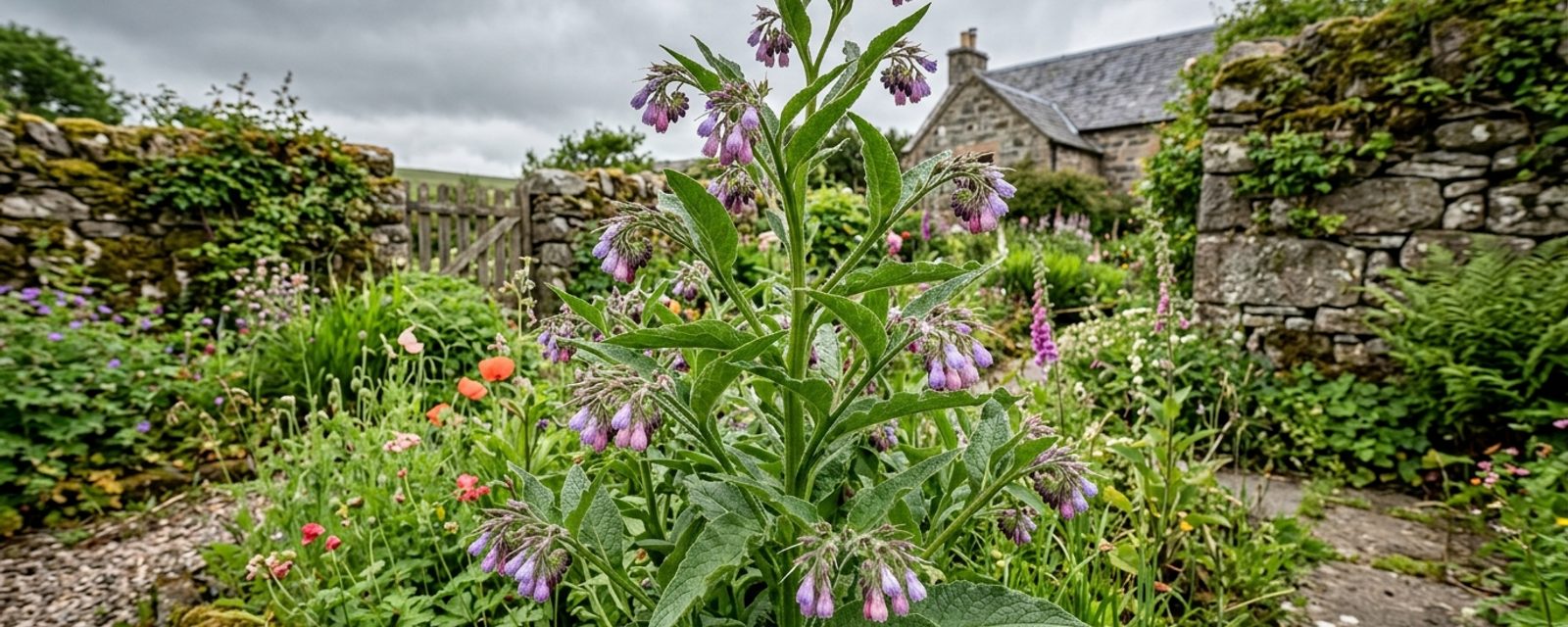
Symphytum officinale
Comfrey is grown for the garden, not the plate: a natural liquid fertiliser and compost activator, with a real containment decision between two genuinely different varieties and two different feed-making methods that both actually work.
Both common comfrey and the sterile Bocking 14 cultivarA plant variety that arose or was bred under cultivation and is kept true by deliberate propagation, rather than a naturally occurring wild species. Full definition → carry an H7 hardiness ratingThe RHS's H1a–H7 scale for how much cold a plant can survive outdoors, H1a being tender indoor-only and H7 hardy anywhere in the UK. Full definition →, well beyond anything a Scottish winter demands. The real planning question is space and containment, not climate.
Site and soil
Choose a spot in sun or partial shade with moist, fertile soil, ideally neutral to slightly acid; comfrey tolerates everything from heavy clay to sandy soil. Plant in spring or autumn, into ground well-prepared and free of perennial weeds, and mulchA layer of material spread over the soil around plants to suppress weeds, retain moisture, and improve soil structure as it breaks down. Full definition → with garden compost topped with leafmould to retain moisture and suppress weeds. Mature plants reach roughly 1-2m tall and wide, so allow generous space, especially for common comfrey rather than a tight initial spacing figure.
Choosing a variety
Common comfrey self-seeds readily and is described as unsuitable for all except the largest gardens, difficult to remove once established since root sections left in the ground regrow into new plants. Bocking 14 is a sterile hybrid that won't self-seed and is non-invasive, solving that half of the problem, while still needing the same generous mature footprint. Choose Bocking 14 for a smaller garden or anywhere self-seeding would be unwelcome; common comfrey suits a large garden with room to manage its spread.
Planting and propagation
Seed-sowing works for common comfrey (sown in pots in a cold frame, autumn or spring) but not for Bocking 14, since it's sterile and can't be raised from seed at all. Propagate either type by dividingPropagating a clump-forming perennial by digging it up and splitting it into several smaller pieces, each with roots and shoots attached. Full definition → fleshy roots in spring or taking root cuttings in early winter.
Care and cutting back
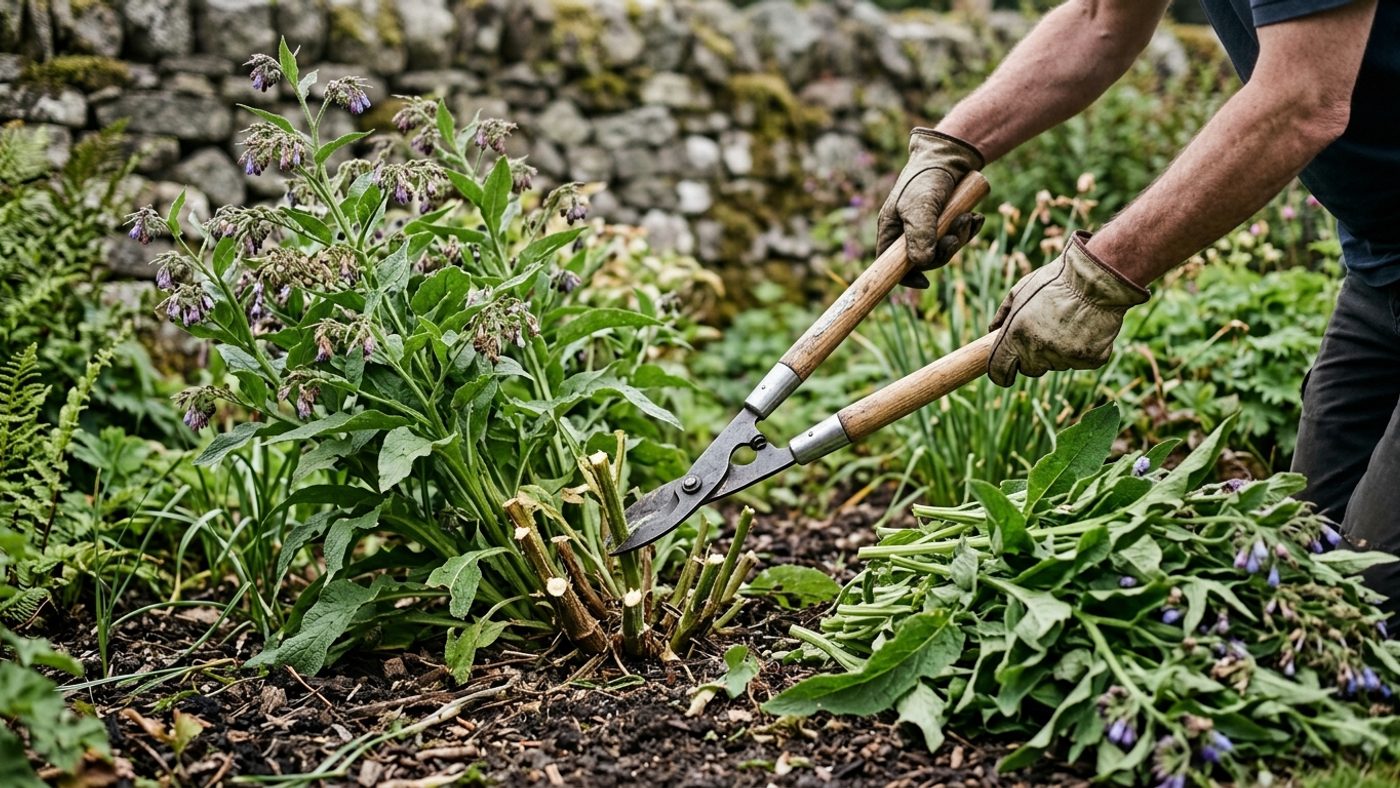
Water to establish newly planted comfrey, then let the roots develop on their own; it needs little further attention once settled in. Allow plants to bloom through April, then cut back to the base to stimulate fresh, leafy growth; further cuts through the growing season provide material for feed.
Making comfrey feed
Cut comfrey to the ground and cover the leaves with water in a container; it's ready in about three weeks, once the liquid is black and strong-smelling. Alternatively, chop and pack leaves tightly into a water-tight, ideally lidded container with no added water, weighted down with a brick, and collect the concentrated liquid that leaches out over a similar period.
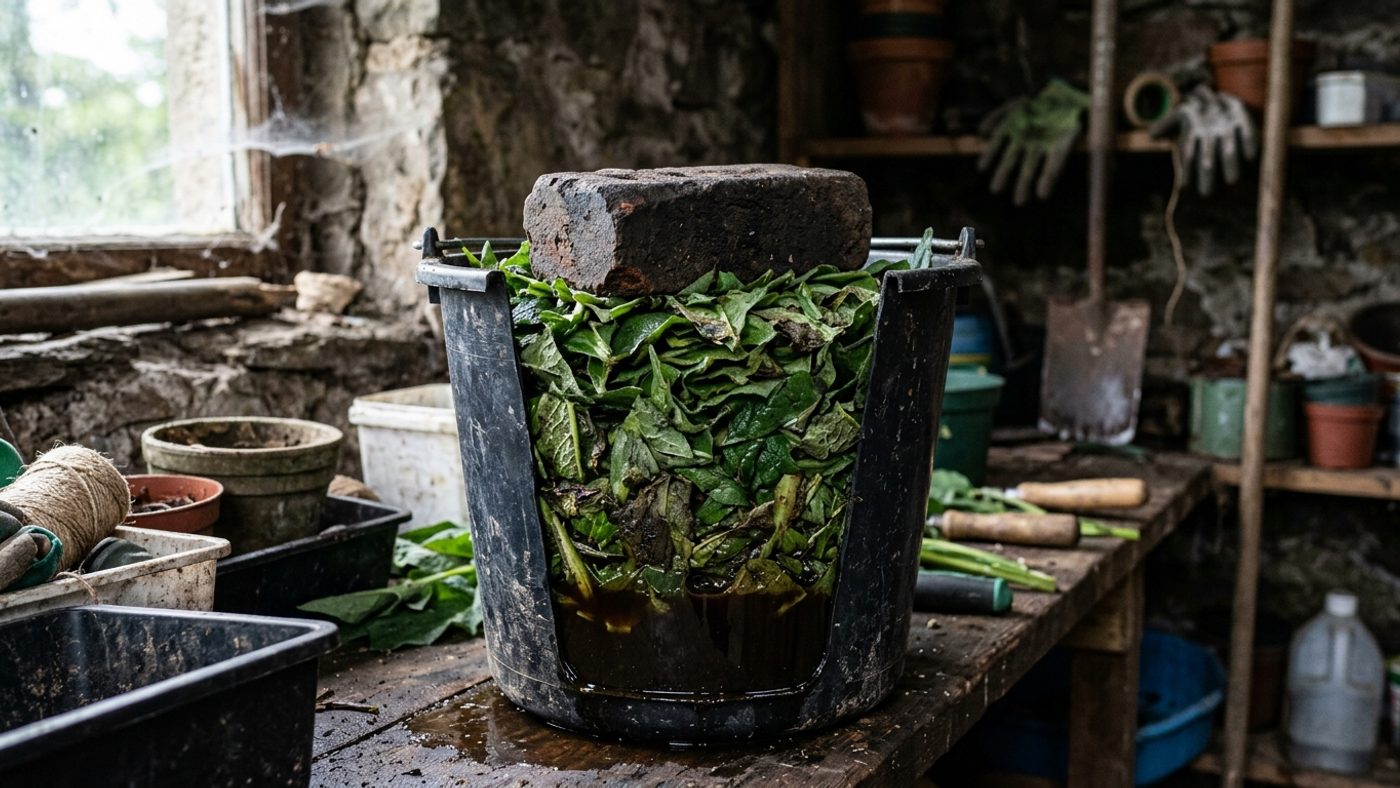
Either way, dilute roughly one part comfrey liquid to ten parts water before using it, and use the finished feed promptly rather than storing it, since it doesn't keep well. Wear gloves and ideally long sleeves throughout: the hairy leaves can irritate skin, separate from the ingestion caution below.
Varieties
Several further Symphytum species and cultivars are named (creeping comfrey, tuberous comfrey, Hidcote Blue among them), none carrying AGMThe RHS's Award of Garden Merit: a UK-wide trials award for reliable performance, not a Scotland-specific recommendation. Full definition →, but Bocking 14 and common comfrey are the two grown specifically for liquid feed. Bocking 14's sterility is the genuinely practical trait that decides the choice between them.
★ Our pick for Scotland
Bocking 14
Sterile hybrid · non-invasive · H7
A sterile hybrid that won't self-seed, H7 hardy, and the variety both sources independently point to for making liquid feed.
Why this one: No AGM award exists for comfrey. Sterility solves the self-seeding half of common comfrey's containment problem outright, in a garden where the same-sized bed would otherwise spread on its own.
Also worth considering
Common comfrey
Symphytum officinale · UK native · showier flowers
The UK-native species with genuinely showier purple, pink or cream flowers, but a real containment cost: it self-seeds readily and root sections left behind after digging can regrow into new plants.
Best Comfrey Varieties for Scotland → compares all named comfrey varieties head-to-head, with the practical detail that doesn't fit in a summary card.
Common problems
Comfrey isn't particularly susceptible to pests or diseases. Both common comfrey and Bocking 14 are harmful if eaten repeatedly, and gloves and protective equipment are recommended when handling either.
Common questions
Is it safe to eat comfrey leaves?
No: common comfrey is harmful if eaten repeatedly, and handling it calls for gloves. Grow it for its real modern use, a liquid fertiliser and compost activator, not as a food crop. Full sourced breakdown: <a href="/tools/garden-myths/comfrey/">Comfrey Myths →</a>
Will comfrey take over my garden?
Common comfrey genuinely can: it self-seeds readily and is difficult to remove once established, since root fragments left in the ground regrow. Bocking 14, a sterile hybrid, solves the seeding problem but still needs the same generous space. Full sourced breakdown: <a href="/tools/garden-myths/comfrey/">Comfrey Myths →</a>
What's the right way to make comfrey feed?
There's no single correct method: one approach steeps cut leaves in added water for two to four weeks, the other packs leaves tightly with no water and collects the concentrated liquid that leaches out. Both are diluted roughly one part comfrey liquid to ten parts water. Full sourced breakdown: <a href="/tools/garden-myths/comfrey/">Comfrey Myths →</a>
Sources
6 sources, and what each was used for
- RHS: site/soil, cutting back for fresh growth, liquid feed method (steeped in water), invasiveness, Bocking 14 recommendation
- RHS: detailed water-steeped comfrey feed method, dilution ratio, handling caution, storage
- RHS: H7 hardiness rating and 'harmful if eaten repeatedly' safety note for common comfrey
- RHS: Bocking 14's sterile/non-invasive trait, H7 hardiness, same 'harmful if eaten repeatedly' safety note
- gardenersworld.com: soil pH preference, invasiveness warning ('unsuitable for all except the largest gardens'), root regrowth risk, skin-irritation handling caution, Bocking 14 recommendation for fertiliser
- gardenersworld.com: alternative no-added-water comfrey feed method, dilution ratio, handling caution