
Woolly Aphid is a minor pest that affects apples in Scotland. Here is what it looks like, how to spot the damage, and which controls have been tested.
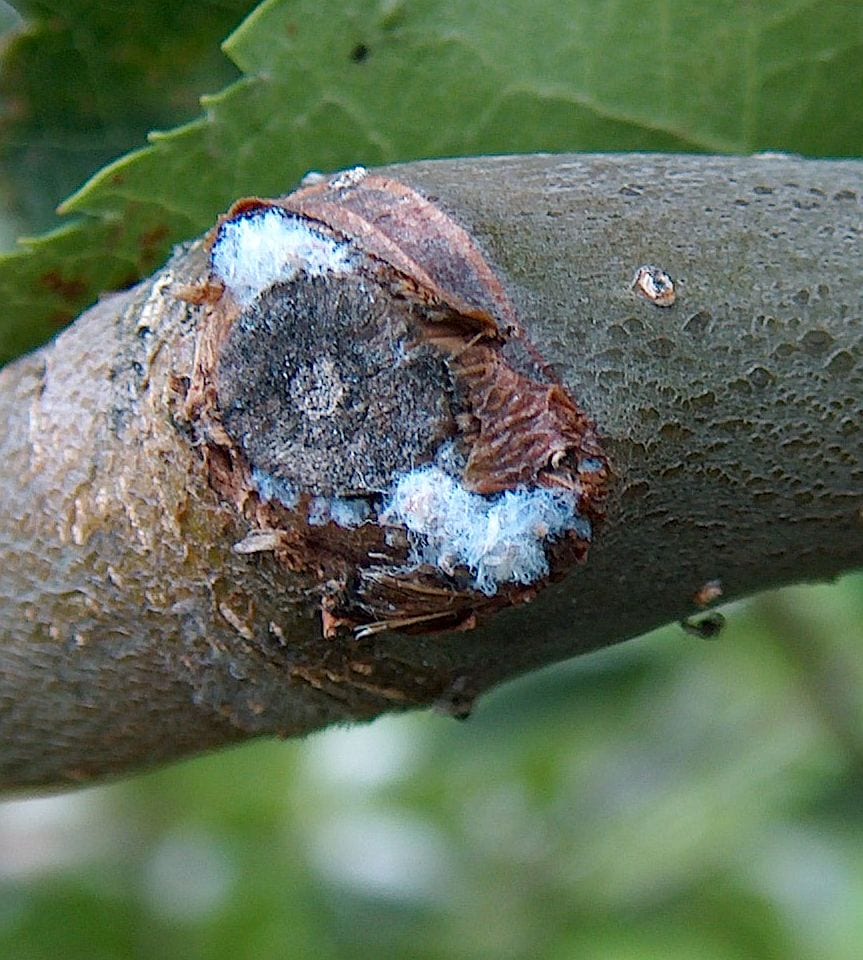
What does it look like?
Adults are blackish-brown and only 1-7mm long, but the fluffy white waxy covering they produce is what actually gives a colony away, coating affected bark from spring through early autumn.
Is this pest active now?
Watch from around April through October, the full window this pest stays active on the tree.
Symptoms
Lumpy swellings develop in the bark where the aphids have been feeding, caused by chemicals the aphids secrete while feeding rather than the feeding itself. In frosty weather, the bark around these swellings can crack, and those cracks are one of the routes apple canker gets in through, a disease that can spread all the way round a branch and kill it, sometimes within a single season on smaller wood.
Life cycle
Aphids overwinterKeeping a plant alive and intact through the cold months, whether left outdoors, moved under cover, or stored dormant. Full definition → as immature nymphs sheltering in bark crevices, without producing wax during the cold months. They become active again in spring around old pruning cuts, and by mid-to-late summer, populations peak and spread to younger shoots. Winged forms also develop in mid-summer and fly off in search of new host trees.
Why this matters in Scotland
This aphid itself rarely costs a tree anything on its own. What's actually worth watching is the separate, more serious risk that follows once frost cracks bark the aphid has already weakened.
A colder Scottish winter means more of that frost-cracking than a milder one further south, adding up over the years on a tree kept long-term rather than a one-season crop.
Controls: what actually works
All the methods below are backed by real evidence, not just repeated folklore.
Hand control: squash colonies by finger and thumb
Direct removal deals with a visible colony immediately and doesn't rely on any product, useful for catching a new colony around a pruning cut before it spreads.
Natural predators: encourage ladybirds, ground beetles, hoverflies, parasitoid wasps and earwigs
All five are named as natural enemies that help keep populations down, and a garden that skips chemical control gives them the chance to do that job.
Earwig shelters: hang a hay-filled flower pot in the tree
A flower pot stuffed with hay and hung in the branches gives earwigs somewhere to shelter close to where the aphid colonies actually are, rather than leaving them to find their own way in.
Frequently asked questions
What should I do first if I find woolly aphid in my garden?
Start with hand control. After that, natural predators. Work through the rest in order of how well-evidenced they are if the first two aren’t enough on their own.
Will woolly aphid kill my plants?
They rarely kill established plants. The damage is usually cosmetic on outer leaves, and natural predators often bring numbers under control without you doing anything.
When are woolly aphid most active in Scotland?
Check the seasonal activity section above. Scottish timings can run a few weeks behind the UK-generic figures.
Should I just leave woolly aphid alone?
In most gardens, yes. woolly aphid are food for birds, wasps and predatory insects, and a healthy garden carries some without trouble. Tolerance is also RHS's official position now, for that same reason.
Sources
2 sources, recorded with what each was used for
- RHS1: identification, symptoms, the pruning-wound trigger, life cycle and overwintering, hand control, encouraging predators, earwig shelters, absence of a chemical control
- RHS1: confirming woolly aphid damage as a route for apple canker infection, corroborating apples as a genuine host beyond apples' own generic 'fruit aphids' listing