
Sweetcorn Smut is a common disease that affects sweetcorn in Scotland. Here is what it looks like, the conditions it needs, and the controls that actually work.
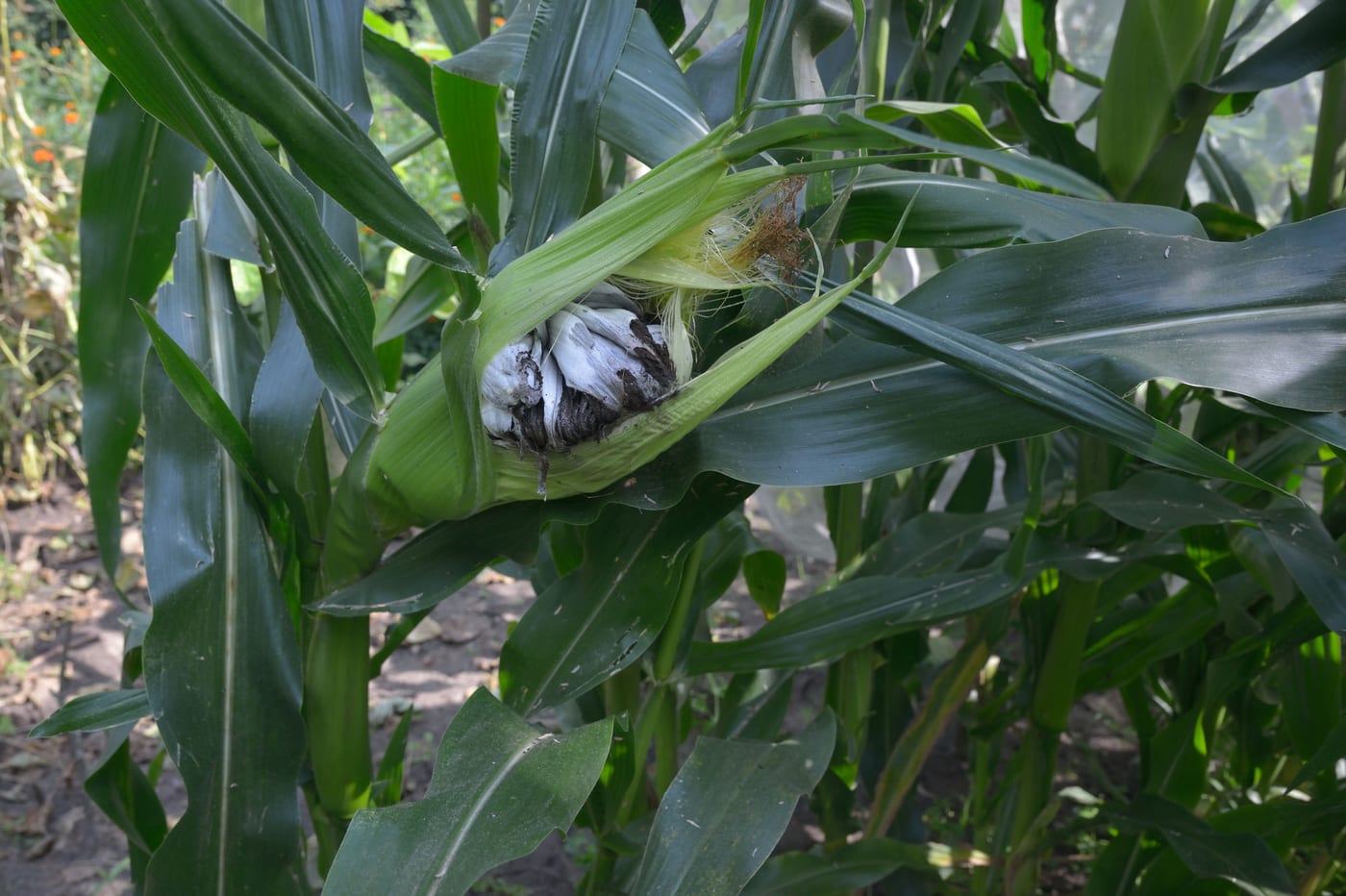
What does it look like?
Affected kernels swell hugely and turn grey, eventually bursting to release huge numbers of black spores. Utah State University Extension describes the same growths as fleshy, tumour-like galls, white at first before turning brown, that can form on ears, leaves, stalks or tassels: on leaves they stay small and blister-like, but on ears and other larger structures they grow much bigger before rupturing.
What causes it
Spores need a temperature between about 10-35C (50-95F) and adequate moisture to germinateA seed sprouting: breaking dormancy and putting out its first root and shoot, given the right warmth and moisture. Full definition → in spring. Infection happens through wounds, including insect damage, or when spores land on the silk and grow down into the developing ear. High nitrogen levels or heavy manure applications make things worse, since they push soft, more easily wounded tissue.
Symptoms
Plants can also show stunting and distortion beyond the galls themselves. Only the specific plant part affected is lost: an infected cob is ruined, but other cobs on the same plant, or the plant as a whole, aren't necessarily affected.
Life cycle
The fungus survives as resting spores (teliospores) in soil or crop residue for several years. In spring, once temperature and moisture conditions are right, these germinate and produce a second spore type that's spread by wind or water to young plants, entering through wounds or the silk. Galls form, and once they rupture they release huge numbers of fresh spores that can infect other plants nearby the same season, as well as returning to the soil to persist for future years.
Why this matters in Scotland
Sweetcorn is already grown close to its climate limit in most of Scotland, needing a warm sheltered spot and often black plastic mulchA layer of material spread over the soil around plants to suppress weeds, retain moisture, and improve soil structure as it breaks down. Full definition → or fleeceA lightweight, breathable fabric laid or draped over plants to trap a little warmth and keep off frost, wind and some flying pests. Full definition → to get enough heat; the germination temperature range this fungus needs overlaps with exactly the marginal warm spells a Scottish sweetcorn crop depends on to grow at all, so a cooler Scottish climate is unlikely to offer the kind of escape it might for some other pests.
Controls: what actually works
All the methods below are backed by real evidence, not just repeated folklore.
Cut out and destroy galls as soon as you spot them, before they burst
Removing a gall before it ruptures stops that generation of spores from being released at all, which is the single most effective point to intervene.
Destroy badly infected plants, and don't compost affected material
Spores can persist in soil for years once established, so keeping infected material out of the garden entirely, rather than composting it, matters more here than for most diseases.
Rest the ground from sweetcorn for several years where the disease has been a recurring problem
Resting affected soil for several years is part of the general smuts advice, reflecting how long spores can persist once they're in the ground.
Minimise wounds to the plant, including insect damage, and avoid excess nitrogen feeding
Infection often happens through a wound, so limiting insect damage and mechanical injury closes off an entry route. Keeping nitrogen levels reasonable, rather than pushing soft growth with heavy feeding or manure, reduces how vulnerable the plant's tissue is.
Choose a resistant variety if you can find one
Utah State University Extension names a long list of smut-resistant sweetcorn varieties, including Golden Security, Merit and Tendersweet. These are US-bred and their availability from UK seed suppliers isn't confirmed, so treat this as worth checking for rather than a guaranteed option.
Frequently asked questions
What should I do first if I find sweetcorn smut in my garden?
Start with cut out and destroy galls as soon as you spot them, before they burst. After that, destroy badly infected plants, and don't compost affected material. Work through the rest in order of how well-evidenced they are if the first two aren’t enough on their own.
Is there a spray that works?
No. There are no amateur chemical treatments available for sweetcorn smut. The controls that work are cultural: the measures listed above.
How much of this advice is actually proven?
Every control listed above is evidence-based, not just repeated folklore. None of it is a guess.
Sources
2 sources, recorded with what each was used for
- RHS1: general smut disease framing, sweetcorn-specific symptoms, soil persistence, and the destroy-plants/rest-soil controls
- Utah State University Extension26: confirmation of the specific species (Ustilago maydis), full gall description across plant parts, the temperature/moisture germination trigger and wound/silk infection routes, the nitrogen/manure aggravating factor, the gall-removal/wound-minimisation controls, and named resistant varieties