
Red Berry Mite is a minor pest that affects blackberries in Scotland. Here is what it looks like, how to spot the damage, and which controls have been tested.
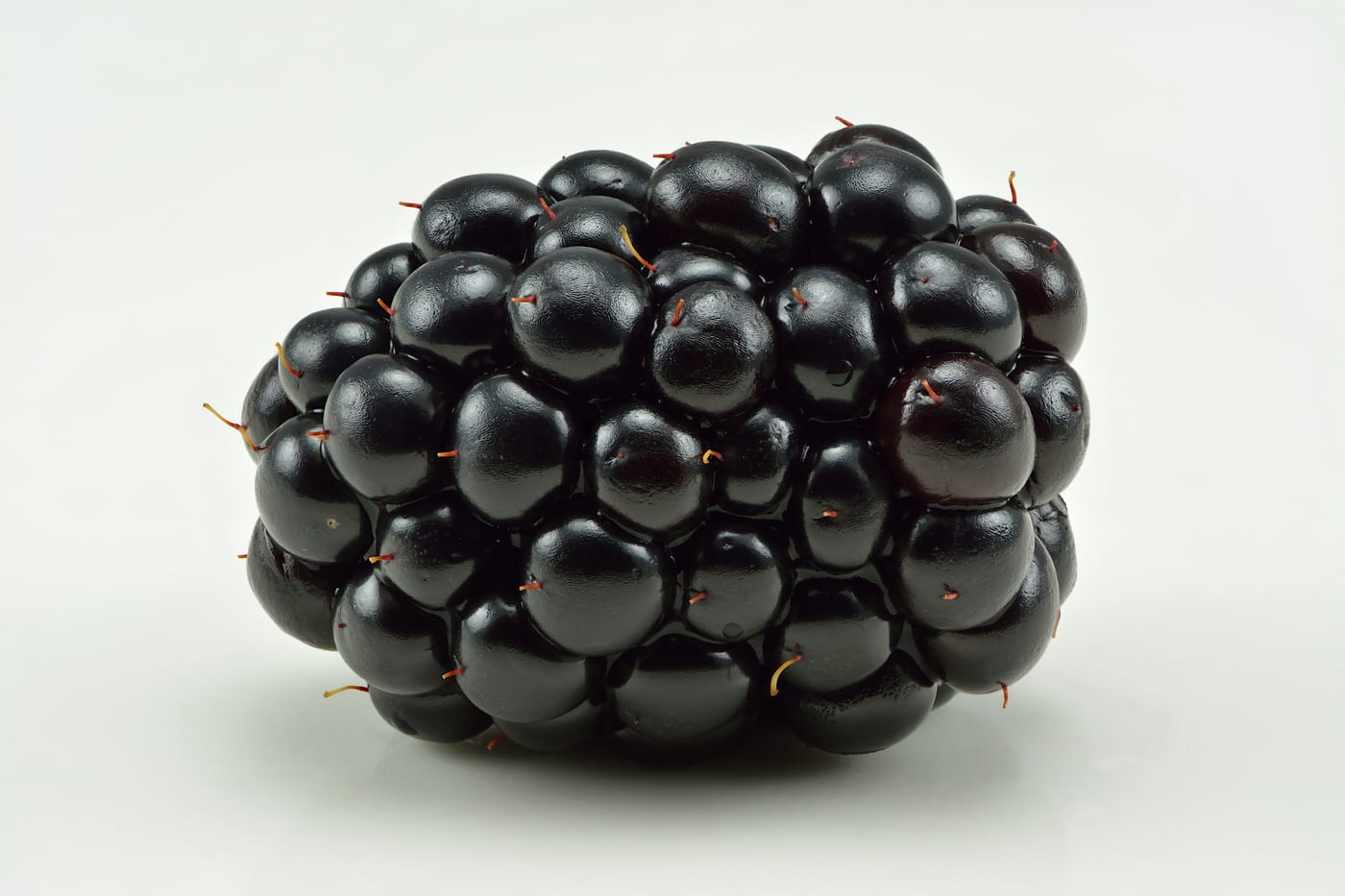
What does it look like?
A microscopic mite, under 0.2mm and needing at least 20x magnification to see directly, so identification in practice is by its damage rather than the mite itself: uneven ripening on the fruit, with some drupelets staying hard and red or green while the rest of the berry ripens normally. The first fruits to develop on a cane usually ripen fully; later fruits show increasingly patchy ripening through the season. The tell is which drupelets are affected: a genuine infestation leaves scattered, hard, discoloured druplets among otherwise normally ripening fruit, rather than the whole berry ripening slowly or unevenly, which is more often just a cool, dull summer.
What causes it
The mite's spread is population-driven rather than weather-triggered; an untreated infestation can spread from an isolated patch of canes to a larger planting over successive seasons.
Is this pest active now?
Active on the foliage from spring once buds break, through to fruiting in later summer, matching blackberries' own flowering and fruiting season.
Symptoms
Affected drupelets remain hard and red or green rather than turning black, giving the berry a patchy, unripe-looking appearance even once picked. The fruit is essentially unmarketable once affected, and late-maturing canes and cultivarsA plant variety that arose or was bred under cultivation and is kept true by deliberate propagation, rather than a naturally occurring wild species. Full definition → carry the greatest risk since the mite population has longer to build up before those fruits ripen.
Life cycle
The mite overwinters under bud scales and deep inside buds. As new growth emerges in spring it moves onto developing shoots, then colonises flower buds and, once fruit sets, concentrates around the base and core of the developing drupelets, which is where the feeding damage that prevents normal ripening happens.
Controls: what actually works
All the methods below are backed by real evidence, not just repeated folklore.
Cut heavily affected canes to ground level as soon as the problem is noticed
The main practical option. Removing the worst-affected canes reduces the population carried over into next season, since the mite overwinters in the buds of exactly those canes. Bin or burn the cut material rather than composting it, since the mite overwinters in exactly those buds.
Replace canes with a persistent, recurring problem
Where the same canes are affected badly year after year, replacing them outright is more practical than continuing to manage around the damage.
Use partly ripened, partly affected berries for cooking, jam or wine rather than discarding them
The unripe drupelets are hard and unpleasant fresh, but cooking or fermenting the whole berry makes the affected patches far less noticeable, so a partly affected crop doesn't have to be a wasted one.
Frequently asked questions
What should I do first if I find red berry mite in my garden?
Start with cut heavily affected canes to ground level as soon as the problem is noticed. After that, replace canes with a persistent, recurring problem. Work through the rest in order of how well-evidenced they are if the first two aren’t enough on their own.
Will red berry mite kill my plants?
Not usually outright, but it can genuinely cost you part of that year's harvest, not just something cosmetic a plant shrugs off. See the controls above for what actually reduces that risk.
When are red berry mite most active in Scotland?
Check the seasonal activity section above. Scottish timings can run a few weeks behind the UK-generic figures.
Should I just leave red berry mite alone?
In most gardens, yes. red berry mite are food for birds, wasps and predatory insects, and a healthy garden carries some without trouble. Tolerance is also RHS's official position now, for that same reason.
Sources
2 sources, recorded with what each was used for
- RHS1: definition, affected crop (blackberries only, explicitly not other cane fruits), identification, symptoms, active timing, and all three non-chemical controls
- UC IPM16: independent corroboration of the mechanism and symptoms, overwinteringKeeping a plant alive and intact through the cold months, whether left outdoors, moved under cover, or stored dormant. Full definition → and colonisation life cycle detail, spread risk if untreated, and confirmation that raspberries are not economically affected