
Quince Leaf Blight is a common disease that affects quince in Scotland. Here is what it looks like, the conditions it needs, and the controls that actually work.
What does it look like?
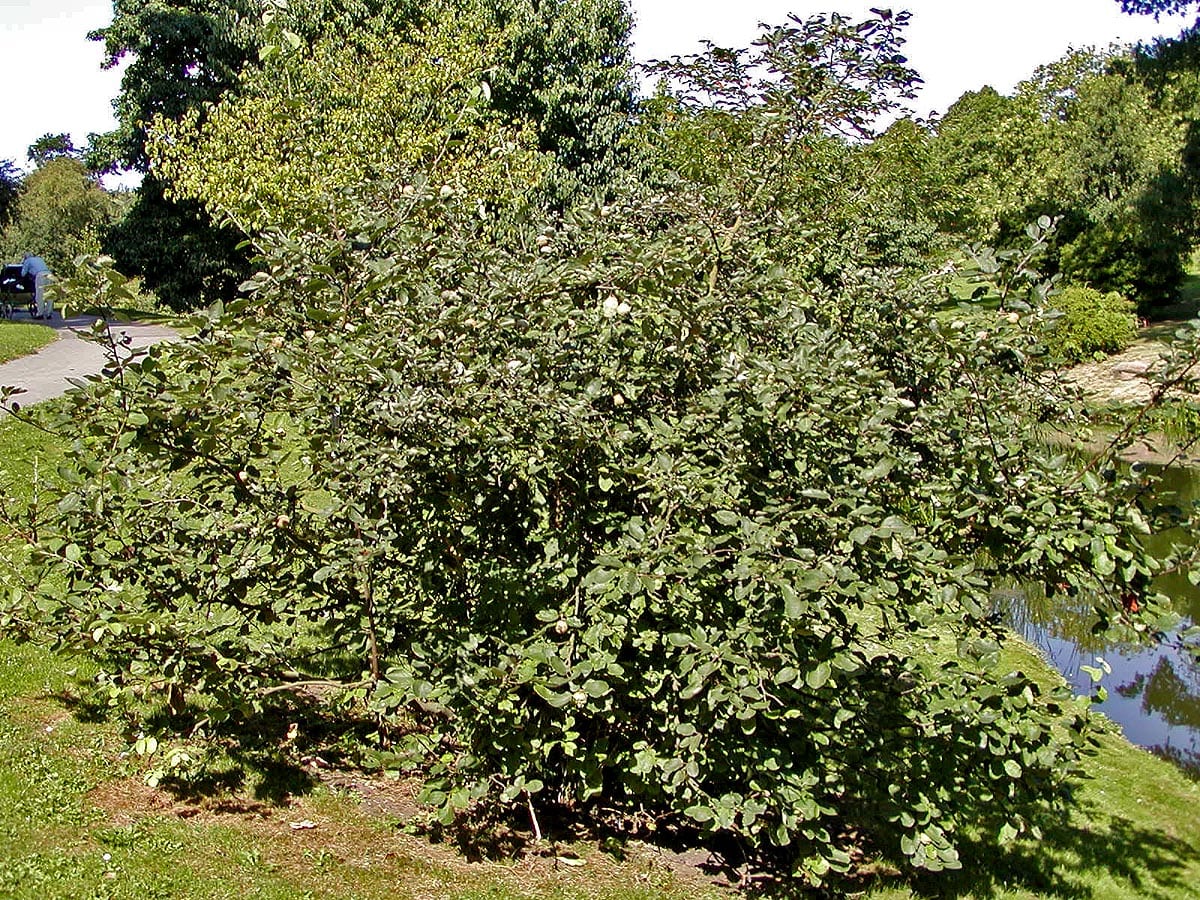
This is true quince (Cydonia oblonga), grown for its fruit, not the unrelated ornamental Chaenomeles often sold as 'flowering quince' or 'japonica' for its spring blossom. Small dark spots with grey centres form on the leaves. As more spots develop on a single leaf they can coalesce, and the leaf turns brown or yellow and falls prematurely. Fruit can also develop spotting and distortion, and infected shoot tips can die back. Pacific Northwest Extension's own description of the same disease emphasises a reddish-purple spot with a tan centre and a reddish halo, visible fungal sporulation often obvious in the centre once established, likely the same lesion described at a different stage as the colour shifts while a spot ages.
What causes it
Most severe during wet summers. Infection specifically needs 8 to 12 hours of continuous leaf wetness to take hold, and susceptibility doesn't drop off as a leaf matures the way it does with some other leaf diseases, so older leaves stay just as much at risk as young growth through a wet spell.
Symptoms
Severe cases lose their leaves early, and fruit can be spotted and distorted alongside the leaf damage. Once the weather turns warm and dry, new growth put on afterwards is rarely affected, since the wet conditions the fungus needs have passed.
Life cycle
The fungus overwinters on dead twigs and fallen leaves left on or near the tree. Spores produced there start new infections in spring. Once the first leaf spots form, fruiting bodies develop inside them, and rain splashes their spores onto more leaves, shoot tips and fruit, spreading the infection further through the same wet spell.
Why this matters in Scotland
A wet Scottish summer supplies exactly the sustained leaf wetness this disease needs. RHS's own resistant-variety trial, run at Wisley during a wet summer, is the closest thing to a real-world test of these cultivarsA plant variety that arose or was bred under cultivation and is kept true by deliberate propagation, rather than a naturally occurring wild species. Full definition → under the conditions a Scottish garden regularly delivers anyway.
Controls: what actually works
All the methods below are backed by real evidence, not just repeated folklore.
Rake up and destroy fallen leaves, and prune out dead shoots over winter
The fungus overwinters on exactly this material, so removing it cuts down how much infection is left to start next spring's cycle. Winter pruning of dead shoots is a further step on top of raking fallen leaves.
Avoid overhead watering, or water in a way that doesn't leave foliage wet for extended periods
Since infection needs 8 to 12 hours of continuous leaf wetness, cutting down how long foliage stays wet from watering directly works against the mechanism, on top of whatever wet weather the tree can't be protected from.
Keep the tree well fed and growing strongly
Improved cultivation and feeding is named as part of the recommended response: a vigorously growing tree tends to cope better with a disease pressure it can't fully avoid.
Where leaf blight has been a recurring problem, or in a wetter part of the country, choose a tolerant cultivar
'Serbian Gold' and 'Aromatnaya' showed good tolerance in an RHS Garden Wisley trial during a wet summer: they still developed leaf spots, but these stayed small, with little or no premature leaf fall, growing right alongside susceptible cultivars in the same conditions.
Frequently asked questions
What should I do first if I find quince leaf blight in my garden?
Start with rake up and destroy fallen leaves, and prune out dead shoots over winter. After that, avoid overhead watering, or water in a way that doesn't leave foliage wet for extended periods. Work through the rest in order of how well-evidenced they are if the first two aren’t enough on their own.
Is there a spray that works?
No. There are no amateur chemical treatments available for quince leaf blight. The controls that work are cultural: the measures listed above.
How much of this advice is actually proven?
Every control listed above is evidence-based, not just repeated folklore. None of it is a guess.
Sources
2 sources, recorded with what each was used for
- RHS1: causal organism, affected hosts, identification, symptoms, life cycle, the named 2023 Wisley resistant-variety trial, and the leaf-raking/pruning/feeding/cultivar-choice controls
- Pacific Northwest Extension18: independent corroboration of the causal species and host range, the specific 8-12 hour leaf-wetness infection trigger RHS's own page doesn't give, and the overhead-watering-avoidance control