
Potato Scab is a minor disease that affects potatoes in Scotland. Here is what it looks like, the conditions it needs, and the controls that actually work.
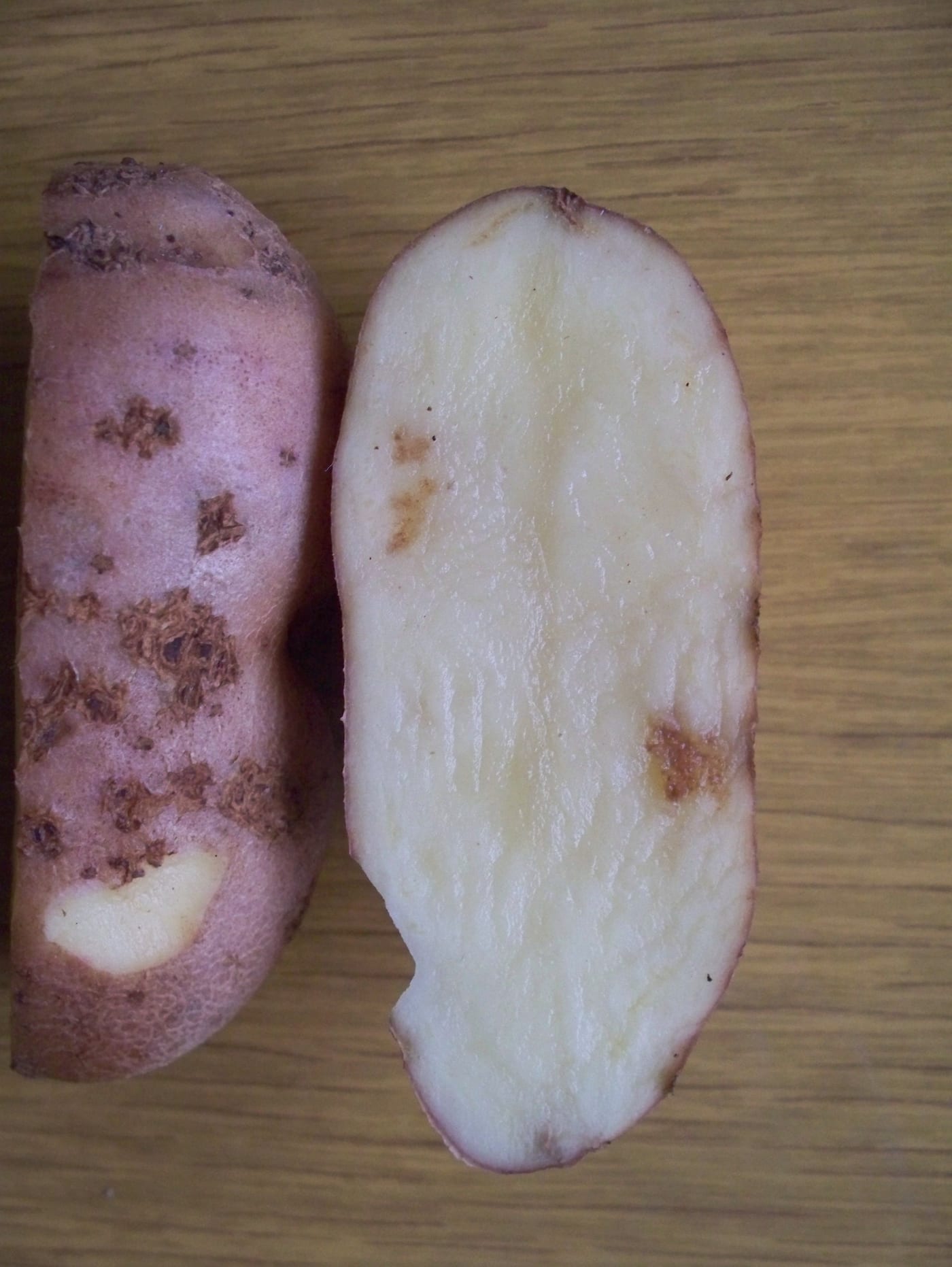
What does it look like?
Common scab shows as raised, rough, corky patches on the tuberA swollen underground stem or root a plant uses to store energy, which can also grow into a new plant, the classic example being a potato. Full definition → skin, superficial in mild cases. Powdery scab shows as irregular brown raised areas or depressions with papery margins, containing dusty brown spore masses. Severe attacks of either can go further: common scab can crack the skin and lead to rotting, and powdery scab can cause tuber distortion resembling potato wart disease. Wart disease itself is now very rare in the UK, but it's a notifiable disease, so a tuber that's genuinely, severely distorted rather than just scabby is worth reporting through the UK Plant Health Information Portal to rule out.
What causes it
The two organisms need opposite conditions to cause visible damage. Common scab is worse when the soil is dry, particularly while the tubers are forming, and worse again in alkaline soil. Powdery scab needs the opposite: its spores need free water in the soil to swim and infect the plant, so wet conditions favour it instead.
Is this disease active now?
Scabs form on the tuber skin as it develops through spring and summer, then persist unchanged on harvested tubers right through storage.
Symptoms
In the mild, far more common form, the damage is entirely skin-deep: peel the tuber and it's fine underneath. Severe cases are a genuine loss rather than a cosmetic mark, with cracked, rotting skin on common scab-affected tubers or distorted, misshapen tubers on powdery scab-affected ones.
Life cycle
Both organisms are already present in most garden soils, so the practical question isn't whether they're there but which of two opposite weather patterns lets them show up as visible marks on the skin. Seed tubers can themselves carry and spread infection, so picking certified seed potatoes with minimal visible infection matters as much as soil conditions do. Neither disease spreads once tubers are in store: both are field diseases, and storage conditions have little further effect on them.
Why this matters in Scotland
The two organisms genuinely cut in opposite directions here. Common scab, the more commonly encountered of the two, needs dry soil to show up badly, and a typically damp Scottish growing season works against it more often than not. Powdery scab needs wet soil, so it's the one Scotland's climate more readily favours, though it's not typically the more damaging of the two.
Beetroot, radishes, swedes and turnips are all named as secondary common-scab hosts generally, but scab doesn't turn up as a real problem for any of them in practice. Potatoes is the crop it actually matters for. Buying certified seed potatoes, the single most direct control here, is also unusually easy to act on from Scotland: SASA is the certifying authority for seed potatoes grown here, and Scotland is itself a major producer of certified, disease-checked seed stock.
Controls: what actually works
All the methods below are backed by real evidence, not just repeated folklore.
Water consistently during tuber formation: 20 litres per square metre spread over 4 weeks, starting 2-3 weeks after shoots emerge
This is specifically aimed at common scab, the drought-triggered of the two organisms, and the timing targets the exact window when dry soil lets the bacteria take hold in the forming tubers.
Select certified seed potatoes with minimal visible scab
Seed tubers themselves can carry and spread infection into otherwise clean soil, so starting with visibly clean, certified seed removes one of the two routes the disease has to reach a new crop.
Avoid liming the soil before a potato crop, and add organic matter to help it hold moisture
Alkaline soil, the kind recent liming produces, favours common scab, so leaving a potato bed unlimed removes one more condition the bacteria need to cause visible damage.
Rotate potatoes onto fresh ground each year rather than replanting the same bed
Both organisms build up in soil where potatoes, or their secondary hosts, are grown repeatedly, so moving the bed each year keeps the ground from becoming a reliable source of infection on its own.
Choose a resistant variety: 'Accent', 'Arran Pilot', 'Juliette', 'Golden Wonder', 'King Edward' or 'Pentland Javelin' for common scab; 'Desiree', 'Hermes', 'King Edward', 'Pixie' or 'Sante' for powdery scab
'King Edward' is the one variety RHS names against both organisms, useful given the two need opposite soil conditions to take hold, so no single cultural fix covers both at once.
Frequently asked questions
What should I do first if I find potato scab in my garden?
Start with water consistently during tuber formation. After that, select certified seed potatoes with minimal visible scab. Work through the rest in order of how well-evidenced they are if the first two aren’t enough on their own.
Is there a spray that works?
No. There are no amateur chemical treatments available for potato scab. The controls that work are cultural: the measures listed above.
When are potato scab most active in Scotland?
Check the seasonal activity section above. Scottish timings can run a few weeks behind the UK-generic figures.
Sources
4 sources, recorded with what each was used for
- RHS1: identification, symptoms, opposite dry/wet triggers for each organism, secondary hosts, watering figure, seed selection, liming avoidance, crop rotationMoving each crop family to different ground each year, on a multi-year cycle, so pests and diseases that build up in soil don't get a repeat host. Full definition →, resistant varieties, absence of a chemical control, potato wart disease being rare but notifiable
- RHS1: confirming potato scabs directly on potatoes' own growing page
- FAS Scotland14: confirming both diseases originate in the field and don't spread in store, so storage conditions have little further effect on damage already present at harvest
- sasa.gov.uk17: SASA's role as the certifying authority for seed potatoes grown in Scotland, and Scotland's standing as a major producer of certified seed stock