
Pocket Plum is a minor disease that affects damsons in Scotland. Here is what it looks like, the conditions it needs, and the controls that actually work.
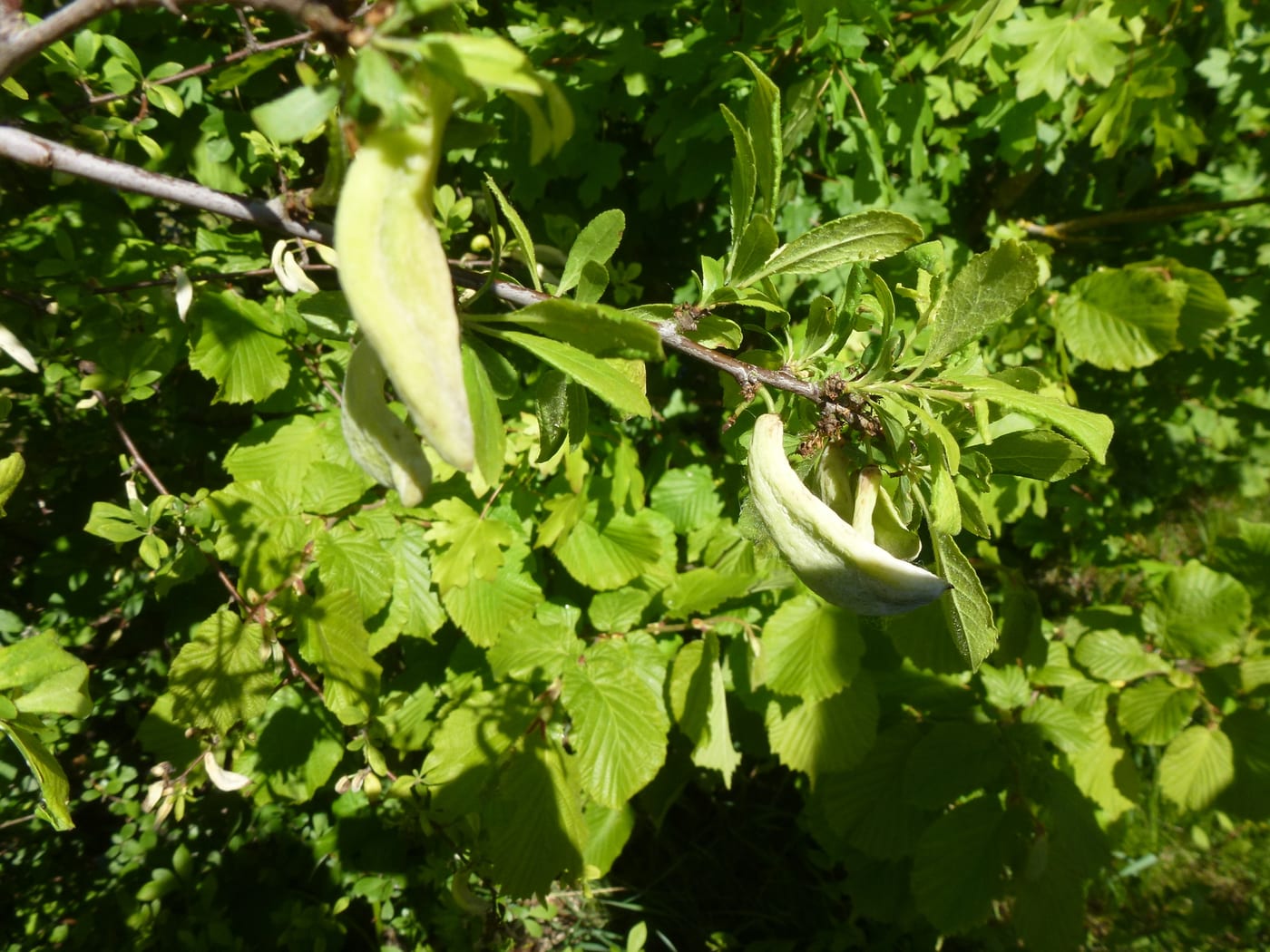
What does it look like?
Developing fruit turns elongated, flattened and hollow, with no stone inside, ranging from light green through grey to a light orange as it ages. A white bloom of fungal spores appears on the surface, then the fruit shrivels, dries out and falls, usually well before it would normally ripen. Damsons are themselves a type of plum, which is why this is the same disease and the same fungus wherever you see it named as either plum pocket or pocket plum.
What causes it
Cool, wet weather right when buds break in spring is when infection happens, and infection is rare in warm, dry weather.
Is this disease active now?
Infection happens at bud break in spring, but the distorted, gall-like fruit doesn't become obvious until midsummer, with galls reaching full size by July and August.
Symptoms
Only the fruit that was infected is affected: it's inedible and drops, but the rest of the tree's crop is unaffected. Deformed twigs can also thicken and grow abnormally, and dense clusters of dead and live twigs, known as witches' brooms, sometimes develop where the fungus has overwinteredKeeping a plant alive and intact through the cold months, whether left outdoors, moved under cover, or stored dormant. Full definition → in bark or bud scales.
Life cycle
The fungus overwinters on old infected fruit still clinging to the tree or fallen on the ground, and in bark and bud scales. It invades new tissue as buds break the following spring, going on to affect twigs, leaves and developing fruit through the season.
Why this matters in Scotland
A cool, wet spring right as buds break is an ordinary Scottish spring more often than not, and that's precisely the weather window the infection needs.
Controls: what actually works
All the methods below are backed by real evidence, not just repeated folklore.
Remove infected branches, witches' brooms and affected fruit thoroughly, before the white fungal bloom releases spores
Prune out infected twigs, limbs and brooms. Don't add the removed material to a compost heap, since that keeps the spores in the garden rather than removing them. Since spores are airborne, this reduces rather than eliminates the risk of new infections where other Prunus species, including wild blackthorn, are growing nearby.
Frequently asked questions
What should I do first if I find pocket plum in my garden?
Start with remove infected branches, witches' brooms and affected fruit thoroughly, before the white fungal bloom releases spores.
Is there a spray that works?
No. There are no amateur chemical treatments available for pocket plum. The controls that work are cultural: the measures listed above.
When are pocket plum most active in Scotland?
Check the seasonal activity section above. Scottish timings can run a few weeks behind the UK-generic figures.
Sources
2 sources, recorded with what each was used for
- RHS1: definition, causal organism, affected crops, identification, symptoms, active-by-month timing, the one non-chemical control, and the no-fungicide-for-amateurs stance
- Pacific Northwest Extension18: independent confirmation this is Taphrina pruni (not the related American species Taphrina communis), the cool-wet-weather-at-bud-break infection trigger RHS's own page doesn't cover, overwintering mechanism, low economic/garden severity, and independent agreement on pruning as the cultural control