
Pear Midge is a common pest that affects pears in Scotland. Here is what it looks like, how to spot the damage, and which controls have been tested.
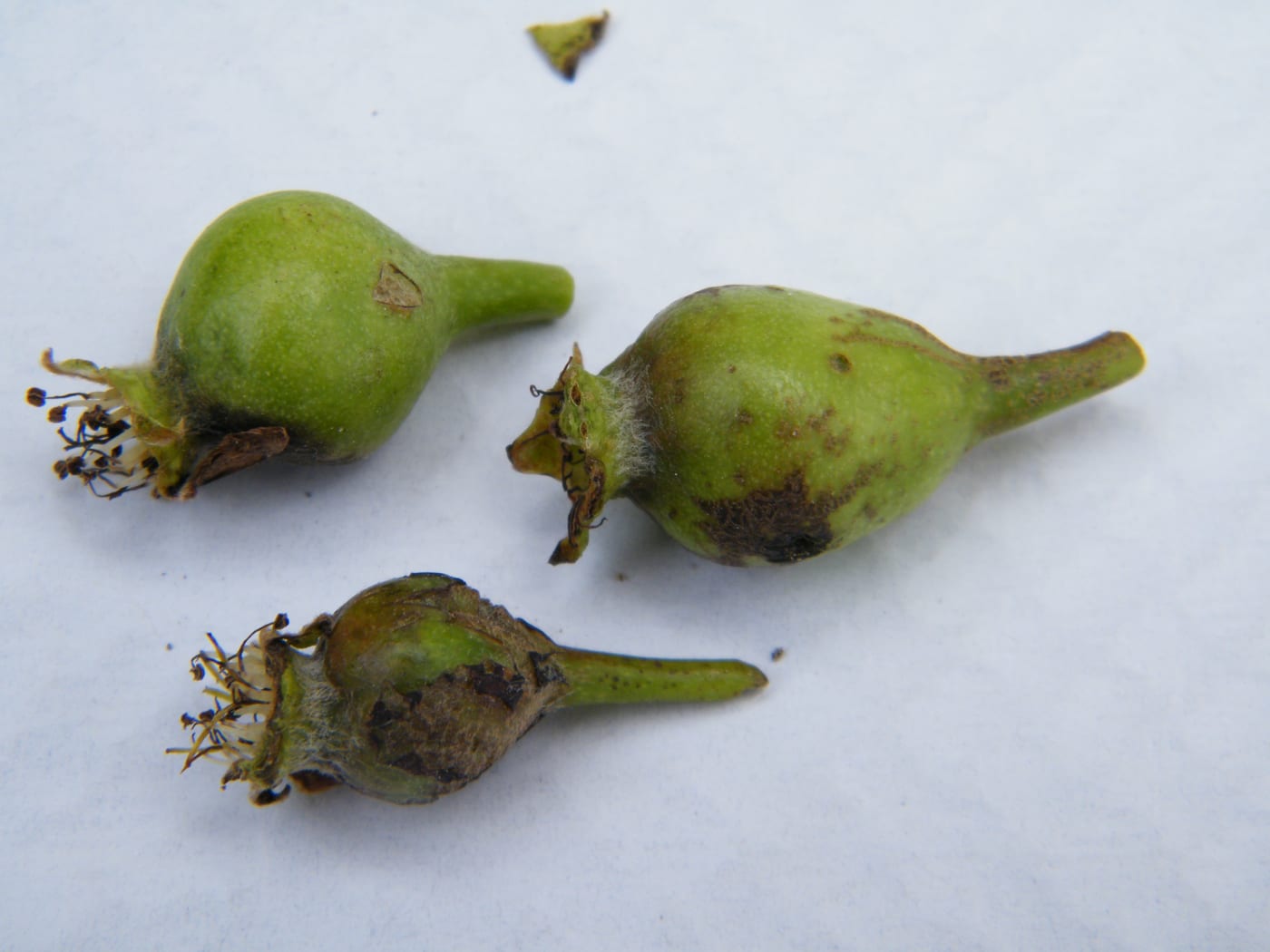
What does it look like?
Affected fruitlets grow noticeably faster than healthy ones at first and feel softer, then during May begin blackening at the eye end. The blackening spreads up the fruitlet, and affected fruitlets drop from the tree in late May to June. Cut one open and you'll find several orange-white maggots inside, up to 4mm long.
What causes it
Severity varies year to year rather than following a fixed weather trigger. The adult flies emerge and lay eggs very early in the season, in pear blossom shortly before it opens, so the whole infestation window is set by how the tree's flowering lines up with the midge's spring emergence.
Is this pest active now?
Adults emerge and lay eggs in spring as blossom opens; affected fruitlets blacken through May and drop by early June.
Symptoms
Only the individual fruitlets that were infested are lost; there's no ongoing damage to the tree itself. Late-flowering pear varieties are more exposed, since their blossom is more likely to still be open when the adult midges are laying eggs. Don't confuse this with ordinary June dropA tree's natural shedding of some immature fruit in early summer, thinning its own crop rather than a sign of a problem. Full definition →, a tree naturally shedding some immature fruit regardless of pests: cut a suspect fruitlet open, and midge damage means finding several small orange-white maggots inside.
Life cycle
Adult midges emerge from the soil in early spring and lay eggs in pear blossom just before it opens. Larvae develop inside the fruitlet through May, causing the fruitlet to blacken and drop by June. Once on the ground, larvae leave the fallen fruitlet, burrow into the soil and spin a silk cocoon a few centimetres down, where they overwinterKeeping a plant alive and intact through the cold months, whether left outdoors, moved under cover, or stored dormant. Full definition → before pupating the following spring.
Why this matters in Scotland
Scottish pear blossom typically opens later than further south, which shifts the exact overlap window between blossom and midge emergence without necessarily reducing the risk; a later-flowering local variety could still end up matching the midge's timing rather than avoiding it.
Controls: what actually works
All the methods below are backed by real evidence, not just repeated folklore.
Check developing fruitlets from spring and pick off and destroy any that are swelling unusually fast or starting to blacken
Removing affected fruitlets before the larvae finish feeding and drop to the soil stops that generation completing its life cycle. This is the main practical control, confirmed by a 2018-2022 trial across the UK, Netherlands, Belgium and Italy: remove infested fruit before the larvae fall to the ground. Bin the fruitlets rather than composting them, since the larvae can still complete their journey into the soil from a compost heap.
Hoe the soil around the base of the tree during dry weather in early summer
Disturbing the soil where larvae are burrowing down to pupate can reduce how many survive to become next year's adults. This targets the window after fruitlets have dropped and larvae are burrowing down to pupate, roughly June and July.
Encourage natural predators in the garden generally
Birds, spiders and ground beetles are natural enemies worth encouraging, though on their own they won't control an infestation that's already established.
Use pheromone traps to monitor when adults are emerging, if you want to time fruitlet checks precisely
A specific pheromone blend has been identified and tested for this species, with transparent traps working best, hung in the orchard from early March. This is a monitoring tool to tell you when to start checking fruitlets closely, not a control on its own: the same trial found mass trapping with 100 traps per hectare didn't actually reduce damage.
Frequently asked questions
What should I do first if I find pear midge in my garden?
Start with check developing fruitlets from spring and pick off and destroy any that are swelling unusually fast or starting to blacken. After that, hoe the soil around the base of the tree during dry weather in early summer. Work through the rest in order of how well-evidenced they are if the first two aren’t enough on their own.
Will pear midge kill my plants?
Not usually outright, but it can genuinely cost you part of that year's harvest, not just something cosmetic a plant shrugs off. See the controls above for what actually reduces that risk.
When are pear midge most active in Scotland?
Check the seasonal activity section above. Scottish timings can run a few weeks behind the UK-generic figures.
Sources
2 sources, recorded with what each was used for
- RHS1: causal organism, identification, symptoms, life cycle, active timing, and the fruitlet-removal/soil-hoeing/predator-encouragement controls
- Organic Farm Knowledge (BIOFRUITNET)25: independent corroboration of the removal-before-drop control (from a 2018-2022 UK/Netherlands/Belgium/Italy trial), late-flowering-variety susceptibility, pheromone trap monitoring detail, and the finding that mass trapping alone didn't reduce damage