
Pea Moth is a minor pest that affects peas in Scotland. Here is what it looks like, how to spot the damage, and which controls have been tested.
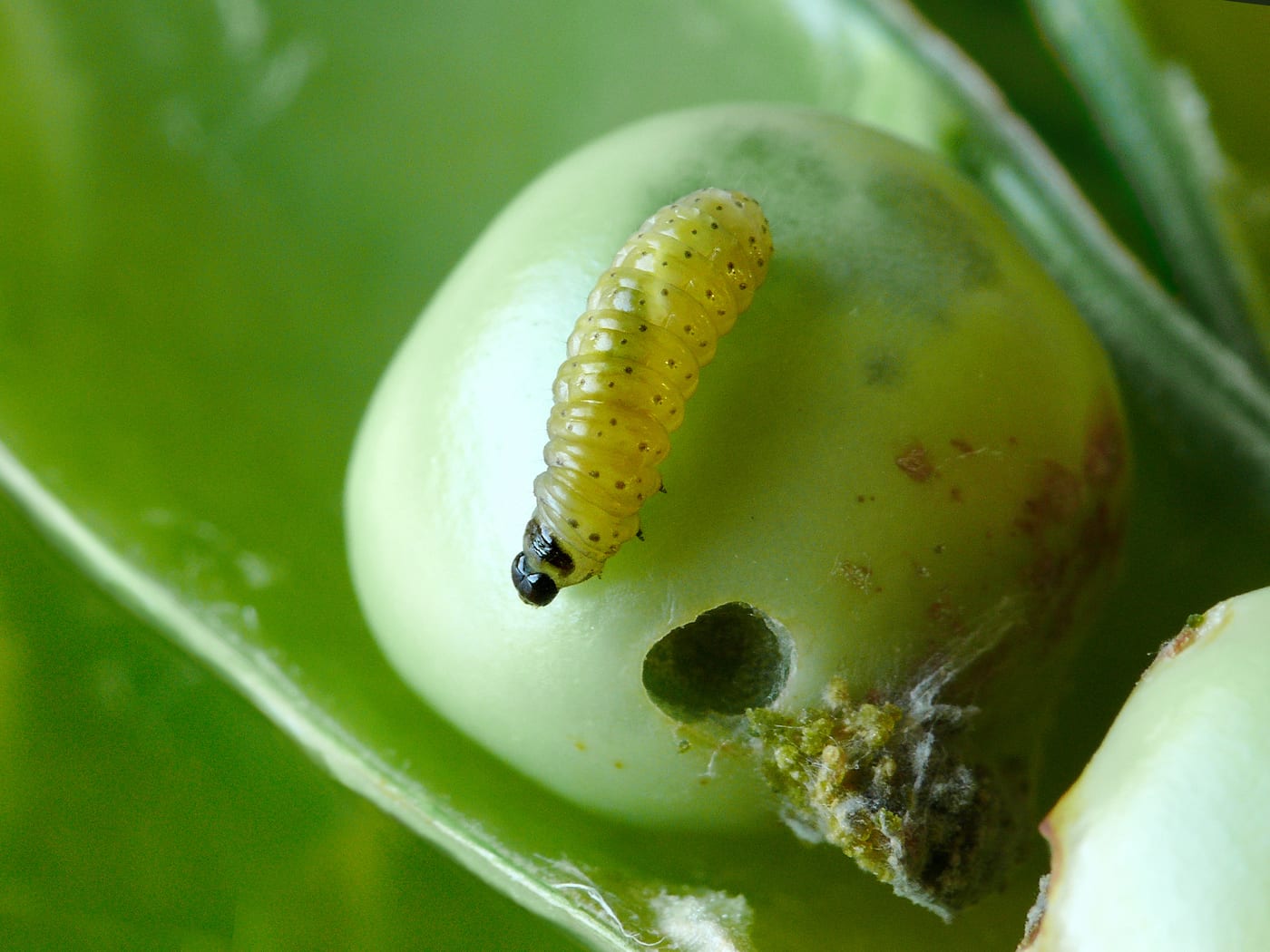
What does it look like?
The adult is a small grey-brown moth with a 15mm wingspan, rarely noticed since it flies at night and lays eggs directly on the flowers. The caterpillar is what a gardener actually finds: creamy white with dark dots, growing up to 14mm long, discovered inside a pod at shelling time alongside small piles of its droppings.
What causes it
Eggs are laid directly on flowering pea plants. A crop's risk comes down to whether its flowering overlaps the moth's June-July flight period; one that flowers before or after that window largely misses it.
Is this pest active now?
Watch from June through July, the egg-laying window that decides whether a crop is at risk that year.
Symptoms
The pod looks completely normal from the outside. It's only when shelling that one or more caterpillars turn up feeding among the peas, with frass nearby as the giveaway sign.
Life cycle
Adults emerge in June and July to lay eggs on flowering plants. Caterpillars feed inside the developing pods through mid-to-late summer, then leave to pupate in the soil, overwinteringKeeping a plant alive and intact through the cold months, whether left outdoors, moved under cover, or stored dormant. Full definition → there until the next year's adults emerge.
Why this matters in Scotland
SRUC's own field-scale organic vegetable guidance is direct about this: pea moth and pea midge are not troublesome in Scotland, a finding it pairs with the same cool summers that delay and extend pea maturity here.
A cooler summer that slows the crop down likely also slows the moth's own flight and egg-laying activity, which fits: the June-July window RHS gives is a UK-wide average, and a cooler Scottish June is plausibly less favourable to the adults than the same month further south.
Controls: what actually works
All the methods below are backed by real evidence, not just repeated folklore.
Sow a quick-maturing cultivarA plant variety that arose or was bred under cultivation and is kept true by deliberate propagation, rather than a naturally occurring wild species. Full definition → early or late, so flowering falls outside June-July
If the plant isn't in flower during the moth's egg-laying window, there's simply nothing for a female to lay eggs on.
Cover flowering plants with horticultural fleece or insect-proof mesh
Peas are self-pollinating, so excluding pollinators during flowering doesn't cost anything the way it would on an insect-pollinated crop, which makes this an easy, low-downside barrier against egg-laying females.
Grow mange-tout or sugar-snap types instead of podding peas
These are picked and eaten before the seed inside develops to the stage the caterpillar actually targets, so the vulnerable window largely passes before harvest.
Frequently asked questions
What should I do first if I find pea moth in my garden?
Start with sow a quick-maturing cultivar early or late, so flowering falls outside june-july. After that, cover flowering plants with horticultural fleece or insect-proof mesh. Work through the rest in order of how well-evidenced they are if the first two aren’t enough on their own.
Will pea moth kill my plants?
Not usually outright, but it can genuinely cost you part of that year's harvest, not just something cosmetic a plant shrugs off. See the controls above for what actually reduces that risk.
When are pea moth most active in Scotland?
Check the seasonal activity section above. Scottish timings can run a few weeks behind the UK-generic figures.
Sources
3 sources, recorded with what each was used for
- RHS1: identification, symptoms, the flowering-window trigger, life cycle and generations, sowing timing, fleece/mesh during flowering, mange-tout/sugar-snap as a less vulnerable option, absence of a chemical control
- RHS1: confirming pea moth directly on peas' own growing page
- SAC/SRUC13: the Scotland-specific finding that pea moth and pea midge are not troublesome in Scotland, already verified and cited in this site's own peas growing guide