
Fireblight is a minor disease that affects quince in Scotland. Here is what it looks like, the conditions it needs, and the controls that actually work.
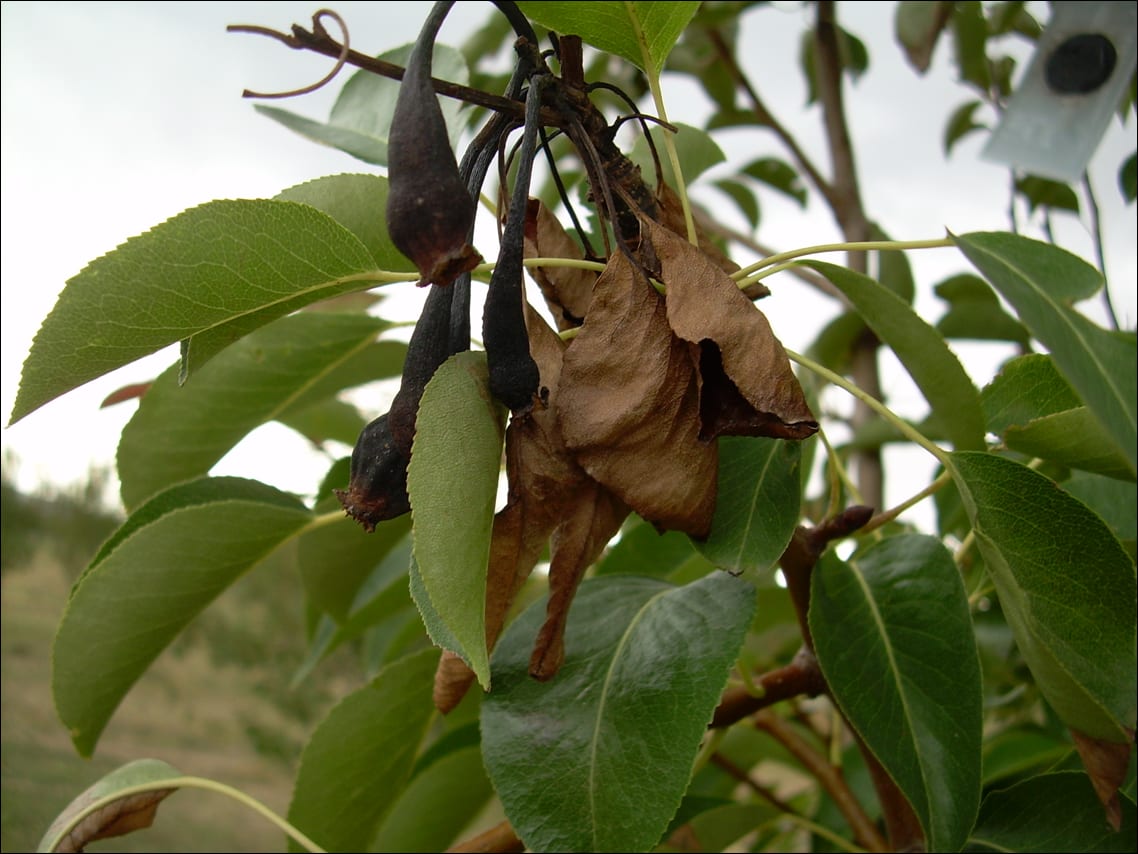
What does it look like?
Blossom wilts and dies at flowering time, sometimes with a slimy white ooze seeping out in wet weather. As shoots die back, the outer wood beneath the bark shows a distinctive 'foxy' reddish-brown staining if you peel it back to check, and cankers of sunken, dead bark develop on branches, often where an infected shoot meets a larger one. A badly affected tree can look genuinely scorched by fire, the source of the disease's name.
What causes it
Warm, wet and windy weather during flowering is what actually activates infection and spread, carried by wind-blown rain and visiting insects including bees. Most UK springs simply don't get warm enough at blossom time for that infection window to open at all, which is the real reason this disease stays uncommon here.
Is this disease active now?
Watch during flowering in spring, and again if a secondary blossom flush opens later in a warm spell through to autumn.
Symptoms
Infection spreads down the inner bark from the original blossom, at up to 5cm a day when conditions favour it, killing the shoot as it goes. Left unchecked, that spread can reach into larger branches and form the cankers that let the bacterium overwinterKeeping a plant alive and intact through the cold months, whether left outdoors, moved under cover, or stored dormant. Full definition → and start the cycle again next spring.
Life cycle
The bacterium spends winter dormant in the cankers left by the previous year's infections. A warm spell during spring flowering is what wakes it: bacteria ooze out and infect open blossom, and from there the same cycle of shoot dieback and new canker formation begins again.
Why this matters in Scotland
A Scottish spring runs cooler at blossom time than the UK average RHS's 'usually too cold' framing is already built on, so this disease has even less opportunity to establish here than in most of the UK.
The exception worth actually watching for is an unusually early, warm spring, exactly the kind of year that could let flowering coincide with the warm, wet, windy conditions this disease needs. That's the specific situation to be more alert in, not every spring by default.
Controls: what actually works
All the methods below are backed by real evidence, not just repeated folklore.
Prune out and burn infected material promptly, cutting well into healthy wood: 30cm on small branches, 60cm on larger ones
Peeling back the bark to check for the reddish-brown staining confirms the cut has actually reached healthy wood, since infection can extend further inside the branch than it looks from outside. Burning rather than composting stops the removed material acting as a source of reinfection.
Disinfect pruning tools between cuts, using Jeyes Fluid or methylated spirit
A bacterial disease spreads easily on a wet blade moving from an infected cut to a healthy one, so disinfecting between cuts stops the tool itself becoming the next infection route.
Remove secondary, late-season blossom before it opens
A second flush of blossom later in the season is a particular risk if the weather has turned warm by then, so removing it before it opens closes off an infection route the first flush may have missed entirely.
Frequently asked questions
What should I do first if I find fireblight in my garden?
Start with prune out and burn infected material promptly, cutting well into healthy wood. After that, disinfect pruning tools between cuts, using jeyes fluid or methylated spirit. Work through the rest in order of how well-evidenced they are if the first two aren’t enough on their own.
Is there a spray that works?
No. There are no amateur chemical treatments available for fireblight. The controls that work are cultural: the measures listed above.
When are fireblight most active in Scotland?
Check the seasonal activity section above. Scottish timings can run a few weeks behind the UK-generic figures.
Sources
4 sources, recorded with what each was used for
- RHS1: identification, symptoms, the warm-wet-windy infection trigger, the cold-UK-spring rarity framing, life cycle and spread rate, pruning into healthy wood, tool disinfection, removing secondary blossom, absence of a chemical control
- RHS1: confirming apples' own growing page does not name this disease, supporting its exclusion from affected_crops despite being a primary named host on the dedicated fireblight page
- RHS1: confirming pears' own growing page does not name this disease, supporting its exclusion from affected_crops despite being a primary named host on the dedicated fireblight page
- RHS1: confirming fireblight directly in quince's own Common Problems list