
Cucumber Mosaic Virus is a serious disease that affects cucumbers in Scotland. Here is what it looks like, the conditions it needs, and the controls that actually work.
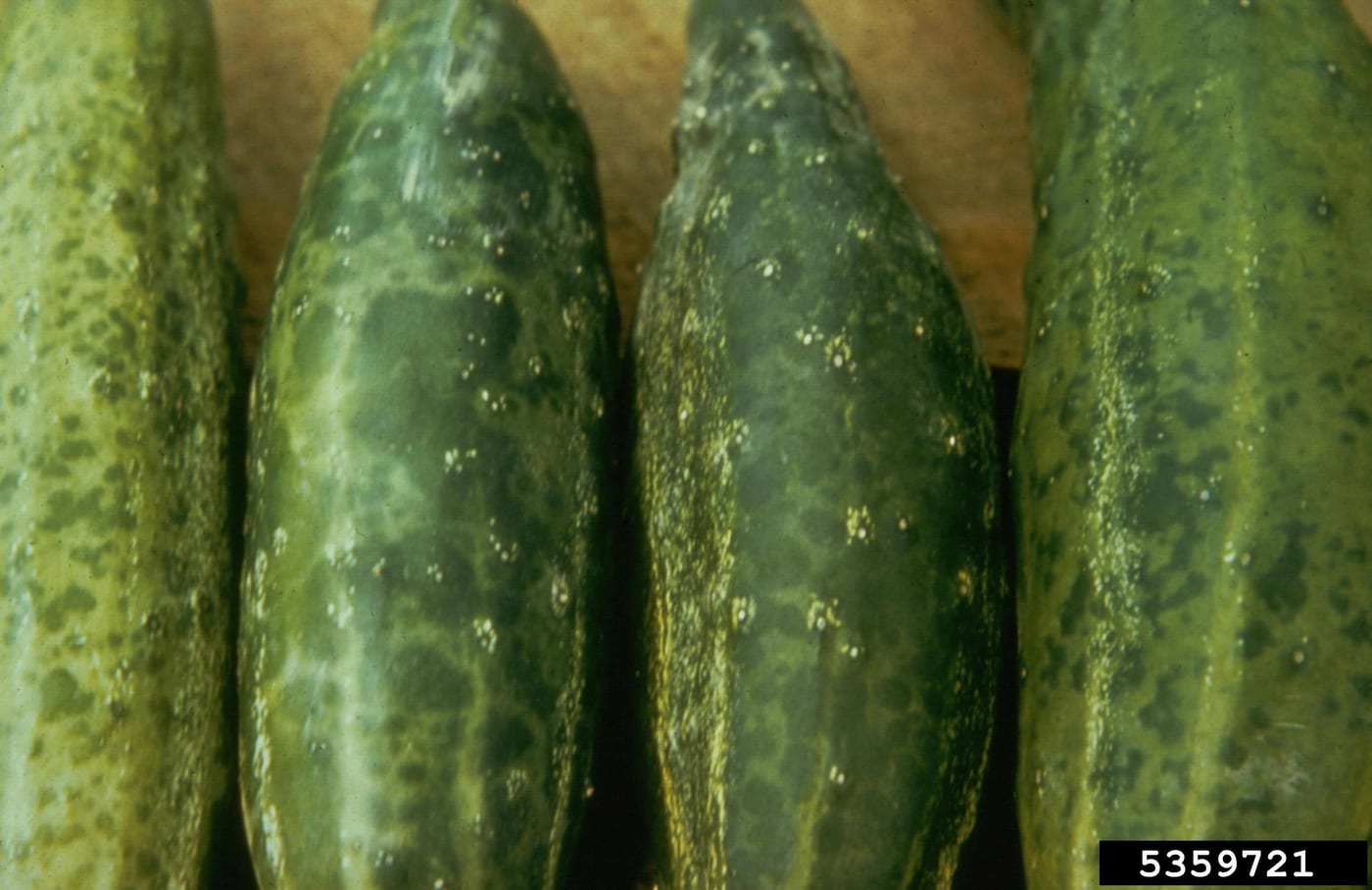
What does it look like?
Leaves develop a yellow-and-green mottled pattern, curl downward, and come in smaller than they should. Fruit can be fewer in number and visibly distorted, and stems can look stunted from shortened growth between leaves. Some plants show white streaks, called 'breaks', in their flowers.
What causes it
Aphids are the main way this virus moves from plant to plant: over 80 aphid species can pick it up from feeding on an infected plant and pass it on to the next plant they land on, without needing to stay long enough to feed properly. It can also travel on garden tools and hands moving between plants, and weeds like groundsel and chickweed can carry it without ever showing symptoms themselves, acting as a hidden reservoir near the vegetable bed.
Is this disease active now?
Watch whenever plants are growing strongly through spring and summer, since that's when symptoms are most evident. There's no specific month the virus itself is tied to: it can arrive whenever an infected aphid reaches the plant.
Life cycle
The virus has no life cycle of its own outside a living plant cell: once inside, it takes over the cell's own machinery to copy itself rather than reproducing independently.
Why this matters in Scotland
Cucumbers are mostly grown under cover in Scotland, and a greenhouse or polytunnel is exactly the environment that helps this virus spread fastest.
An enclosed space concentrates any aphids that get in, and plants trained and pinched outRemoving the soft growing tip of a stem to stop upward growth and make the plant branch out sideways instead. Full definition → under cover are handled far more often than an outdoor crop, both of which give the virus more chances to move from an infected plant to a healthy one on the same hands or tools.
Controls: what actually works
All the methods below are backed by real evidence, not just repeated folklore.
Plant removal: destroy infected plants promptly rather than composting them
An infected plant won't recover and stays a source that aphids, tools or hands can carry the virus from, so removing it promptly limits how far an existing infection can spread rather than leaving it in place.
Hygiene: wash tools and hands between plants
Since the virus can travel on tools and hands as well as aphids, washing between plants with soap and water breaks that route, especially useful when pinching out or training several plants in the same session.
Weed control: keep beds free of groundsel and chickweed
Clearing them removes a reservoir sitting right next to the vegetable bed that an aphid can pick the virus up from before ever landing on the crop itself.
Resistant varieties: choose a cultivarA plant variety that arose or was bred under cultivation and is kept true by deliberate propagation, rather than a naturally occurring wild species. Full definition → bred for CMV resistance
Several resistant cucumber varieties exist, 'Bush Champion', 'Crispy Salad' and 'Petita' among them, giving a real option to reduce risk before a single plant goes in the ground rather than reacting after infection.
Frequently asked questions
What should I do first if I find cucumber mosaic virus in my garden?
Start with plant removal. After that, hygiene. Work through the rest in order of how well-evidenced they are if the first two aren’t enough on their own.
Is there a spray that works?
No. There are no amateur chemical treatments available for cucumber mosaic virus. The controls that work are cultural: the measures listed above.
When are cucumber mosaic virus most active in Scotland?
Check the seasonal activity section above. Scottish timings can run a few weeks behind the UK-generic figures.
Sources
2 sources, recorded with what each was used for
- RHS1: identification, symptoms, aphid transmission, tool and hand transmission, weed reservoirs, removing infected plants, hygiene, weed control, resistant varieties, absence of a chemical control
- en.wikipedia.org: quantifying the number of aphid species capable of transmission