
Chocolate Spot is a common disease that affects broad beans in Scotland. Here is what it looks like, the conditions it needs, and the controls that actually work.
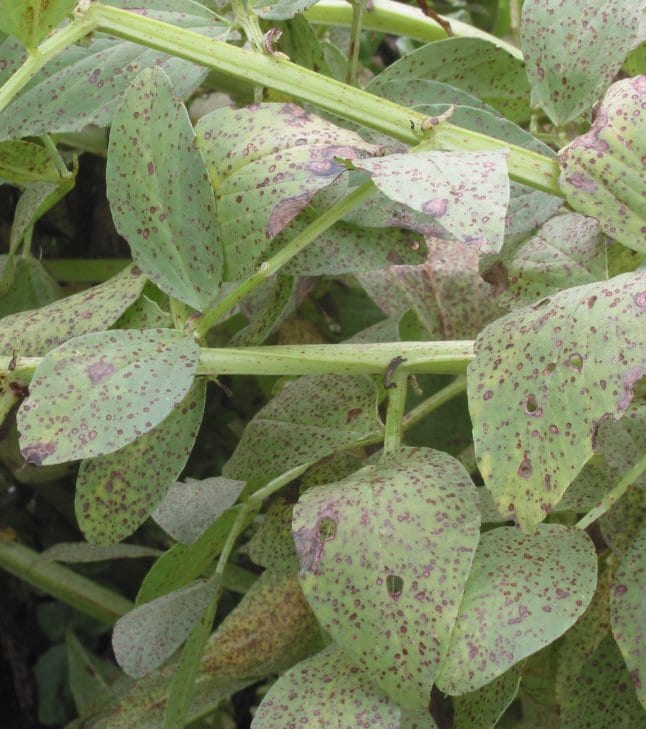
What does it look like?
Small, round, reddish-brown spots on leaves, stems and pods are the sign to look for, not blackened or rotted growth: that's a late, severe stage that only develops if spotting is left to worsen in wet weather. In humid conditions the spots darken and expand; alternating wet and dry spells can leave a spot with a series of concentric rings as it grows in stages.
What causes it
Cool, damp weather and overcrowded plants are what let this fungus take hold: airborne spores need wet conditions to spread and infect, and plants grown too close together trap the humidity that gives those spores the conditions they need. Dry weather alone keeps an existing spot small and contained rather than spreading.
Is this disease active now?
Autumn-sown beans can show symptoms from late winter; spring-sown beans typically show it from mid-spring onward. Once flowering is largely finished, a late infection has little crop left to damage, so it stops being worth acting on.
Life cycle
The fungus overwinters as resting structures in dead plant tissue, in lesions carried through on autumn-sown beans, and on nearby common vetch or field beans grown as a green manureA fast-growing crop sown specifically to be dug back into the soil, adding organic matter and, with legumes, fixing nitrogen. Full definition →. Seed saved from an infected plant can also carry it into the next crop.
Why this matters in Scotland
This is rated moderate rather than low because the exact conditions this fungus needs, cool, damp weather and crowded plants, are what a Scottish summer typically supplies.
Autumn sowing, common here for an earlier harvest, exposes beans to a whole Scottish winter and spring of exactly those conditions before they even reach flowering. A spring-sown crop isn't in the ground for most of that stretch, so it faces a shorter run of cool, damp weather before its own flowering starts.
Controls: what actually works
All the methods below are backed by real evidence, not just repeated folklore.
Airflow: space plants properly and avoid overcrowding
Crowded rows trap humidity between plants, exactly the condition this fungus needs to spread. Giving plants their full recommended spacing keeps air moving through the row instead.
Sanitation: destroy infected material and remove nearby vetch
Clearing and destroying infected plant material at the end of the season removes a source the fungus would otherwise overwinterKeeping a plant alive and intact through the cold months, whether left outdoors, moved under cover, or stored dormant. Full definition → in. Common vetch growing nearby can carry the same infection between seasons, so it's worth clearing too if it's present.
Clean seed: avoid saving seed from diseased plants
Seed from an infected plant can carry the fungus straight into next year's crop, so a plant that showed chocolate spot this season isn't the one to save seed from.
Site selection: avoid damp, poorly-drained, humid spots
A naturally damp or poorly-drained corner of the plot starts a broad bean crop with the humidity this fungus wants already in place, before overcrowding or wet weather add to it.
Frequently asked questions
What should I do first if I find chocolate spot in my garden?
Start with airflow. After that, sanitation. Work through the rest in order of how well-evidenced they are if the first two aren’t enough on their own.
Is there a spray that works?
No. There are no amateur chemical treatments available for chocolate spot. The controls that work are cultural: the measures listed above.
When are chocolate spot most active in Scotland?
Check the seasonal activity section above. Scottish timings can run a few weeks behind the UK-generic figures.
Sources
2 sources, recorded with what each was used for
- RHS1: identification, symptoms, the two causal fungi, conditions that favour spread, life cycle and overwintering, seed-borne transmission, airflow spacing, sanitation, clean seed, site selection, absence of an amateur fungicide
- FAS Scotland14: confirming cool, damp Scottish summers and dense crops as favourable conditions; the end-of-flowering timing point at which a late infection has little left to damage