
Cherry Leaf Scorch and Leaf Spot is a common disease that affects cherries in Scotland. Here is what it looks like, the conditions it needs, and the controls that actually work.
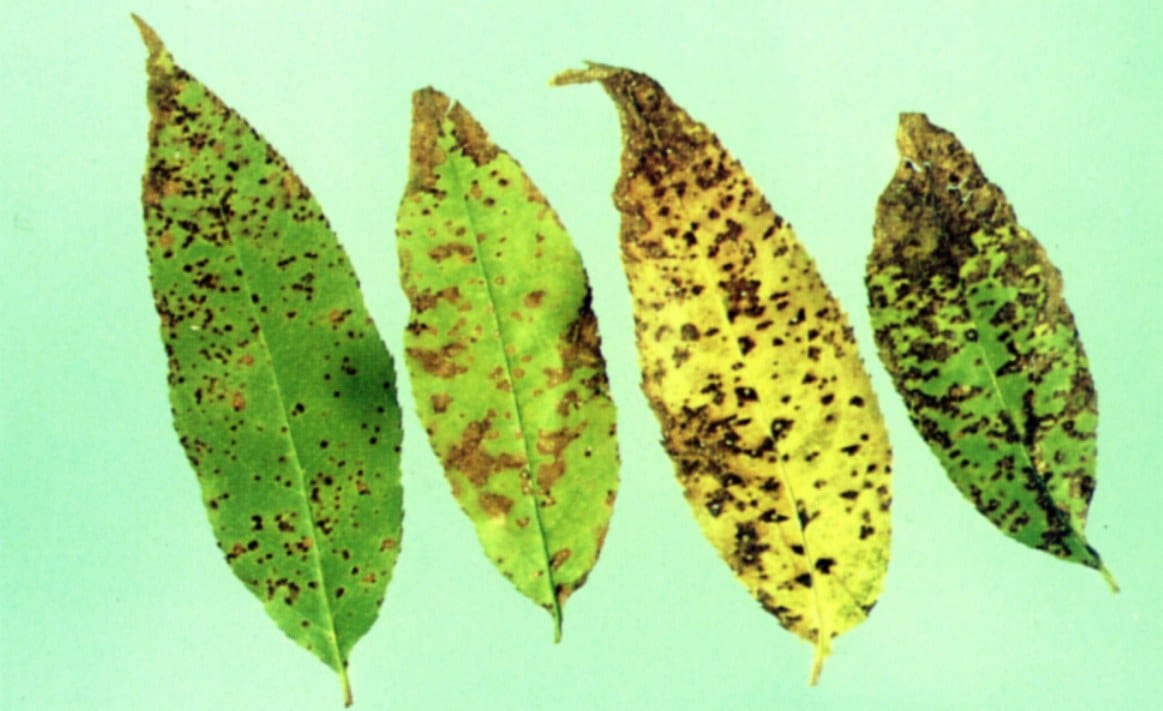
What does it look like?
Leaf scorch: leaves turn blotchy and brown in summer, then fully brown and shrivelled, and unlike most leaf diseases, the dead foliage stays hanging on the tree right through winter instead of dropping. Leaf spot: small purple or red circular spots appear on the upper leaf surface, sometimes with tiny holes where the dead tissue has fallen out ("shothole"); as spots age, the surrounding leaf tissue can take on a bright orange tinge. Penn State Extension adds detail specific to leaf spot: spots enlarge to about 3-6mm (1/8-1/4 inch) across, and the leaf underside turns brown, developing whitish, feltlike patches where the fungus is actively producing spores in wet conditions. Neither disease is limited to one type of cherry: RHS covers sweet and acid cherries and ornamental Prunus for both, and Penn State Extension separately confirms leaf spot on tart, sweet and English Morello cherries too. Affected leaves eventually turn yellow and drop, the opposite pattern to leaf scorch's hanging-on foliage. Hard spots can occasionally develop on the fruit too, though neither source gives further detail on how this affects eating quality.
What causes it
Both diseases need moisture to spread and become active in spring. Penn State Extension gives a specific mechanism for leaf spot: spores mature and are released around bloom time or shortly after, infecting newly-expanded leaves through pores on the underside; a second spore type then follows 10-15 days after that first infection and spreads further on splashing rain. Each wave of infection through the season tends to be heavier than the one before it.
Symptoms
The two diseases are distinguishable mainly by what the dead leaves do next: leaf scorch's foliage stays on the tree over winter, while leaf spot's foliage drops early. Leaf spot's premature leaf loss can happen before harvest, and losing leaves that would otherwise be feeding the ripening fruit reduces fruit quality and colour, on top of the cosmetic damage to the tree itself.
Life cycle
Both fungi overwinterKeeping a plant alive and intact through the cold months, whether left outdoors, moved under cover, or stored dormant. Full definition → in dead plant material — resting structures in fallen leaves for leaf scorch, and diseased fallen leaves for leaf spot. Airborne spores released from that material the following spring start the first infections of the season, and rain-splashed spores carry the disease on through summer.
Why this matters in Scotland
Both diseases spread on moisture and rain-splash, and Scotland runs wetter than the UK average across spring and summer. A garden here supplies more of the exact conditions both fungi need to establish and keep spreading, not less.
Controls: what actually works
All the methods below are backed by real evidence, not just repeated folklore.
Rake up and destroy fallen leaves in autumn and winter
Both fungi overwinter in exactly this material, so removing it cuts down how much infection is available to start next spring's cycle. Penn State Extension adds a specific, commercial-orchard-scale version of the same idea for leaf spot: mowing over fallen leaves hastens their decay and reduces the number of spores that survive the winter, a step a garden mower or shredder could achieve on a smaller scale.
Note that the only cultivarsA plant variety that arose or was bred under cultivation and is kept true by deliberate propagation, rather than a naturally occurring wild species. Full definition → named as resistant are ornamental, not fruiting, varieties
RHS names 'Kanzan' and 'Fugenzo' as resistant. Both are grown for blossom, not for a useful edible crop, so this isn't a directly actionable choice for a fruit-growing garden — it's included for completeness rather than as a recommendation, since no fruiting cherry variety is named as resistant by either source.
Frequently asked questions
What should I do first if I find cherry leaf scorch and leaf spot in my garden?
Start with rake up and destroy fallen leaves in autumn and winter. After that, note that the only cultivars named as resistant are ornamental, not fruiting, varieties.
Is there a spray that works?
No. There are no amateur chemical treatments available for cherry leaf scorch and leaf spot. The controls that work are cultural: the measures listed above.
How much of this advice is actually proven?
Every control listed above is evidence-based, not just repeated folklore. None of it is a guess.
Sources
2 sources, recorded with what each was used for
- RHS1: identification of both diseases, symptoms, mechanism/biology, affected plants, resistant ornamental cultivars, and the no-UK-fungicide stance
- Penn State Extension27: leaf spot-specific identification detail (spot size, underside sporulation patches), infection-cycle timing and mechanism, affected cherry types, and the leaf-mowing refinement to the raking control