
Broad Bean Seed Beetle is a minor pest that affects broad beans in Scotland. Here is what it looks like, how to spot the damage, and which controls have been tested.
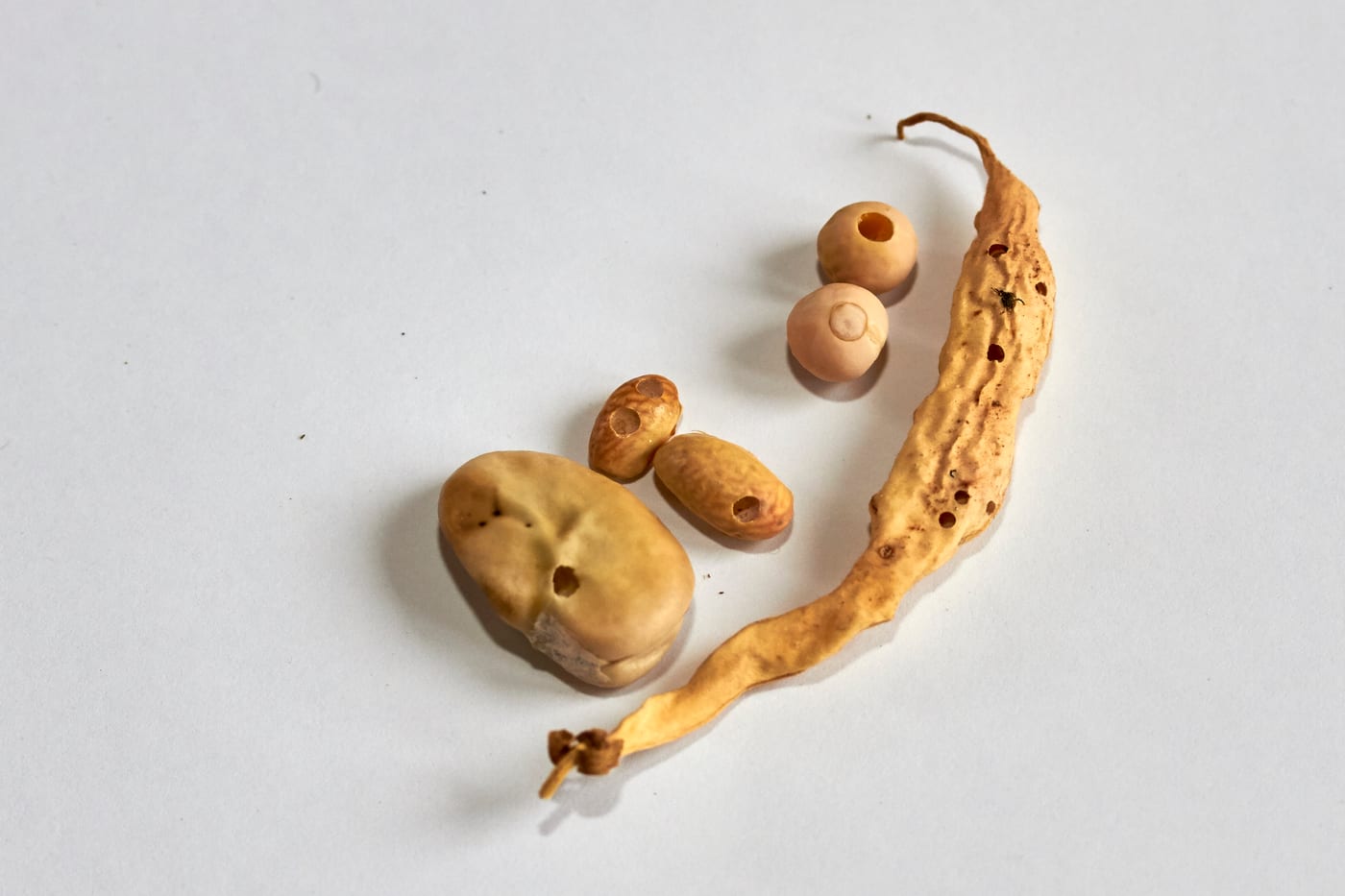
What does it look like?
Adults are about 5mm long, mottled with black, brown and white scales. Larvae are maggot-like grubs of a similar size, but they feed hidden inside the seed itself rather than anywhere visible on the plant.
What causes it
Whether this pest ever becomes relevant depends on how the crop is used, not on weather or growing conditions: beans picked for eating are harvested well before the grubs inside are large enough to notice, while beans deliberately left on the plant to dry as seed give the grubs their full feeding window through to maturity.
Is this pest active now?
Adults are active from around March, with eggs laid on the pods once early summer arrives and grubs developing inside through to pod maturity. Exit holes in stored seed can turn up any time after that, whenever the beetles inside are ready to emerge, especially in a heated indoor store over winter.
Symptoms
Small, circular holes just over 1mm across appear in the seed coat of dried, stored broad beans, the mark left by an adult beetle emerging from inside.
Life cycle
Adults lay eggs on broad bean pods in early summer. Grubs bore into the developing seeds and feed there through the rest of the growing season, pupating inside the seed itself. In the warmth of a heated building, adults can emerge from stored dry seed over winter, leaving the tell-tale exit holes behind, though with no pods to lay fresh eggs on indoors, the cycle doesn't continue in storage.
Why this matters in Scotland
Saving seed from your own broad bean plants is common practice for anyone growing food self-sufficiently in Scotland, and that home-saved seed is exactly where this beetle actually turns up.
Exit holes tend to be found over winter, sometimes indoors where a heated room is warm enough for the adults trapped inside to emerge, catching a seed-saver off guard the first time it happens.
Controls: what actually works
All the methods below are backed by real evidence, not just repeated folklore.
Sowing affected seed: use it as normal rather than discarding it
An exit hole shows an adult has left, not that the seed is dead: the grubs feed on the cotyledon, the seed's stored food, while the embryo that actually needs to sprout is left undamaged, which is why affected seed usually still germinates.
Frequently asked questions
What should I do first if I find broad bean seed beetle in my garden?
Start with sowing affected seed.
Will broad bean seed beetle kill my plants?
They rarely kill established plants. The damage is usually cosmetic on outer leaves, and natural predators often bring numbers under control without you doing anything.
When are broad bean seed beetle most active in Scotland?
Check the seasonal activity section above. Scottish timings can run a few weeks behind the UK-generic figures.
Should I just leave broad bean seed beetle alone?
In most gardens, yes. broad bean seed beetle are food for birds, wasps and predatory insects, and a healthy garden carries some without trouble. Tolerance is also RHS's official position now, for that same reason.
Sources
1 source, recorded with what each was used for
- RHS1: identification, symptoms, the seed-use trigger, life cycle and overwinteringKeeping a plant alive and intact through the cold months, whether left outdoors, moved under cover, or stored dormant. Full definition → in storage, sowing affected seed, absence of a chemical or biological control