
Big Bud Mite is a common pest that affects blackcurrants in Scotland. Here is what it looks like, how to spot the damage, and which controls have been tested.
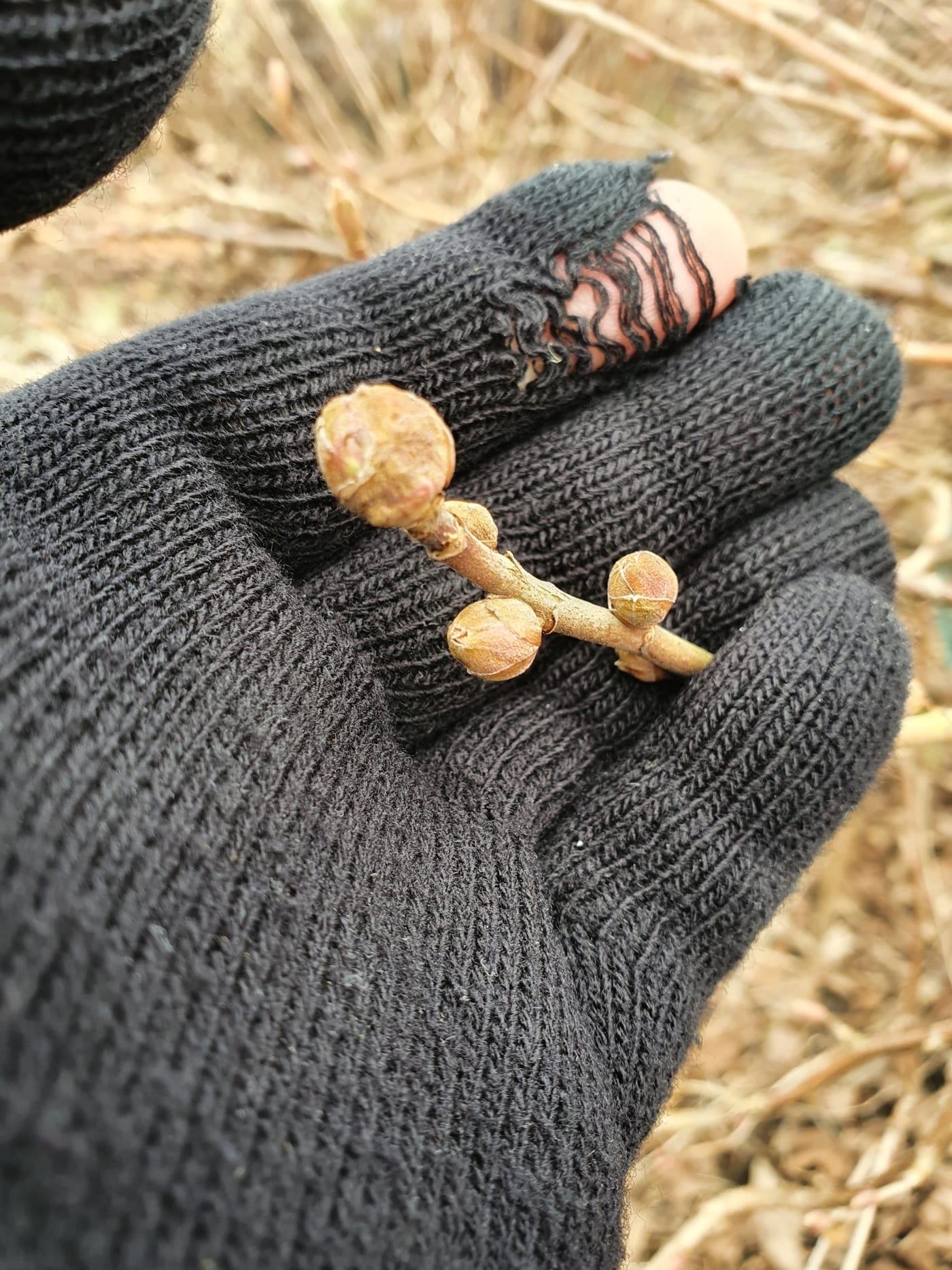
What does it look like?
The mite itself is far too small to see without a microscope, at just 0.25mm long. What you'll actually spot is the tell it leaves behind: a bud that's abnormally swollen and rounded, instead of the pointed, slender shape of a healthy bud nearby.
What causes it
Proximity alone is enough to spread this mite: it doesn't need to be carried on tools or hands, since it can drift on the wind from an infested bush to a clean one just as effectively as it crawls there. A badly affected bush anywhere nearby is a genuine source of new infestation, and not just of the mite itself: it's also the vector that carries reversion virus from bush to bush.
Is this pest active now?
The practical window is January to May. Mites themselves don't emerge and disperse until early summer, so a bush checked and cleared before then has already had its worst buds dealt with before the population moves on to find new ones.
This mite is the only documented vector for reversion virus, an incurable disease that permanently reduces a bush's cropping once it takes hold. See Reversion Virus →
Symptoms
Swollen, rounded buds are most obvious in late winter before other growth hides them. Many affected buds dry up completely and never open in spring; others open into stunted foliage with few or no flowers.
Life cycle
Hundreds of mites can shelter inside a single dormant bud over winter. In early summer they leave in search of new buds to colonise, crawling across the plant or being carried by the wind to a neighbouring bush, where the cycle starts again.
Why this matters in Scotland
Reversion virus, not the mite itself, is what actually threatens a blackcurrant bush long-term, and Scottish breeding is the reason resistant varieties exist to blunt that threat.
Modern resistant blackcurrant varieties trace back to a Scottish breeding effort, not a general industry trend: a Dundee programme bred the resistance gene into blackcurrant, and the resulting variety, Ben Hope, carries around 40 times lower susceptibility to the mite than older varieties. The relationship also runs the other way: a bush already infected with reversion virus becomes more susceptible to mite colonisation in turn, so an unmanaged infestation and the virus it carries tend to reinforce each other.
Controls: what actually works
All the methods below are backed by real evidence, not just repeated folklore.
Winter hand-removal: pick off swollen buds on lightly infected plants
Picking off swollen buds and disposing of them keeps a light infestation from building into a heavier one, and is worth doing as part of a normal winter check of the bush rather than as a separate task.
Resistant varieties: choose Ben Hope or another genetically resistant cultivarA plant variety that arose or was bred under cultivation and is kept true by deliberate propagation, rather than a naturally occurring wild species. Full definition →
Ben Hope's resistance comes from the Ce gene, originally from a wild gooseberry relative bred into blackcurrant, giving real measured resistance rather than a marketing claim. The number of acaricides (mite-killing pesticides) approved for controlling this mite is also shrinking, which makes a resistant variety more of a first line of defence than a fallback option.
Certified stock: buy plants certified free of big bud and reversion
Starting with certified clean stock avoids bringing either the mite or the virus it spreads onto a plot that doesn't have them yet, which matters more here than with most pests since reversion virus has no cure once established.
Remove heavily infected bushes and replant with certified stock
Once a bush is heavily infested, picking off individual buds stops being practical. The practical route is to let it finish fruiting for one last harvest, then dispose of it and replant with certified stock rather than trying to nurse a heavily affected bush back to health.
Frequently asked questions
What should I do first if I find big bud mite in my garden?
Start with winter hand-removal. After that, resistant varieties. Work through the rest in order of how well-evidenced they are if the first two aren’t enough on their own.
Will big bud mite kill my plants?
They rarely kill established plants. The damage is usually cosmetic on outer leaves, and natural predators often bring numbers under control without you doing anything.
When are big bud mite most active in Scotland?
Check the seasonal activity section above. Scottish timings can run a few weeks behind the UK-generic figures.
Should I just leave big bud mite alone?
In most gardens, yes. big bud mite are food for birds, wasps and predatory insects, and a healthy garden carries some without trouble. Tolerance is also RHS's official position now, for that same reason.
Sources
2 sources, recorded with what each was used for
- RHS1: identification (mite invisibility, gall symptom), symptoms, life cycle and overwinteringKeeping a plant alive and intact through the cold months, whether left outdoors, moved under cover, or stored dormant. Full definition →, wind and crawling dispersal, tolerance threshold, winter hand-removal, certified stock, disposing of heavily infected bushes, Ben Hope as a resistant variety, absence of a chemical control
- James Hutton Institute2: the Ce gene's origin and Scottish breeding history, Ben Hope's resistance quantified at roughly 40 times lower susceptibility, reversion-infected bushes being more susceptible to mite colonisation, declining acaricide approvals