
Asparagus Beetle is a common pest that affects asparagus in Scotland. Here is what it looks like, how to spot the damage, and which controls have been tested.
What does it look like?
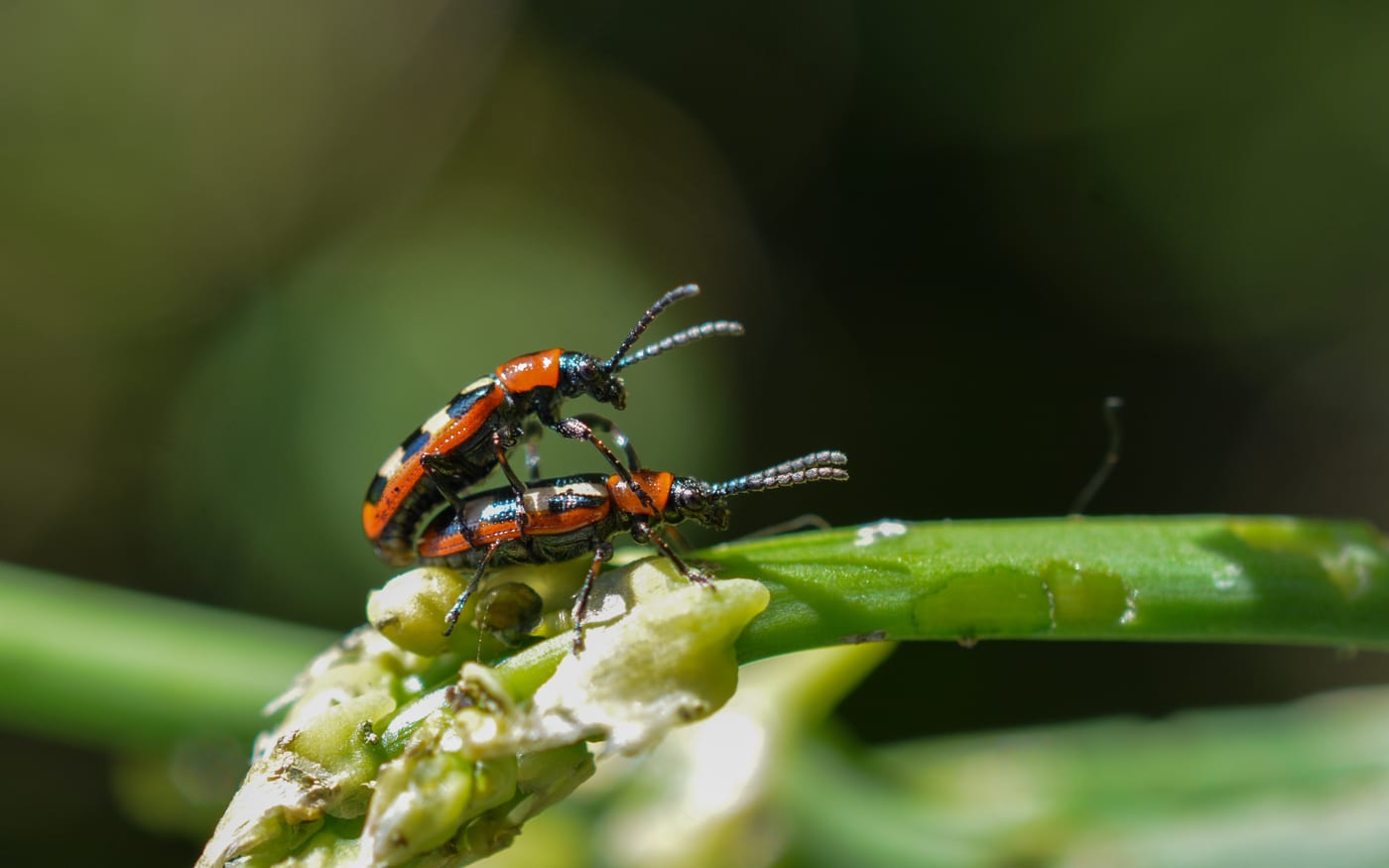
Adults are 6-8mm long, black with six yellow blotches across the wing cases and a reddish thorax. Larvae are creamy greyish-black and reach up to 10mm long when fully grown. Eggs are elongated and black, laid standing upright and attached to the spears.
What causes it
Adults need somewhere close by to survive winter. A bed edged with long grass or left uncleared going into autumn gives the population shelter right next to next year's spears, rather than forcing it to disperse or die off before spring.
Is this pest active now?
Adults emerge in May and June and stay active into September, with two generations running across that stretch. In warmer areas they can appear as early as late April, so it's worth checking spears before the usual May emergence window rather than waiting for a calendar date.
Symptoms
Adults and larvae feed openly on stems and foliage, visible without needing to search for them. Where feeding strips the bark all the way round a stem, the foliage above that point dries out and turns yellowish brown.
Life cycle
Adults overwinterKeeping a plant alive and intact through the cold months, whether left outdoors, moved under cover, or stored dormant. Full definition → in sheltered spots such as grass tussocks and plant debris, emerging to lay eggs on the spears. Larvae feed before dropping to the soil to pupate, and the beetles that emerge from that pupation go on to lay the next generation's eggs in turn.
Why this matters in Scotland
Asparagus is one of the longest-term investments in a Scottish vegetable garden: two to three years before the first proper harvest, then a decade or more of cropping from the same bed if it's looked after.
Asparagus is harvested as spears in spring, then left to grow into tall, fern-like foliage for the rest of the season; that foliage is what photosynthesises and builds up the energy the crownThe base of a perennial plant where roots and shoots meet, often sold and planted as a ready-made dormant plant rather than grown from seed. Full definition → stores for next year's spears. Feeding that strips or dries out this foliage cuts into that build-up directly, so damage this year shows up as a smaller harvest next year rather than immediately. That's exactly why an unmanaged population is worth taking seriously on a bed that's already years into a decade-long payback period, even though any single year's damage is rarely dramatic.
Controls: what actually works
All the methods below are backed by real evidence, not just repeated folklore.
Hand-picking: remove adults and larvae from late spring onward
Both stages feed in the open on stems and foliage, which makes them straightforward to spot and remove by hand once you're looking, rather than something you need to hunt for on the underside of leaves.
Autumn hygiene: clear and dispose of old stems and foliage
Adults overwinter in sheltered plant debris near the bed, so removing the old ferny growth each autumn takes away the shelter they'd otherwise use to see out the winter close to next year's spears.
Biological control: a nematode drench for larvae
A bought-in biological control containing the nematode Steinernema carpocapsae targets the larval stage specifically. It's watered onto the plants rather than sprayed, and works by infecting larvae rather than by any chemical action.
Natural predators: encourage birds, frogs, ground beetles and social wasps
All four are named as natural enemies that feed on the larvae and adults. A bed with cover nearby for frogs and ground beetles, and something in flower for wasps, gets some ongoing control without any direct intervention.
Frequently asked questions
What should I do first if I find asparagus beetle in my garden?
Start with hand-picking. After that, autumn hygiene. Work through the rest in order of how well-evidenced they are if the first two aren’t enough on their own.
Will asparagus beetle kill my plants?
They rarely kill established plants. The damage is usually cosmetic on outer leaves, and natural predators often bring numbers under control without you doing anything.
When are asparagus beetle most active in Scotland?
Check the seasonal activity section above. Scottish timings can run a few weeks behind the UK-generic figures.
Should I just leave asparagus beetle alone?
In most gardens, yes. asparagus beetle are food for birds, wasps and predatory insects, and a healthy garden carries some without trouble. Tolerance is also RHS's official position now, for that same reason.
Sources
2 sources, recorded with what each was used for
- RHS1: identification, symptoms, the bark-stripping mechanism, life cycle and overwintering, tolerance threshold, hand-picking, autumn hygiene, nematode biological control, encouraging predators, absence of a chemical control
- Garden Organic8: corroborating hand-picking of adults and larvae, and an earlier monitoring start towards the end of April